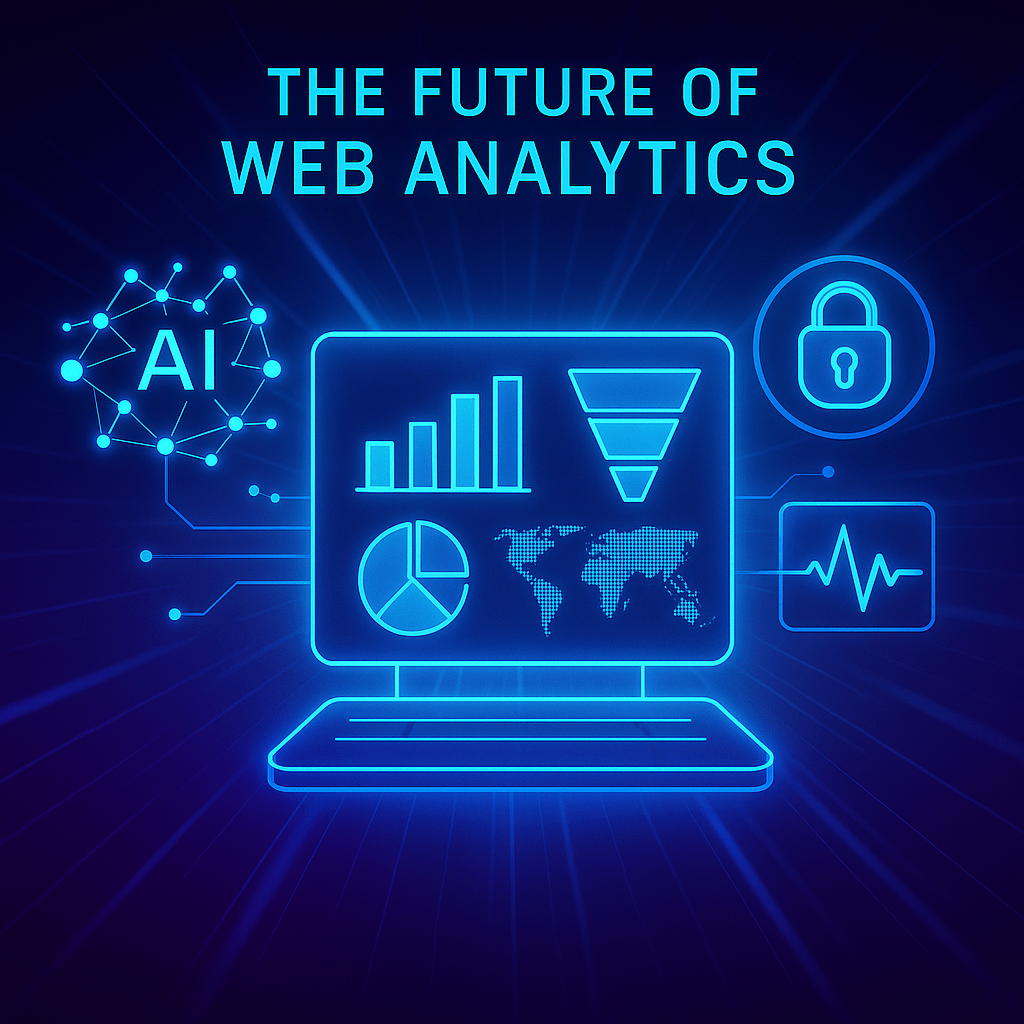
When people talk about analytics, they often think of static dashboards and monthly reports. But that's like judging the weather by last week's forecast, by the time you act, the world has already changed.
Analytics is shifting fast, driven by privacy laws, artificial intelligence, and the way people use devices. If you want your website (and business) to stay relevant, you need to understand where this field is heading. Let’s break down the key trends shaping 2026.
1. AI-Powered Insights: From Reports to Recommendations
In the past, analytics gave you raw numbers. You had to figure out the meaning yourself. Now, AI is turning those numbers into sentences and suggestions.
Instead of staring at charts, you’ll get messages like:
- "Checkout abandonment rose 15% this week. Likely cause: payment form errors."
- "Visitors who read your FAQ are 40% more likely to convert. Move FAQ higher."
The job of analytics is shifting from data collection to decision support.
2. Cookieless Tracking and the Rise of First-Party Data
Third-party cookies are collapsing, blocked by browsers and laws. Businesses that relied on them will scramble. The winners? Those who own first-party data, information collected directly from their audience with consent.
This includes:
- Clicks and interactions on your site.
- Surveys, preferences, and zero-party data users willingly share.
- Contextual data (like time, location, or device) that doesn't identify individuals.
Analytics tools that work without tracking people across the web will dominate.
3. Real-Time and Edge Analytics
Nobody wants yesterday's answers to today's problems. Real-time analytics means knowing instantly when something breaks or spikes.
Edge analytics pushes this even further by processing data closer to the source, in the browser, app, or IoT device, without sending everything to a central server. Faster, lighter, and often more private.
4. Cross-Device & Cross-Platform Journeys
Your visitors don't live on one device. They start on a phone, switch to a laptop, and sometimes end on a smart TV or tablet. Analytics is evolving to stitch these fragments together.
The challenge: how do you connect the dots without violating privacy? Expect a rise in consent-driven identity stitching, techniques that link sessions only when users agree.
5. Explainable & Transparent Analytics
AI can find patterns, but if nobody understands how it reached a conclusion, people won't trust it. The future of analytics is explainable: tools will show not only what the insight is, but also how the system derived it.
Think of it as “show your working” in school maths, transparency builds trust.
6. Storytelling With Data
Charts are useful, but stories move people. The future of analytics isn't just about dashboards, it's about narratives.
Instead of dumping metrics, analytics tools will generate stories:
- "Visitors were excited by the new product page but hesitated at shipping options."
- "The blog drew record traffic from LinkedIn, but readers bounced when posts got too technical."
Data that reads like a story is data that drives action.
What This Means for You
- Stop chasing old metrics like "page views" and start focusing on insights that change behaviour.
- Make sure your analytics setup is privacy-ready and cookieless.
- Prepare to blend human judgment with AI-generated suggestions.
How Acalytica Is Preparing
At Acalytica Web Analytics, we’re already building toward this future:
- AI-powered insights instead of static charts.
- Privacy-first, cookieless tracking.
- Real-time alerts for anomalies.
- Interfaces designed to tell stories, not just show numbers.
The goal isn’t more data. It's smarter decisions in less time.
The Bottom Line
Analytics is no longer about counting clicks. It's about earning trust, predicting behaviour, and guiding growth in real time.
Those who ride these trends will treat analytics as a compass, not just a rear-view mirror. And that’s how you build an edge in 2026.
Want to see the future in practice? Explore Acalytica Web Analytics today.





