Every marketing and creative agency sits on a mountain of institutional knowledge that no machine can read. Brand histories live in PowerPoint decks from ten years ago. Media relationships exist in the heads of senior planners. Contract terms are buried in PDFs that were scanned, emailed, revised and scanned again. For years this was just an inconvenience. In the age of AI agents, it has become an existential bottleneck, and for startups it is one of the most lucrative openings in the B2B software market.
The reason is simple. AI agents are only as good as the context they can consume. Large language models and autonomous planning agents need strict, structured, contextual data to work reliably. Agencies, whose entire value proposition is built on nuance, narrative and relationships, have almost none of their knowledge in that form. The startups that convert this unstructured "dark data" into machine-readable intelligence will not be selling a nice-to-have productivity tool. They will be selling the connective tissue that lets agencies take part in an AI-mediated economy at all.
The New Judge of Brand Credibility Has Never Read Your Press Release
The shift from search engines to answer engines has quietly rewritten the rules of visibility. When a consumer asks an AI assistant to recommend a product, an accounting firm or a hotel, the model does not rank ten blue links. It puts together an answer from the citation networks, entity relationships and semantic signals it has absorbed. A brand's reputation is now being judged by systems that have never read its press release, never seen its campaign work, and have no structured way to weigh up two decades of earned media coverage.
This creates the first major opportunity: earned media and brand credibility mapping. PR and communications teams generate huge volumes of authentic, human-generated coverage. Journalist mentions, analyst citations, podcast appearances, awards. Yet almost none of it is packaged in a way that language models can verify or attribute. There is no schema that tells an AI that this brand was independently endorsed by these credible third parties, in these contexts, over this period of time.
Startups can fill this gap by building audit and conversion tools that crawl a brand's off-site media footprint, check the authenticity and authority of each mention, and restructure the whole lot into citation-worthy entity relationships. Think of it as visibility engineering: taking the messy, narrative output of PR and translating it into the structured trust signals that answer engines actually consume. Agencies will pay good money for this because it directly determines whether their clients show up inside AI-generated answers, which is fast becoming the new front page of the internet.
Entity Identity: Teaching Machines Who a Brand Actually Is
The second bottleneck sits one layer deeper. Search and answer engines increasingly judge credibility on semantic organisation, in other words how coherently a brand's identity, expertise and claims are represented across the knowledge graph. Yet the richest sources of that identity are locked away inside the agency and the client organisation: proprietary executive knowledge, ESG and sustainability records, brand guidelines, positioning documents and internal research.
When this material stays unstructured, AI models fill the vacuum with whatever they can scrape. Outdated coverage, competitor framing, or outright hallucination. The result is brands being misrepresented at exactly the moment representation matters most.
The startup opportunity here is entity identity and truth verification tooling: platforms that take in internal, proprietary documentation and map it into machine-readable structures such as schema markup, knowledge graphs and verified entity records that AI search models can accurately draw on. ESG is a particularly urgent wedge, since sustainability claims are both high-stakes and heavily scrutinised. A tool that converts audited ESG records into verifiable, structured assertions solves a compliance problem and a visibility problem at the same time. The pitch to agencies writes itself: control the machine-readable version of your client's identity, or someone else's data will define it for you.
Contracts and SOWs: The Unglamorous Goldmine
Not every opportunity in this space is about external visibility. Some of the most defensible startups will go after the paperwork agencies drown in internally. Statements of work, NDAs and complex retainer agreements are notoriously idiosyncratic in the agency world. Variable scopes, usage rights, exclusivity clauses, media commitments, revision limits and payment triggers differ from client to client and project to project. Account teams and operations staff burn hours manually auditing these documents, and expensive mistakes still slip through.
Generic contract AI exists, but it is trained on generic legal language. The opening for startups is specialised contract-reading software tuned to agency-specific legal nuance: tools that can parse a scope of work, flag deviations from rate cards, reconcile deliverables against retainer terms, and pick up conflicts across a whole portfolio of client agreements. Because the domain is narrow and the language patterns are distinctive, a focused vertical product can outperform horizontal legal AI by a long way, and vertical depth is exactly what builds a moat.
Media Planning Meets the Model Context Protocol
The final frontier is the media plan itself. Despite the billions that flow through them, media planning workflows still run on static PDFs, siloed dashboards and spreadsheets emailed back and forth. Negotiation history, meaning what a publisher charged last quarter, what added value was thrown in, and which rates were only opening positions, lives in inboxes and in people's memories.
Emerging standards like the Model Context Protocol (MCP) change what is possible. MCP gives AI agents a common way to read live data from external systems without bespoke API integrations coded by hand. Startups that build MCP-native layers over media marketplaces can let AI planning agents dynamically read media plans, check publisher availability and pull current pricing in real time. Early movers are already integrating media planning platforms directly with AI agents, which shows where the market is heading: a world where an agency's planning agent negotiates against structured, live inventory data rather than last year's PDF rate card.
The startups that also capture negotiation history, structuring it so that agents can learn from past deals, will own something even more valuable than the workflow. They will own the institutional memory of the media business itself.
Why Now, and Why Agencies
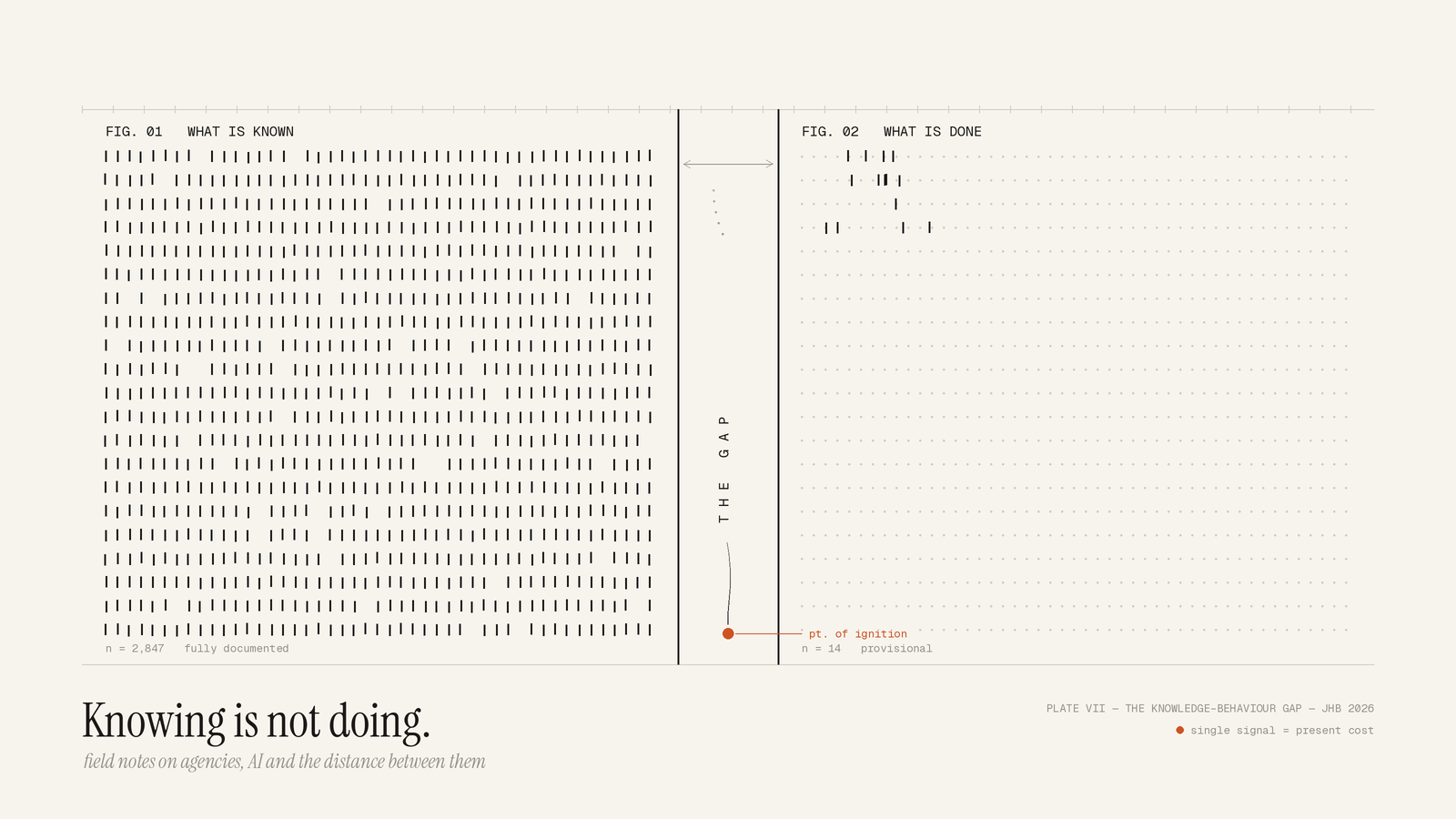
All four of these opportunities share the same underlying logic. Agencies are context-rich and structure-poor. AI agents are structure-hungry and context-blind. Whoever bridges that gap gets paid.
The timing advantage is real but temporary. Agencies are under serious pressure. Clients are asking why AI has not made everything faster and cheaper, while the agencies themselves lack the engineering capacity to structure their own data. That desperation creates a willingness to buy now. But as MCP-style standards mature and structured-context tooling becomes commoditised, the window for establishing category leadership will narrow.
For founders, the playbook is clear. Pick one bottleneck, go deep on agency-specific nuance rather than building horizontal AI tooling, and position the product not as automation but as translation: turning the narrative intelligence agencies have always had into the structured context machines now demand. The dark data is already there. Someone just has to switch on the lights.