Why This Question Matters
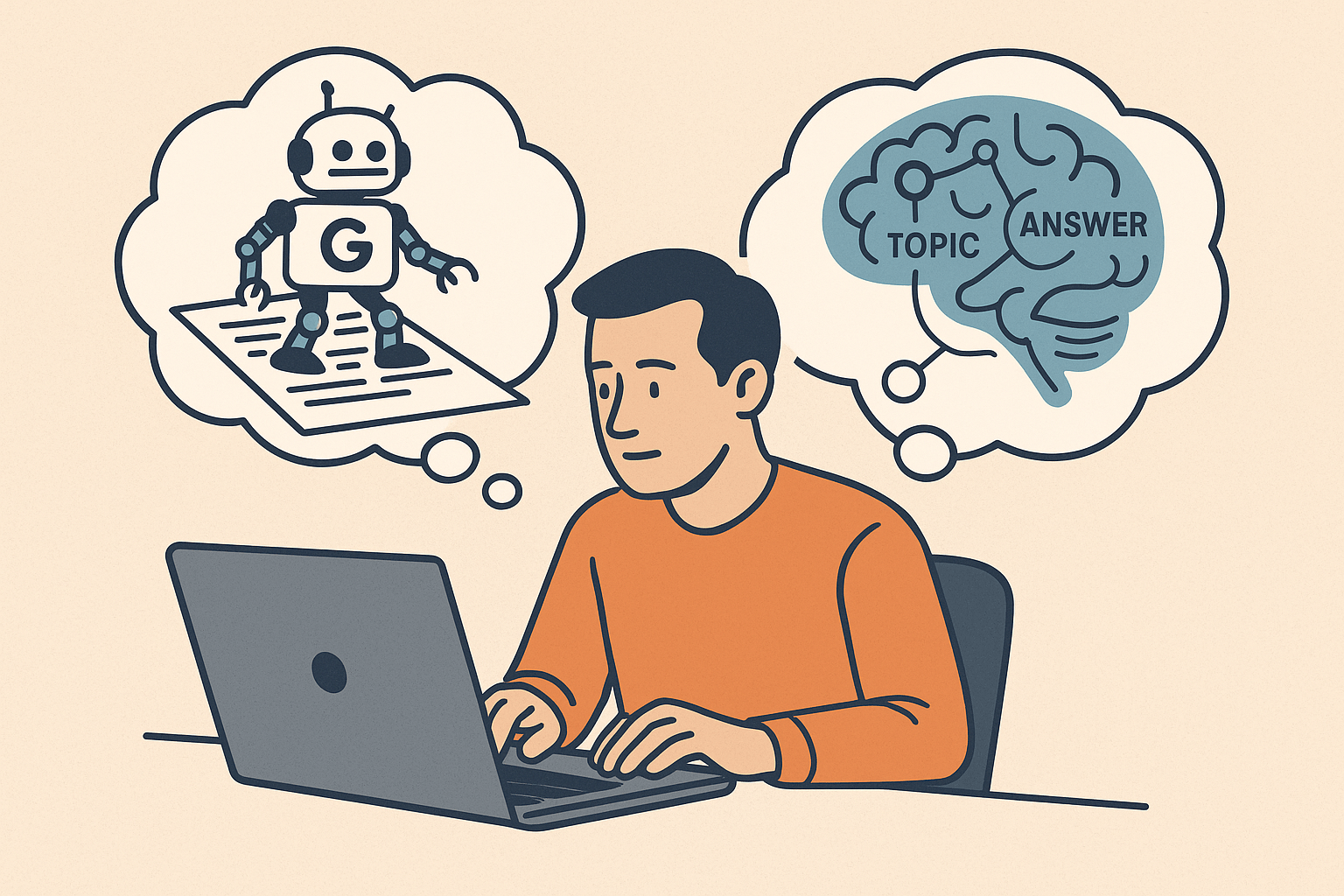
Search has changed. When people used to search, they'd scroll through lists of blue links. Now, they often stop at the first answer served by an AI, whether it's Google's AI Overview, Bing Copilot, or ChatGPT. That means your content needs to be AI-ready, not just Google-friendly.
The Core Difference
Traditional SEO: Google's crawler looks for keywords, backlinks, and technical signals.
AI search: Large language models (LLMs) look for context, clarity, and relationships between ideas.
Think of it like this:
- Old SEO = stuffing your CV with keywords to beat an HR filter.
- AI search = explaining your skills clearly so an interviewer understands what you can actually do.
First Principles of AI Optimisation
- Clarity first: Machines summarise what's clear. Write answers in plain, direct language.
- Entities over keywords: An AI connects "Nelson Mandela", "South Africa", and "apartheid" as linked ideas. Use these explicitly.
- Structured signals: JSON-LD, FAQs, headings, bullet points, all make it easier for an AI to "lift" your content into its answers.
- Authority matters: AI looks for credible sources. Cite stats, data, and expert quotes.
How to Optimise Practically
- Start with FAQ-style headings: "What is X?", "How does X work?", "Why does X matter?"
- Add schema markup: Embed FAQ or HowTo schema.
- Write intro answers first: Begin each article with a one-sentence direct answer.
- Check with ChatGPT: Paste your content in and ask, "Would you use this to answer a search about [topic]?"
Example:
Bad:
"Marketing has changed dramatically over the years. Companies now need to adapt to AI-driven strategies in order to stay ahead of the curve."
Better:
"AI search engines optimise for clear answers. To rank, write content that answers questions directly, use structured data, and highlight key entities like tools, industries, and outcomes."
Why Marketers Should Care
If AI search engines skip your site, you'll miss traffic even if you're technically "ranking". Optimising for AI is about making your content the answer instead of just another link.





