Imagine you’re a street vendor in a city where everyone used to walk down the main road. You just needed the best sign, the right smells wafting out of your stall, and a spot in the high-foot-traffic zone to make sales.
Now, the city’s changed. People don’t walk the main road anymore. Instead, they send a friend to go ask all the stalls questions, and that friend comes back with a neat little package: the best answers, the highlights, and maybe a mention of where they came from.
That’s what’s happening to the internet. Search engines and AI assistants are now your "friend", the middleman who decides what the world hears about you.
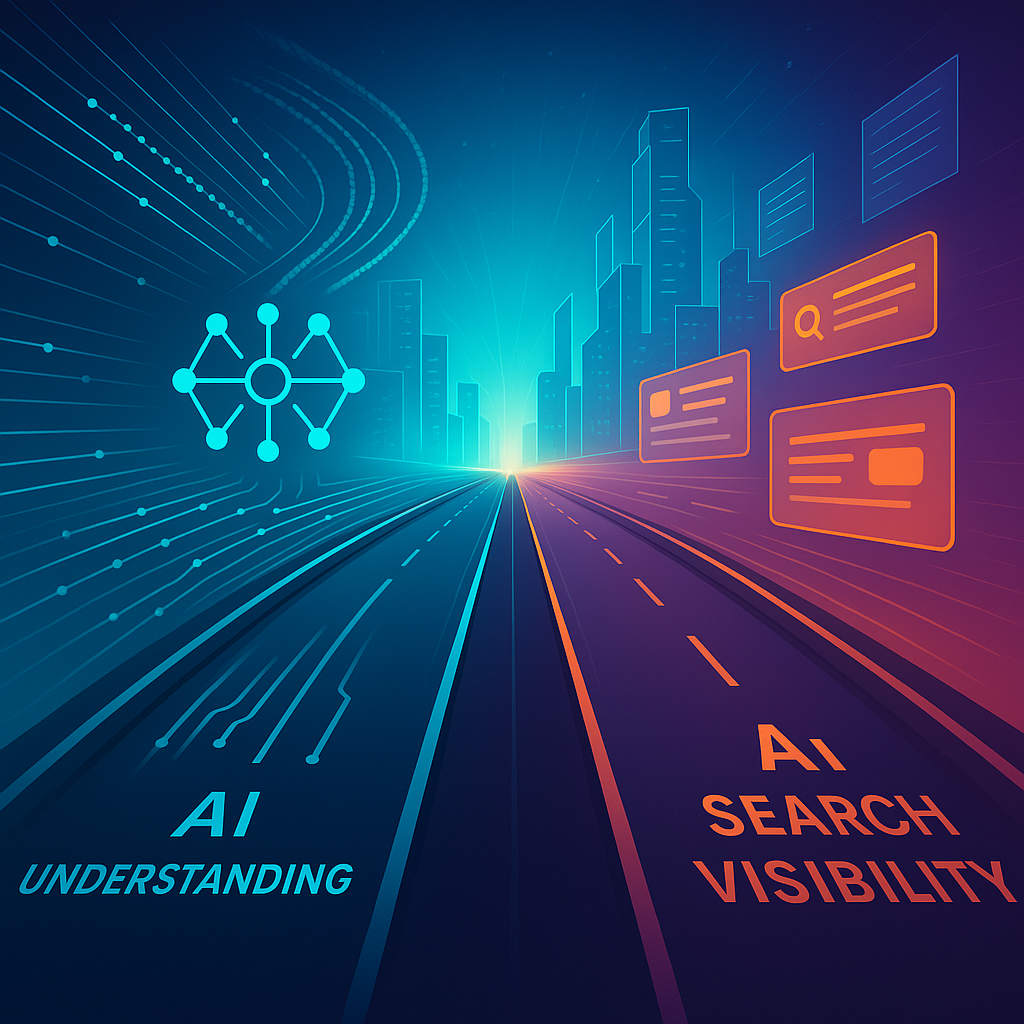
The old game was SEO. The new game has two fronts:
- LLMO — making sure AI assistants understand and can use your content.
- GEO — making sure AI search engines find, trust, and cite your content.
LLMO - Teaching the AI to Read You Right
When an AI reads your content, it’s not squinting at fonts and colours, it’s chewing on the structure, the relationships between ideas, the context you’ve given, and the clarity of your language.
The trick here is to talk to machines the way they process the world.
That means:
- Structure beats fluff — headings, clean sections, explicit relationships between ideas.
- Context is oxygen — tell the AI exactly who you are, what you do, and why it matters in the content itself, not buried three clicks away.
- Entities matter more than keywords — "solar panel financing in South Africa" is one thing; making sure the AI understands you’re an authority on "renewable energy finance" is another.
If you’ve ever had your words misunderstood in a game of broken telephone, you know why LLMO matters. Without it, the AI’s “summary” of your brand might be wrong, incomplete, or bland.
GEO - Winning the Generative Search Lottery
Generative search is different. Here, the AI isn’t just understanding your content, it’s choosing whether to include you when it composes an answer.
This is where:
- Structured data and schema are your backstage pass, they feed the search engine extra facts it can trust.
- Entity-based optimisation makes sure you’re connected to the right topics, people, and places in the AI’s knowledge graph.
- Trust signals like author bios, citations, and consistent branding increase your odds of being selected.
Think of GEO as campaigning for a spot in the AI’s “answer cabinet.” If you don’t show up, someone else will.
The Practitioner's Mindset
The danger is thinking these are two separate worlds. In reality, they’re a chain reaction:
- LLMO ensures the AI can understand you.
- GEO ensures the AI wants to show you.
Skip the first, and you’re misunderstood. Skip the second, and you’re invisible.
The internet used to reward the loudest. Now, it rewards the most machine-legible and most trusted.
So, What Do You Do on Monday Morning?
- Audit your top content as if you were an AI — can you tell what it’s about without human inference?
- Add structured data wherever you can — it’s the nutrition label for machines.
- Connect your brand to the right entities — industry, geography, people, products, across every mention.
- Track not just traffic, but AI visibility — are you showing up in AI summaries, not just search results?
Because here’s the kicker: in this new city, your sign on the street matters less than the whispers passed between machines. And you need to be in those whispers, loud and clear.





