Marketers love frameworks. Funnel models, loyalty pyramids, 4Ps, 7Ps, 27Ps. But the brutal truth, from Byron Sharp's How Brands Grow, is this: brands grow by reaching more people, more often, in more situations.
That's it. Simple physics. Yet CMOs keep trying to "outsmart" it.
The Two Levers That Actually Matter
At its most stripped-down, brand growth depends on:
- Mental availability – Will people think of you when they need the category?
- Physical availability – Can they find and buy you, easily, when they decide?
That's the whole game. If either lever is weak, your growth stalls.
Why CMOs Drift into Complexity
Why do smart CMOs forget this? Because complexity feels like control.
- Segmentations make us feel we've mastered the consumer.
- Loyalty dashboards make us feel our "core base" is safe.
- Fancy targeting tools promise efficiency.
But none of that breaks the maths: most buyers are light buyers. They don't care deeply about you. They buy you occasionally, among others. Growth comes from reaching more of them, not coddling your superfans.
The Illusion of Loyalty
Loyalty feels like a warm blanket. But it's mostly an illusion created by penetration. Big brands look "loyal" because they're bought by many people, often. Small brands look "disloyal" because they're bought by few.
The mistake CMOs make: spending disproportionate budgets on CRM, loyalty apps, and VIP clubs for a small base, while neglecting the bigger pool of casual, light, occasional buyers who actually drive share.
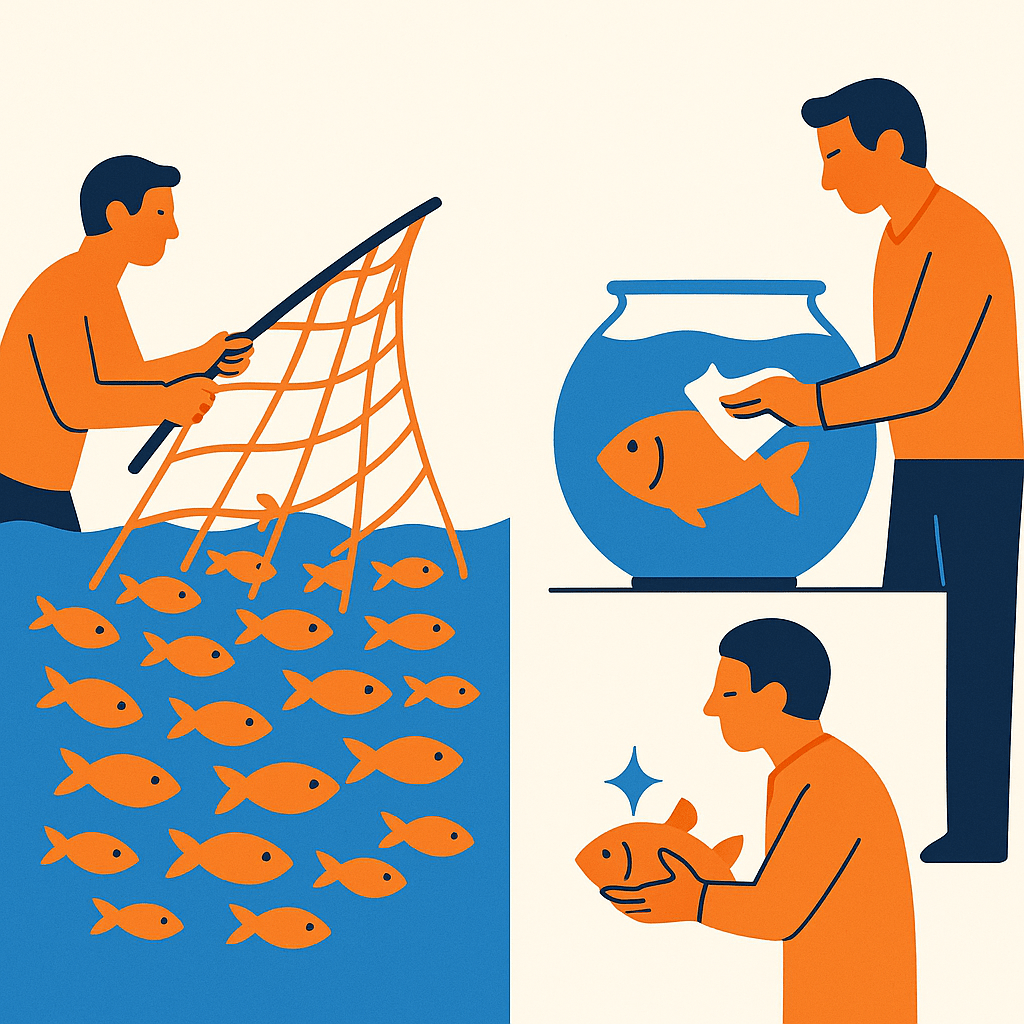
A Simple Analogy: Fishing Nets vs Fishbowls
- Fishing net strategy (penetration): Cast wide, catch more fish.
- Fishbowl strategy (loyalty): Polish the same few fish over and over.
Most CMOs secretly prefer the fishbowl. It feels safer. But it ignores the ocean of growth.
What CMOs Should Do Tomorrow
- Audit your spend. How much goes to mass reach vs "deep" loyalty plays? If it's tilted to loyalty, you're starving your future.
- Build memory structures. Consistency in assets, colours, sounds, taglines, is how you stay mentally available. Distinctiveness pays more than novelty.
- Check physical friction. Are you as easy to buy as your biggest rival? If not, stop building campaigns and fix the shelf first.
- Redefine success metrics. Celebrate penetration gains, not vanity loyalty KPIs.
Bottom Line
Brands don't grow by magic or by "community management." They grow because more people buy them, more often, in more situations.
As CMO, your job is to make your brand easy to remember and easy to buy. Everything else is expensive decoration.





