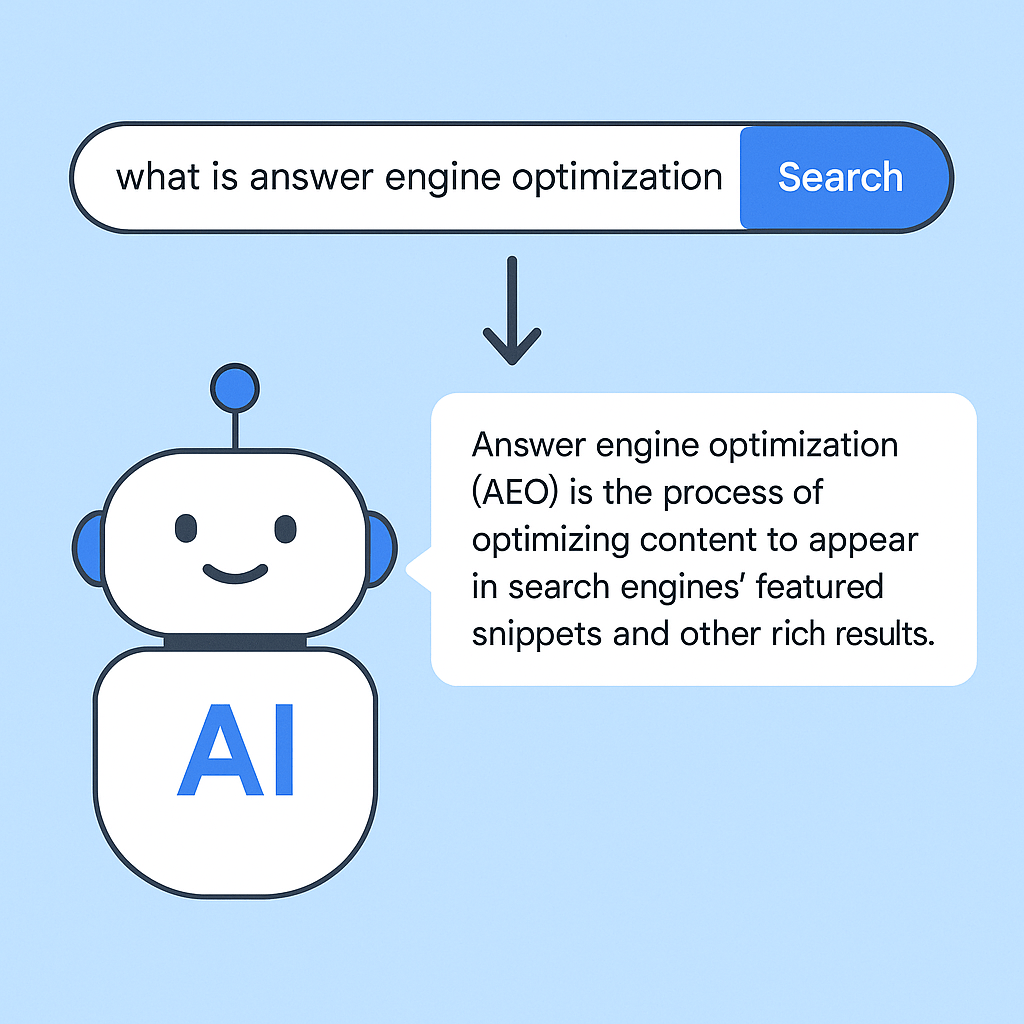
Everyone wants to "rank #1 on Google," but the ground under SEO is shifting. Search engines are no longer just lists of links; they are answer engines. Google, Bing, and now AI-powered search assistants (ChatGPT, Perplexity, Gemini) don't just index pages, they summarise, infer, and serve answers directly.
That's where Answer Engine Optimisation (AEO) comes in. It's still SEO at its core, but tuned for a world where searchers ask questions conversationally and expect an immediate, trustworthy answer, often without ever clicking through.
Automatic SEO as the Baseline
Before you can play the AEO game, you need your automatic SEO foundations rock-solid. Think of them as hygiene factors:
- Titles and meta descriptions that are concise and keyword-rich.
- A single H1 that nails the intent of the page.
- Structured data (JSON-LD schemas) to make your content machine-readable.
- Semantic HTML that clarifies relationships between headings, paragraphs, and lists.
- Lazy-loaded, compressed images with keyword-aware alt tags.
- Lighthouse-driven page speed checks that keep Core Web Vitals in the green.
If your platform (like Acalytica) bakes these in automatically, every new page starts life “AEO-ready.” No tinkering required.
The AEO Layer: What Machines Really Care About
AEO is about teaching algorithms the meaning of your content, not just sprinkling in keywords. That means:
- Entity-First Writing: Search engines and LLMs think in terms of entities (people, brands, places, concepts). Every page should tie itself to clear, disambiguated entities from Google's Knowledge Graph.
- Question-Answer Format: Content structured around FAQs, how-tos, and definitions increases the chance of being pulled into AI Overviews and featured snippets.
- Schema Everywhere: FAQs, products, events, reviews, schema markup is like giving the machine a cheat sheet.
- Content Compression: Answers should be concise enough to be quotable, but deep enough to show authority when expanded.
- Trust Signals: Social proof, citations, and clear authorship all increase the likelihood of your answer being surfaced in AI responses.
Where SEO said: "Be the most relevant result," AEO says: "Be the most quotable answer."
Page Speed Meets AI Readability
It's not just about human patience. Fast, mobile-first pages with clean code are easier for crawlers and AI scrapers to parse. If Lighthouse gives you 90+ on performance and SEO, you're also signalling to AI engines: this page is fresh, clear, and trustworthy.
The Future: Autonomous Pages
The natural endpoint? Pages that optimise themselves in real time. Imagine:
- Your titles adjust dynamically to trending search queries.
- Schema updates automatically as you publish new FAQs or events.
- Analytics feed into content rewrites, ensuring your answers always match the latest questions people ask.
Platforms that make this the default aren't just building websites. They're building always-optimised, AEO-ready answer hubs.
Bottom Line
SEO got you discovered.
AEO gets you quoted.
In the AI search era, the prize is not a blue link but a place in the machine's answer. Automatic SEO features make sure you don't miss the basics. AEO ensures your brand's voice is heard in every AI-powered response that matters.





