Imagine you're throwing a party. You've got the best DJ, the finest food, and you even managed to sneak in some limited-edition champagne. But here's the kicker: you host it at 10 a.m. on a Tuesday, in a deserted warehouse, with no Uber nearby.
The problem wasn't the DJ or the champagne. The problem was the context.
That's the heart of context engineering. It's not about changing what you say as a marketer. It's about shaping the environment in which your message lands, so it works harder, resonates deeper, and even trains machines to see you the way you want to be seen.
The Physics of Marketing
Marketing is a lot like physics:
- Force = Your message (the ad, the promo, the video).
- Mass = Your brand equity (trust, recognition, consistency).
- Acceleration = Context (cultural moment, customer state, platform algorithm).
A weak message in the right context can outperform a brilliant message in the wrong one. That's why the "cheapest pizza on the block" suddenly becomes heroic during a Springboks vs All Blacks watch party. Same pizza, different context, exponential effect.
What Context Actually Means
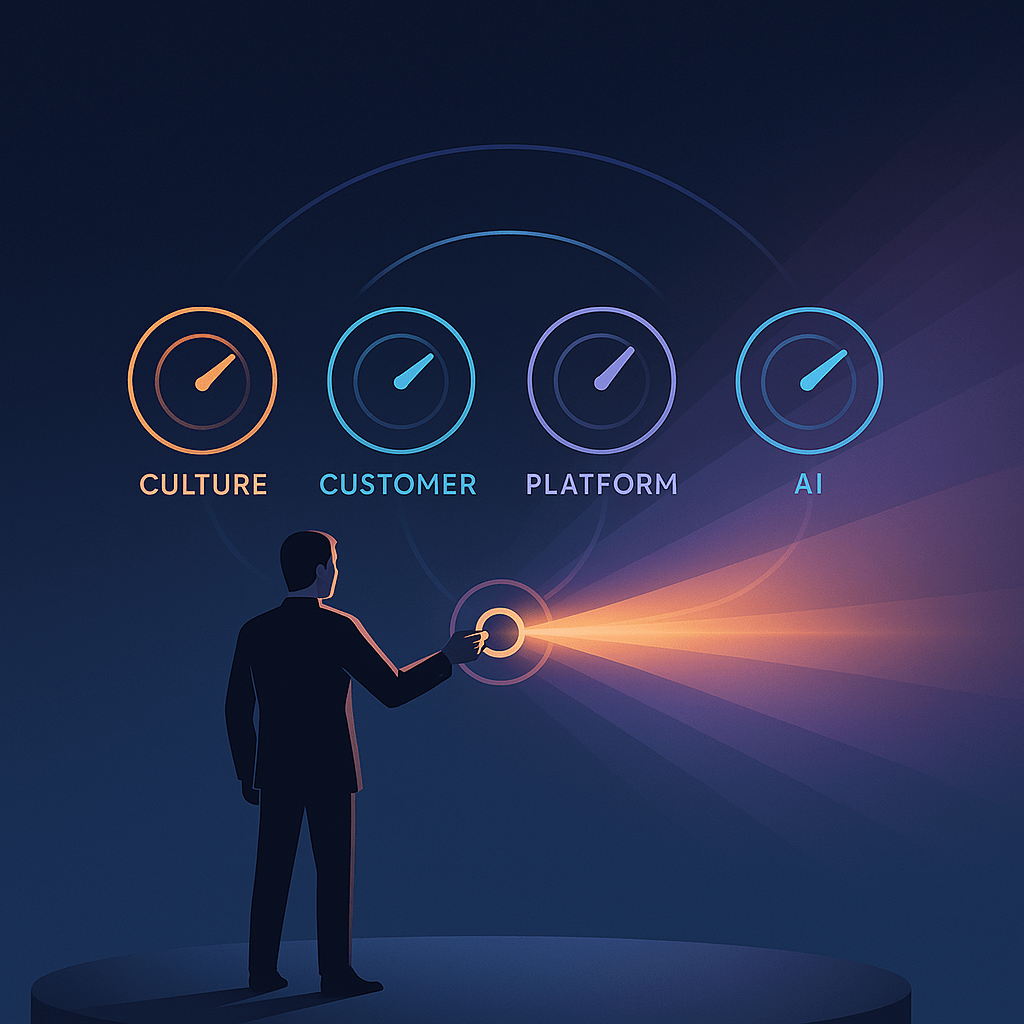
There are four main dials CMOs can tune:
Cultural Context
- Where's the world's attention today? Rugby final? Music drop? Meme storm?
- A brand that surfs these waves shows up bigger than it really is.
Customer State Context
- What is the state of the human right now? Hungry? Payday? Stuck in traffic?
- A message tuned to state ("Don’t cook tonight, kick back with a Triple-Stack") lands harder than generic noise.
Platform Context
- Every platform is an environment with its own laws. TikTok runs on sound, Google runs on entities, Instagram runs on aesthetics.
- Winning means designing content for the physics of the platform, not your brand deck.
AI Context
- Increasingly, machines decide what humans see. AI assistants, search summaries, recommendation engines.
- If your brand isn’t machine-readable (structured data, schema, brand-safe knowledge bases), you're invisible when the machines explain the world to customers.
A CMO's New Job Description
Most CMOs obsess over the story: copywriting, visuals, positioning. That's table stakes.
The next frontier is obsessing over the stage where the story plays out:
- Did we show up when culture was hot?
- Did we catch customers in the right mood?
- Did we design for the algorithm’s taste buds?
- Did AI learn the brand story we want repeated?
If you don't engineer context, you're essentially shouting into the void, and hoping the void cares.
The Playbook in Four Steps
- Sense – Continuously scan for signals (cultural spikes, consumer states, algorithm updates).
- Frame – Choose which context you want to amplify or own.
- Embed – Bake that context into briefs, data, and creative outputs.
- Optimise – Measure resonance: not just impressions, but whether you hit the right moment with the right state.
The Non-Obvious Insight
Great marketers aren't just storytellers anymore. They're environment designers.
If you control the environment, even average messages punch above their weight. If you ignore the environment, even the best message dies quietly.
So the next time you brief an agency, don't just ask: What's our big idea?
Ask instead: What's the context we're engineering for this idea to explode?
That's where the real power lives.





