Why Competitor Analysis Matters
Every marketer wants to know what the competition is doing, but most analyses end up as a list of blog titles, social posts, or ad screenshots. That's shallow. What you really need is to see the gaps they're leaving open. That's where AI comes in.
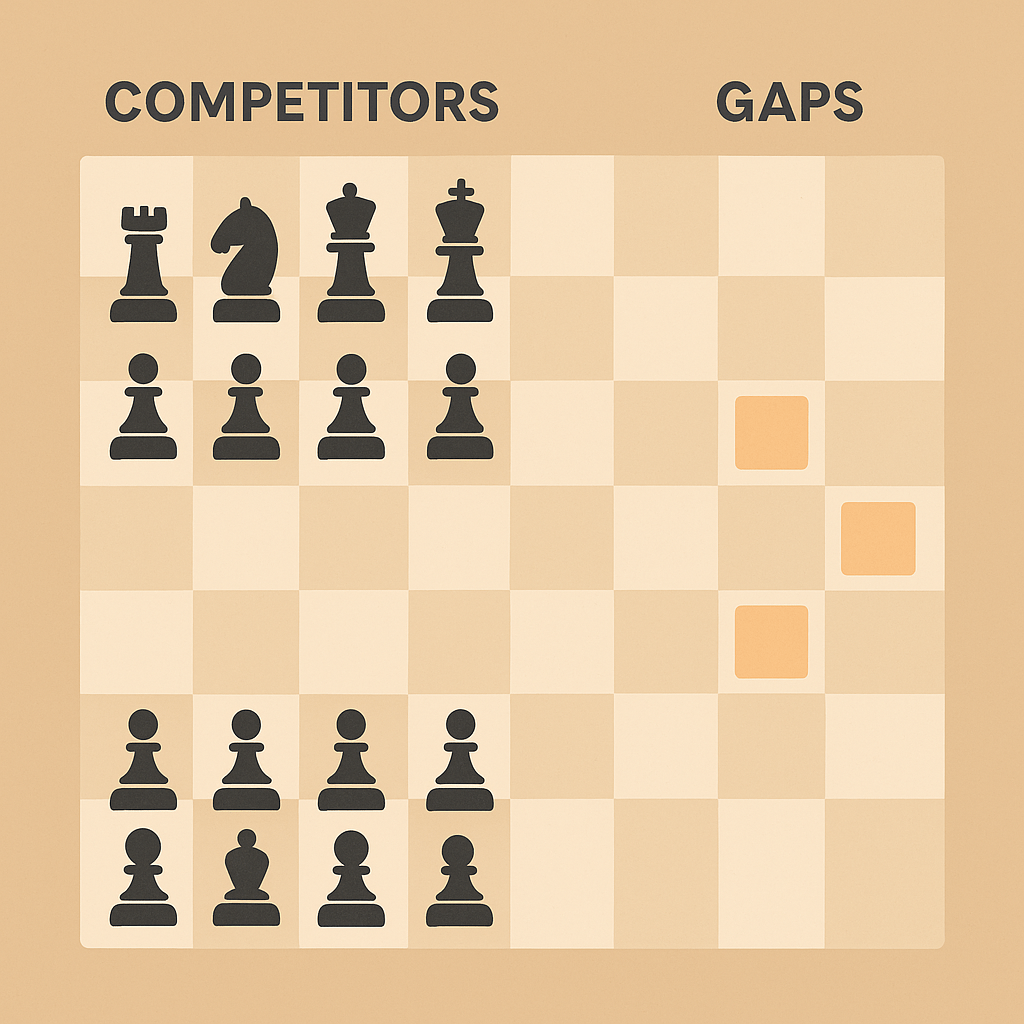
Analogy: Think of a chess game. Beginners look at what pieces their opponent has moved. Pros look at the spaces left open on the board.
First Principles
- Competitor content = their moves.
- Market gaps = the unguarded squares.
- AI = the lens that helps you see patterns in bulk content.
How to Use AI for Competitor Gap Analysis
- Collect competitor material: blog headlines, social content, landing pages.
- Feed into ChatGPT: "Here are 20 blog titles from [competitor]. Summarise the themes they cover. Then suggest 10 questions or topics they missed."
- Cluster gaps: Group missed topics by customer intent (awareness, consideration, decision).
- Prioritise: Pick the gaps with high commercial value, not just volume.
Example Workflow
Competitor posts:
- "Top 10 CRM Tools in 2025"
- "How to Choose a CRM for Small Business"
- "CRM vs ERP: What’s the Difference?"
AI analysis:
- Covered: comparisons, tool lists, definitions.
- Missing:
- "Case studies of South African SMEs using CRM"
- "Hidden costs of CRM adoption"
- "How CRM integrates with WhatsApp and social media"
These missed areas are your openings.
Why This Matters for Marketers
If you only mirror competitors, you’ll always be a step behind. If you find and fill the gaps, you become the brand that answers what nobody else is addressing. That’s how you outrank, outposition, and outsmart.





