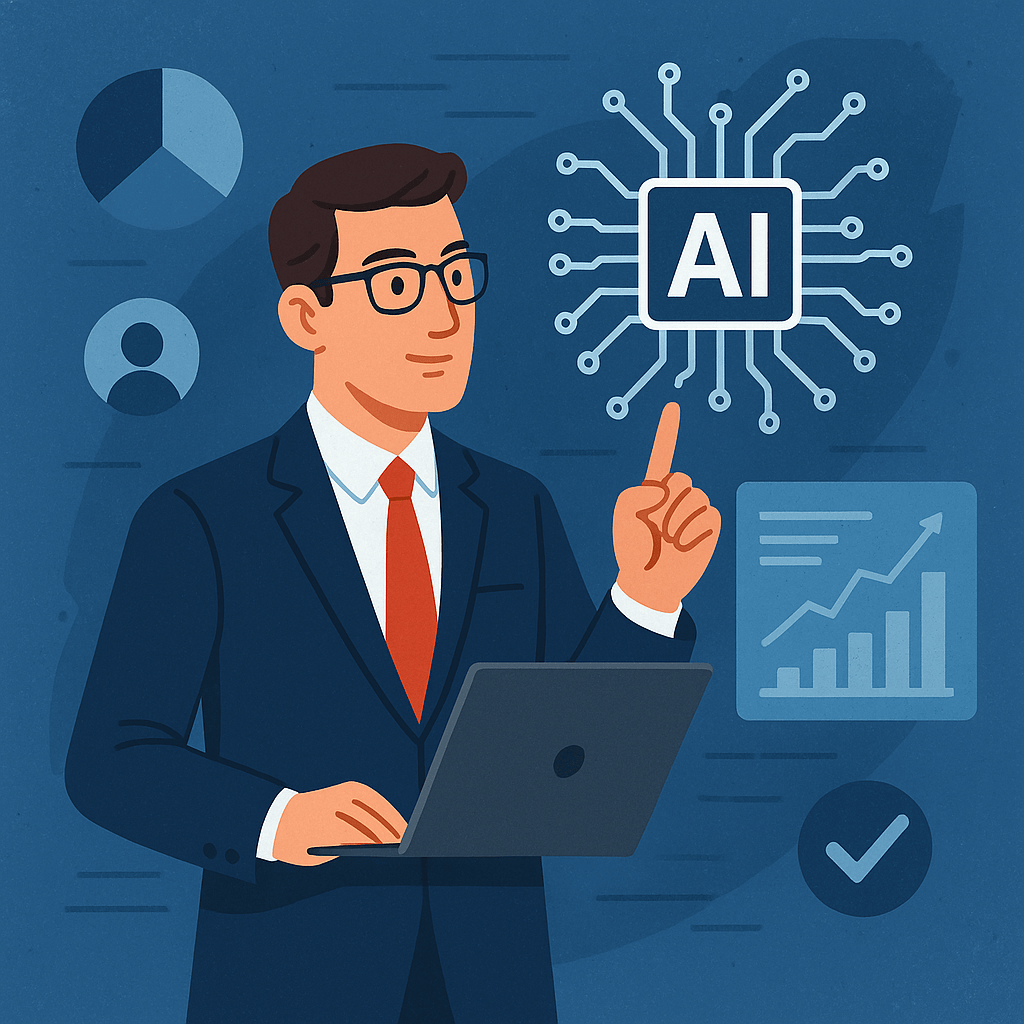
When people hear “AI in marketing,” they imagine machines spitting out copy or dashboards that magically predict the next customer to buy. That’s automation, not intelligence. AI fluency begins when marketers stop treating these systems like vending machines and start treating them like thinking partners.
The Real Subject: Understanding, Not Using
Most marketers see AI as a new set of tools. But fluency is about building a mental model of what AI can and cannot do. It’s like learning economics, not to balance books, but to think in trade-offs and incentives. In this case, you learn how information, uncertainty, and data shape marketing outcomes.
AI doesn’t “know” anything. It spots patterns in data and predicts what fits next. A fluent marketer recognises this and frames problems in ways that match AI’s strengths. You don’t ask for miracles; you structure questions to get measurable lift.
Data as Behaviour, Not Numbers
AI doesn’t see humans; it sees distributions. A marketer fluent in AI knows that a spike in engagement or a drop in click-throughs isn’t “good” or “bad”, it’s a shift in underlying behaviour. The goal is to model causality, not correlation. You ask: What changed in context? not What happened to the metric?
Predictive models are only as useful as the causal thinking behind them. Without that, marketers chase noise. With it, they discover leverage.
The Machine as Mirror
AI systems reflect your own assumptions. Feed them vague prompts and you’ll get vague thinking back. Fluency means learning to use the machine as a mirror, to test your framing. Each prompt is an experiment: you adjust language, tone, data, and constraints until the output clarifies your own reasoning.
The tool isn’t replacing judgment; it’s amplifying feedback speed. The better your questions, the more the model reveals your blind spots.
Risk and Responsibility
Financial services marketers operate in a regulated space where trust is currency. An AI that personalises too aggressively or hallucinates numbers can erode that trust instantly. Fluency means knowing where the risks live: bias, opacity, data privacy. These aren’t “compliance issues.” They’re economic ones. A brand that loses credibility pays a premium in customer reacquisition.
AI fluency turns ethics into a design principle, not a policy clause.
Integration, Not Replacement
AI is additive. The marketer’s intuition, experience, and narrative sense are irreplaceable. Machines compress time; humans connect meaning. The real advantage emerges when both work in sequence, AI to scan possibilities, humans to decide which matter.
An AI-fluent marketer doesn’t fear automation. They see it as bandwidth expansion, freeing time to think about strategy instead of spreadsheets.
Continuous Recalibration
Fluency decays fast. Models update, APIs change, regulations tighten. You don’t master AI; you maintain it, like fitness. Staying fluent means ongoing curiosity, testing tools, reading system cards, questioning assumptions. The marketer who stops learning becomes the dataset, not the analyst.
Core Idea
AI fluency is not about tools or trends. It’s the discipline of reasoning in probabilities, acting through evidence, and using machines to sharpen, not substitute, human judgment.





