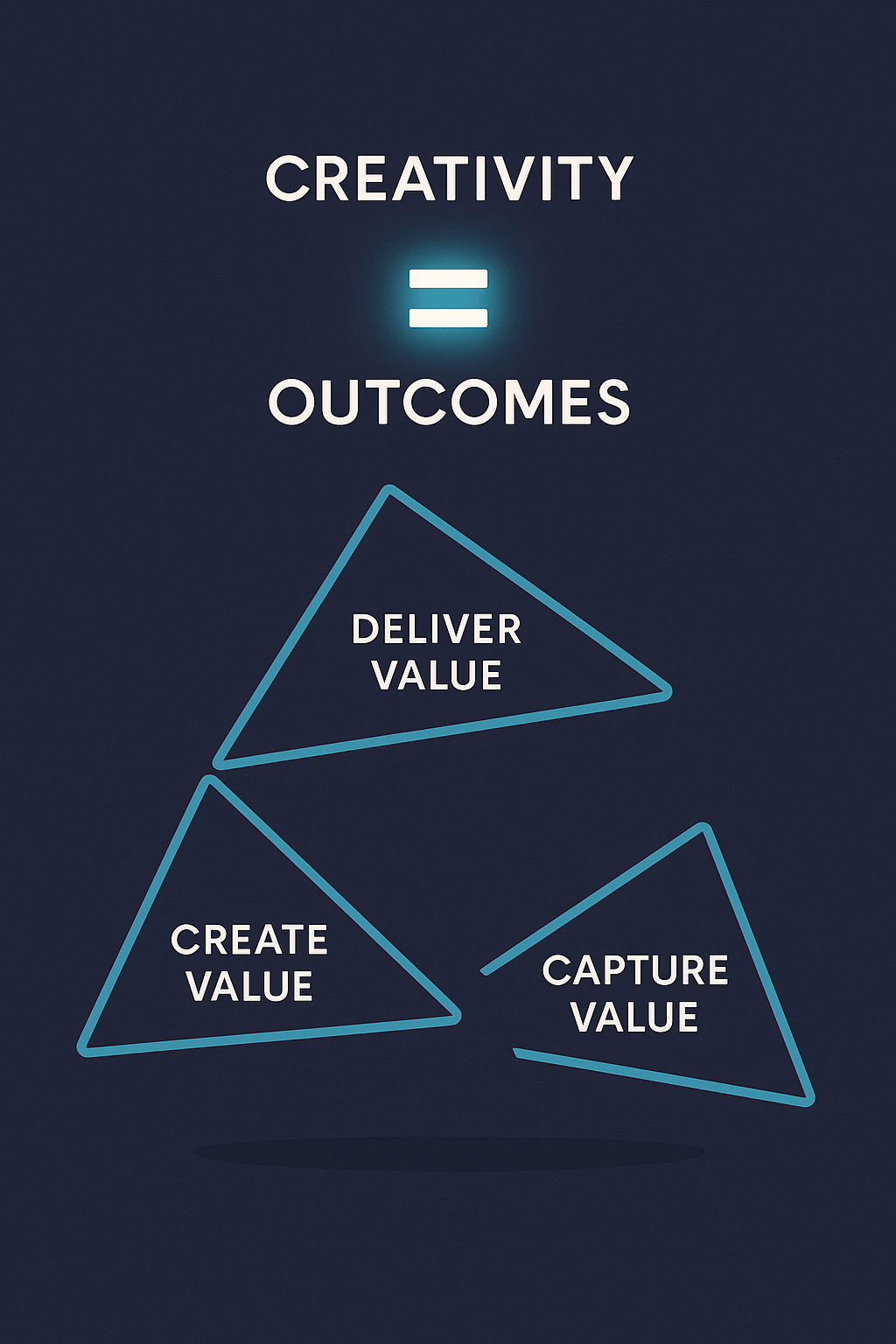
The Problem in Plain Words
Let's start with something obvious but rarely said out loud:
The creative industry is broke, not because it lacks talent, but because it lacks a commercial model.
Agencies are full of brilliant people who can design, write, film, code, and invent ideas that move culture. Yet when it comes to making money, most agencies default to a 200-year-old factory logic:
"Value = time + effort + process."
That equation might work in construction or plumbing, but it kills creativity. It traps creative work inside hours and rates instead of outcomes and impact.
Creativity Priced Like Plumbing
Imagine you hire a plumber. He fixes your leak in 30 minutes and charges you R500. You might complain: "But it only took you half an hour!" The plumber replies:
"You're not paying me for 30 minutes, you're paying for the 20 years it took to learn how to fix it in 30 minutes."
That’s fair for a plumber. But agencies? They flipped the logic. They say:
"We'll charge you more because it takes us longer."
If a campaign takes 500 hours, you get a big invoice. If a brilliant idea lands in 5 minutes, you bill less. The industry literally punishes efficiency and rewards slowness.
The Hidden Cost of the Wrong Equation
By pricing creativity as effort, agencies have:
- Commodified themselves – Every agency sells "strategy hours" and "design hours." It's like 100 restaurants all serving the same buffet. Clients shop on price, not taste.
- Lowered their valuation – Service businesses trade at 6-9x profit. Businesses with products, programs, or platforms trade at 12-18x. Same creativity, different packaging, double the value.
- Lost their confidence – Agencies now measure success by how "busy" they are, not by the impact of the ideas.
In other words, the creative industry chained itself to a broken model and then wondered why margins shrank and clients treated them like vendors.
What's Really Missing: A Commercial Model
A commercial model answers one simple question:
"How do we create, deliver, and capture value in a way that sustains us?"
Right now, most agencies don't have one. They have a costing model:
- Count hours.
- Apply rates.
- Send invoice.
That's not commercial. That's accounting.
A proper commercial model would:
- Start with outcomes (what business result the client gets).
- Design value-based pricing (charging for results, not inputs).
- Ensure the agency captures its fair share of the value it creates.
A Simple Analogy: The Lemonade Stand
Think of a kid running a lemonade stand.
- Costing model: "It cost me R10 for lemons, R2 for sugar, and 10 minutes of work, so I'll charge R15."
- Commercial model: "It's a hot day, you're thirsty, and this lemonade makes you feel refreshed. It's worth R30 to you."
Same lemonade. Different model. One survives, the other folds.
Agencies are stuck in lemonade-stand thinking. They’re tallying sugar and lemons when they should be selling refreshment and relief.
Why This Matters Now
Brands are screaming for new commercial models. They’re tired of endless pitches, bloated time-sheets, and paying for process instead of results.
At the same time, agencies feel squeezed. Staff burnout rises. Talent walks out. Margins evaporate. The system isn't just creaking, it's collapsing.
If creativity is humanity's last unfair advantage, why is the business of creativity so… unimaginative?
The First Principle Shift
To fix this, the industry must start from first principles:
- Value is not effort. Effort is internal. Value is external.
- Value lives in the client’s hands. Not in your studio, not in your process, but in the results they achieve.
- Value should be priced as outcomes. If your idea drives R100m in sales, why are you charging R200,000 in hours?
The Path Forward (in Simple Steps)
- Kill the hours-to-value equation. Stop treating time as the measure of creativity.
- Reframe the offer. Package creativity as outcomes, not services. Name and price for what the client gains, not what you do.
- Build a real commercial model. Decide how you create, deliver, and capture value in a way that scales.
The Irony
The world’s most imaginative industry has been the least imaginative about its own business. Agencies invent billion-dollar campaigns for brands but can't invent sustainable models for themselves.
That's the paradox. And that’s why the creative industry is broke.
Closing Thought
If you remember nothing else, remember this:
Agencies don't have a money problem. They have a model problem.
And fixing it doesn't require more pitches, more hours, or more hustle. It requires rethinking the equation of value itself.
Because once creativity stops being priced like plumbing, it can finally be valued like the superpower it truly is.





