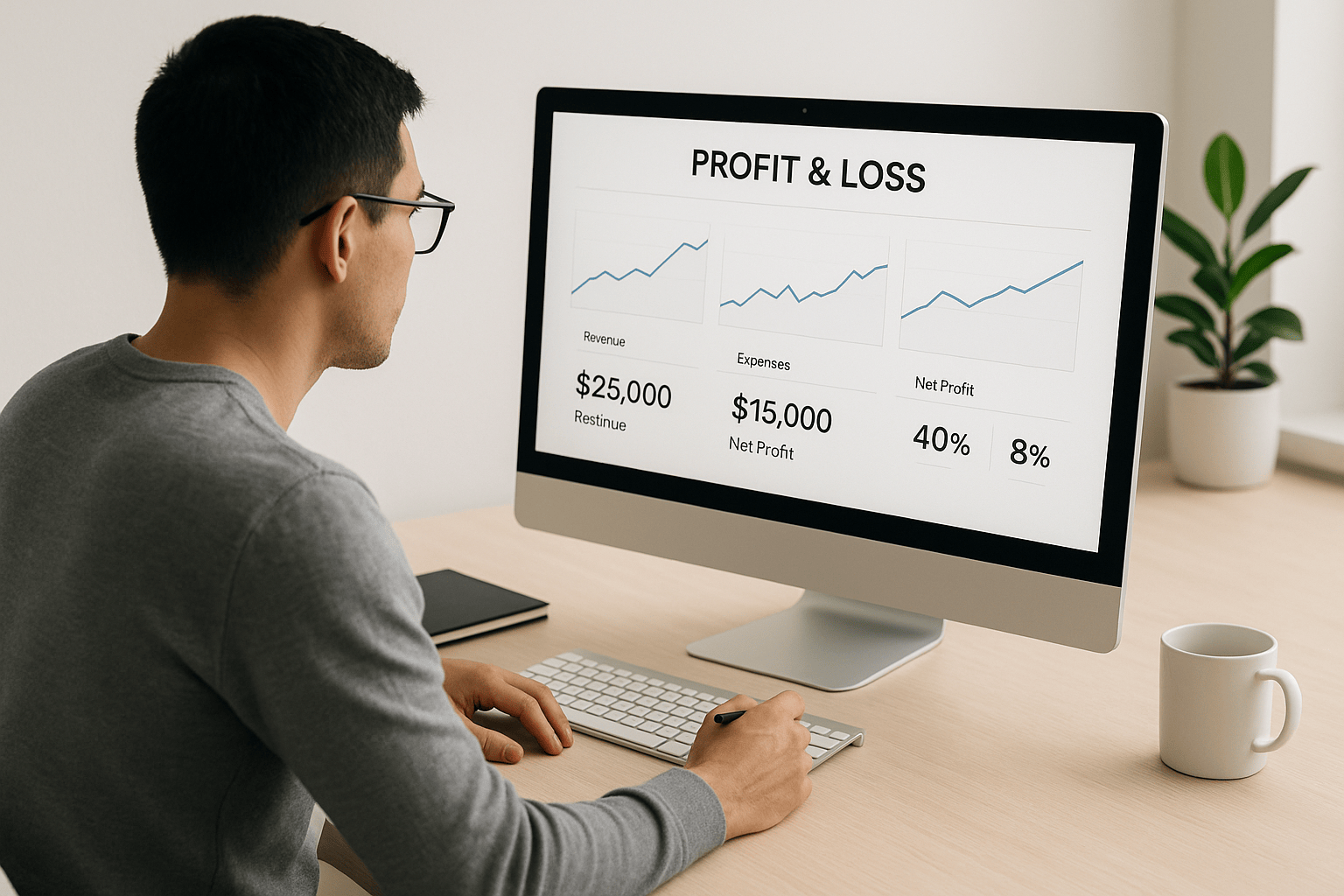
Most founders love the idea of growth but avoid the language of numbers. That's fatal. A Profit and Loss (P&L) statement isn't accounting trivia, it's the operating system of your business. If you can't read it, you can't lead it.
The P&L is the Mirror of Reality
Your marketing campaigns, sales calls, and product launches all end up reflected in one document: the P&L. Revenue shows whether people value what you're selling. Cost of Goods Sold shows what it takes to deliver that value. Operating Expenses expose whether your structure is efficient or bloated. When read correctly, a P&L tells you what’s actually happening beneath your optimism.
It Enforces Causal Thinking
A founder fluent in financials starts to see causality. A spike in marketing spend increases lead volume, but what happens to gross margin? A hiring spree may grow capacity, but what’s the impact on operating profit? Managing a P&L transforms gut feeling into measured cause-and-effect. You stop guessing and start optimising.
It’s the Survival Dashboard
Cash doesn't lie. Every business that fails does so because it runs out of cash or time. The P&L, paired with a cash flow statement, reveals your runway. Knowing your break-even point and fixed vs variable cost structure is what separates survival from shutdown.
It's the Investor’s Lie Detector
When investors ask for your P&L, they're not looking for pretty formatting. They're checking whether you understand the economic engine you’re building. A founder who can explain their gross margins, customer acquisition costs, and EBITDA trends earns instant credibility. Numbers are the universal investor language.
It's the Source of Leverage
Every improvement, reducing churn, negotiating supplier terms, or pricing smarter, shows up in the P&L. When you manage it monthly, you see how small adjustments compound into profit. The goal isn't just survival; it's control.
Minimum Financial Literacy
You don't need to be an accountant, but you must know the structure:
- Revenue: The top line, proof of market fit.
- COGS: Cost of producing or delivering the product.
- Gross Profit: The value you retain before overheads.
- Operating Expenses: Salaries, rent, marketing, admin.
- Net Profit: What’s left after everything.
You must also track ratios like:
- Gross Margin % – shows efficiency of delivery.
- EBITDA % – shows operational health.
- LTV:CAC – shows customer-level profitability.
The Principle
Entrepreneurship is applied decision-making under uncertainty. The P&L converts that uncertainty into measurable feedback. If you’re not managing it, you’re managing by mood.
Profit isn’t greed, it's proof that your system works.





