MIT just released a report showing that 95% of enterprise AI experiments fail. At first glance, it looks like a disaster. Investors panic. Executives hesitate. But the real story is more interesting: AI itself isn’t failing, companies are.
This isn't a technology problem. It's a business readiness problem.
The Wrong Game Being Played
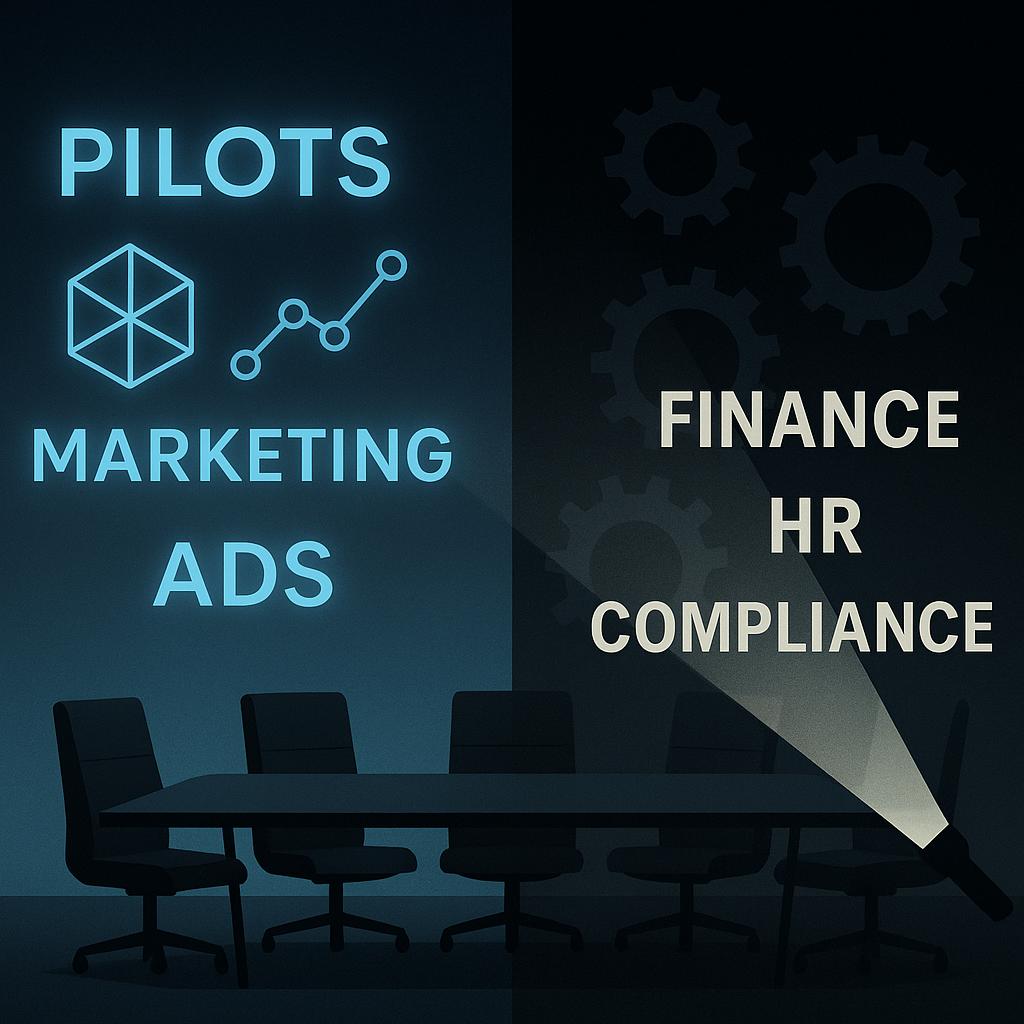
Most companies throw AI at front-end sparkle, sales campaigns, marketing experiments, flashy customer-facing pilots. It looks good in board presentations, but it rarely shifts profit and loss.
The real value is hidden in back-end operations:
- automating HR forms,
- replacing BPO processes,
- crunching invoices,
- handling compliance workflows.
These aren't glamorous, but they are high-ROI. Yet budgets flow to dazzle instead of dollars.
Why Pilots Crash
Strip away the hype and four patterns emerge:
- Integration failure – The AI isn't broken. The workflows are.
- Wrong incentives – Pilots are judged by launch, not results.
- Build bias – In-house prestige projects underperform; external tools integrate better.
- Shadow AI economy – Employees are already using ChatGPT, Claude, and Midjourney daily. Leadership hasn't caught up.
The Real Lesson
If 95% fail, what about the 5% that succeed? That's where the signal is. Those companies re-engineered workflows, integrated deeply, and measured outcomes against business value, not vanity metrics.
The risk isn't that AI doesn’t work. The risk is that executives keep funding pilots that look good but don't change operations.
What Smart Leaders Do Next
- Stop chasing applause. Focus AI on procurement, compliance, HR, and finance, where it actually saves money.
- Buy, don’t build. Specialist solutions outperform experimental in-house builds.
- Measure money, not models. The metric is cost saved or revenue gained, not "number of pilots launched."
- Listen to staff. Employees' shadow AI adoption is a roadmap, scale what they're already using.
Closing Thought
AI isn't failing. Companies are failing at using AI.
Think of it this way: you've bought the fastest engine in the world, but you’re bolting it onto a broken chassis. No wonder the car doesn't move.
The report is not a warning siren, it's a flashlight. It shows where businesses are blind: integration, incentives, and workflows. Fix those, and you'll land in the 5% that actually win with AI.





