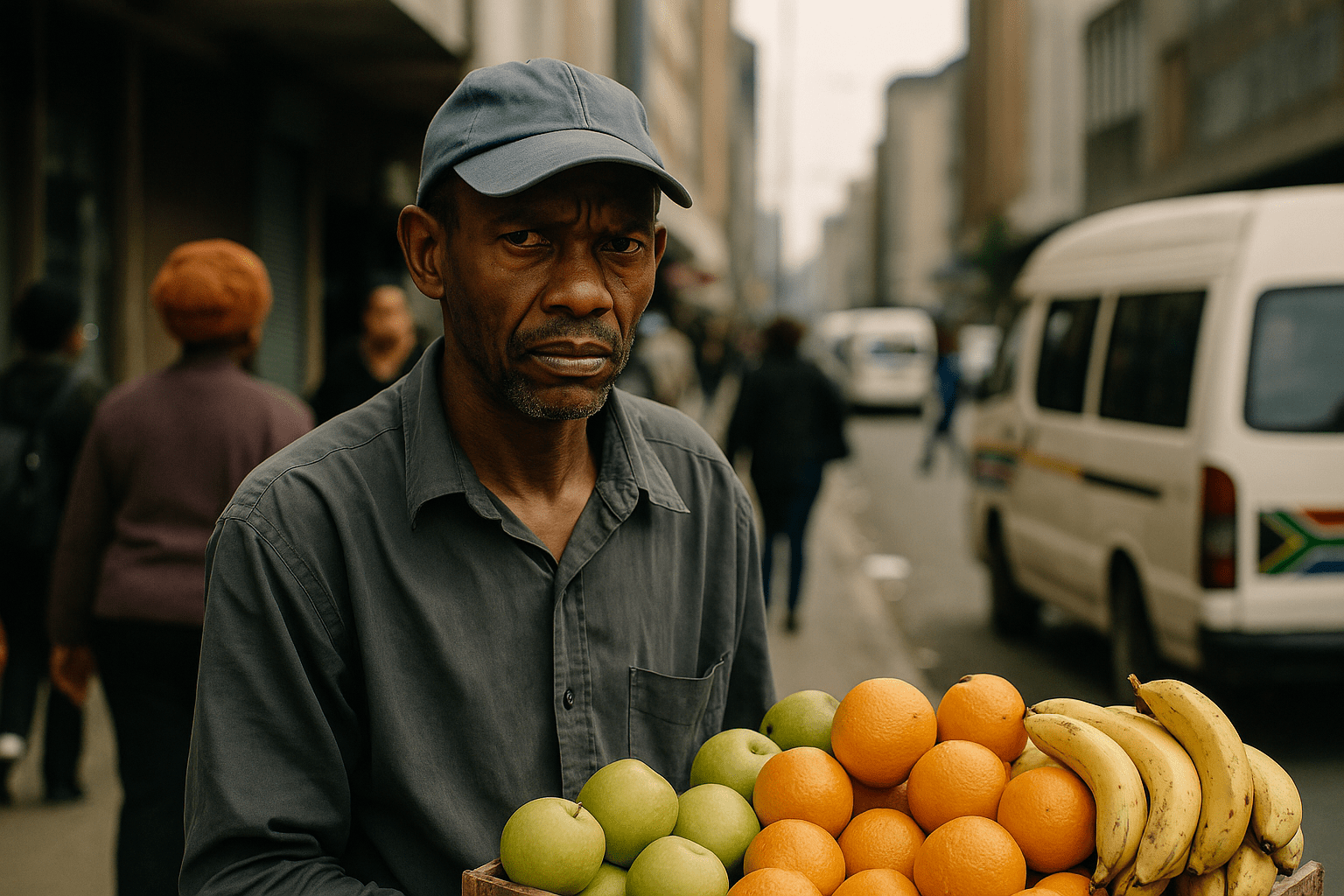
The informal economy in South Africa is a vital yet undervalued component of the country's socio-economic fabric. It encompasses a broad range of unregistered and unregulated economic activities—such as street vending, domestic work, informal manufacturing, and small-scale services—that provide livelihoods for millions. Despite its significant contribution to employment and survival, particularly in low-income communities, participation in the informal sector is often accompanied by social stigma, marginalization, and structural neglect. This article explores the roots and consequences of the stigma attached to the informal economy in South Africa, as well as policy implications for inclusive development.
The Informal Economy: Scope and Significance
According to Statistics South Africa, as of 2024, the informal sector employs approximately 5.1 million people, representing around 32% of total employment in the country. It plays a critical role in poverty alleviation, food security, and economic resilience—especially during periods of economic downturns or crises such as COVID-19.
However, the informal economy remains largely excluded from formal policy frameworks, lacks social protections, and is rarely integrated into mainstream economic planning. This exclusion reinforces negative societal perceptions that participants in the informal sector are either "unproductive", "illegal", or "untrustworthy."
Origins of the Stigma
1. Colonial and Apartheid Legacy
The roots of informal economy stigma can be traced back to colonial and apartheid-era policies that criminalized informal trade among black South Africans. The 1950s influx control laws and pass laws sought to restrict black enterprise, relegating most economic activity to subsistence levels. This historical criminalization has left a deep cultural residue, where informal work is still viewed as inferior or illegitimate.
2. Formalization Bias in Economic Policy
Post-apartheid development models have prioritized formalization and corporate growth, often at the expense of recognizing informal sector dynamics. Many policymakers and economists continue to equate formality with productivity and informality with disorder. This bias creates a hierarchy of labor, where formal jobs are valorized, and informal work is seen as a fallback or failure.
3. Urban Governance and Spatial Marginalization
In urban planning, informal traders are frequently viewed as nuisances—cluttering public spaces, lacking hygiene, or attracting crime. Local governments have historically responded with evictions, fines, and spatial exclusion rather than inclusion and infrastructure support. This treatment fuels public perception that informal traders are undesirable actors in the urban economy.
Effects of Social Stigma
1. Low Self-Esteem and Internalized Shame
Many informal workers internalize the stigma, resulting in a diminished sense of self-worth. Despite their entrepreneurial spirit and resilience, they may view their work as a temporary hustle rather than a legitimate career. This affects their willingness to invest in skill development, product quality, or market expansion.
2. Exclusion from Financial Systems
Stigma often correlates with structural exclusion from financial services. Informal workers are less likely to have access to credit, insurance, or business development support. Banks and investors may deem them high-risk, compounding their economic vulnerability.
3. Policy Invisibility and Mistrust
Social stigma also manifests in weak political representation. Informal workers’ voices are rarely heard in national debates or labor negotiations, and many distrust government due to repeated crackdowns. This invisibility perpetuates a cycle of marginalization and misrecognition.
Reframing Informality: Towards a Dignified Narrative
To dismantle the stigma surrounding South Africa’s informal economy, both public perception and policy orientation need to shift. The following approaches are crucial:
1. Recognition and Protection
Recognizing informal workers as economic contributors, not deviants, is the first step. This includes offering social protections like health insurance, pensions, and maternity benefits—even without full formalization.
2. Public Education and Media Campaigns
Shaping narratives through media, schools, and community dialogues can elevate the status of informal workers. Showcasing success stories and the everyday resilience of informal entrepreneurs can counteract stereotypes.
3. Inclusive Urban Design
Rather than criminalizing street traders, cities should provide designated trading zones, water and sanitation, waste collection, and security services. Informal does not mean unmanaged.
4. Bridging Institutions
Associations, cooperatives, and social enterprises can serve as intermediaries between informal workers and formal institutions. These structures can provide access to microfinance, training, legal assistance, and collective bargaining power.
Conclusion
The informal economy in South Africa is not a problem to be eradicated but a solution waiting to be dignified. By addressing the deep-rooted social stigma associated with informality, the country can unlock the potential of millions of micro-entrepreneurs, innovators, and community builders. A new social contract—based on recognition, redistribution, and respect—is essential for building a more inclusive and equitable economic future.
References
- Statistics South Africa. (2024). Quarterly Labour Force Survey.
- Skinner, C. (2008). The Struggle for the Streets: Processes of Exclusion and Inclusion of Street Traders in Durban. Development Southern Africa.
- Chen, M. A. (2012). The Informal Economy: Definitions, Theories and Policies. WIEGO Working Paper No. 1.
- Rogan, M., & Skinner, C. (2020). The Size and Structure of the South African Informal Sector 2008–2018. UNU-WIDER.
- Hart, K. (1973). Informal Income Opportunities and Urban Employment in Ghana. Journal of Modern African Studies.





