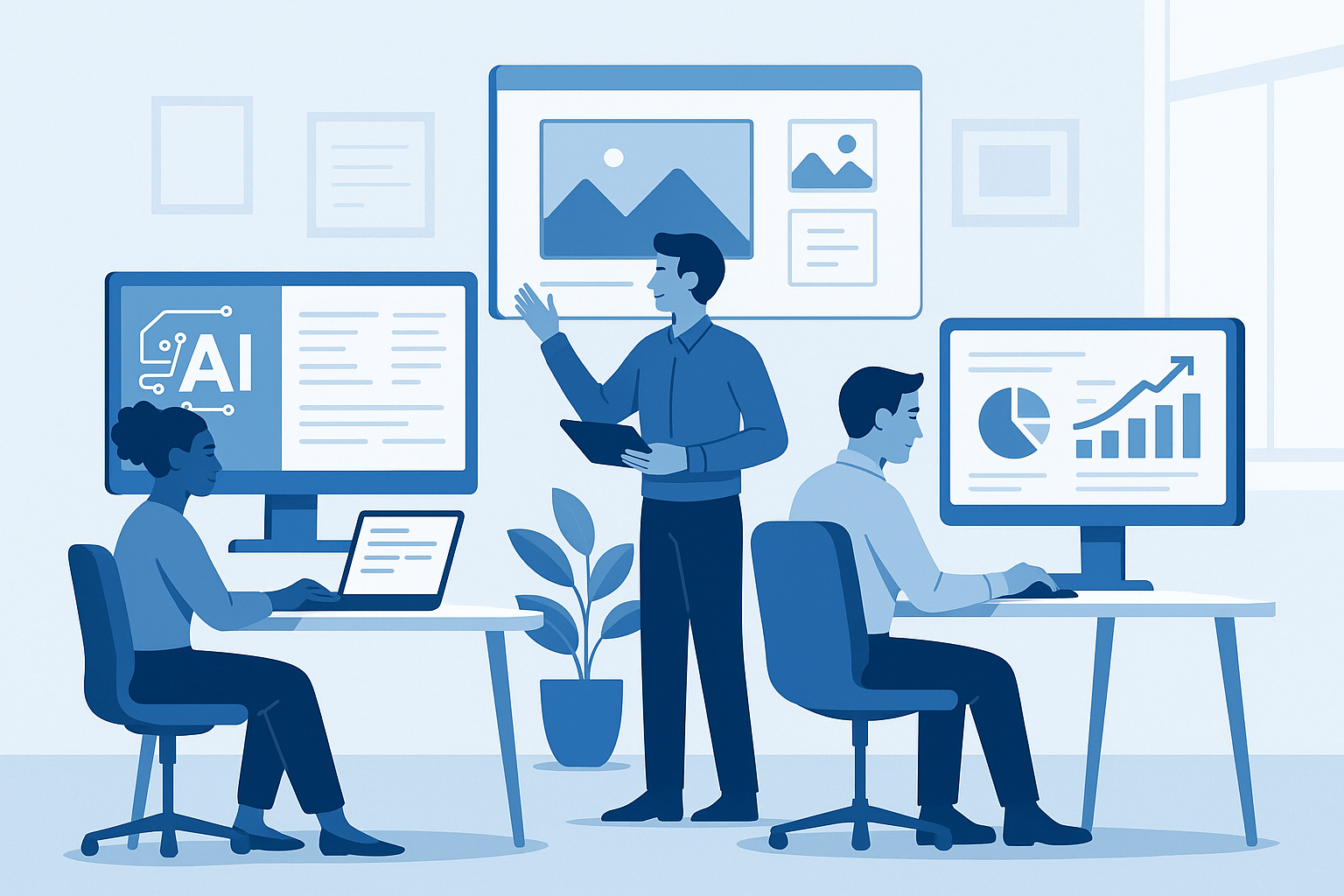
The rise of artificial intelligence in marketing has sparked a familiar tension: Will technology replace us? Or will it redefine what we’re capable of? For agencies that have chosen to embrace AI, the answer is becoming clear, human creativity and machine intelligence aren’t rivals. They’re teammates.
The most progressive agencies aren’t automating people out of the equation. They’re creating environments where people can do more strategic, more imaginative, and more human work, precisely because AI is handling the repetitive, mechanical tasks.
We’re witnessing the emergence of a hybrid agency model, where humans and machines collaborate in real time. AI is no longer a backend tool, it’s now embedded into daily workflows, working with strategists, copywriters, designers, and analysts.
This transformation isn’t futuristic. It’s already reshaping roles, redefining what "creative" means, and unlocking new value for clients.
How Roles Are Evolving in Human + AI Agencies
1. The Strategist as Systems Thinker
With AI handling research, market scanning, and data summaries, strategists are focusing on connecting dots across disciplines. They're asking better questions, framing sharper briefs, and zooming out to see big-picture patterns.
Old Value: Gathering insights
New Value: Synthesizing them into transformative action
2. The Creative as Orchestrator
AI now drafts headlines, generates images, and proposes layouts. The creative's role shifts from pure ideation to curation, refinement, and direction. Great creatives are still at the center, they’re just moving faster, prototyping more, and testing ideas in real time.
Old Value: Generating ideas from scratch
New Value: Curating, guiding, and humanizing machine outputs
3. The Analyst as Narrative Architect
Dashboards used to be the end goal. Now, AI builds those dashboards instantly. The analyst’s job becomes storytelling: explaining why the numbers matter, how to act on them, and what to do next.
Old Value: Reporting metrics
New Value: Framing strategy through data stories
Collaboration Over Replacement
In most cases, AI isn’t removing jobs, it’s removing friction.
- Less time spent formatting reports = more time for client consulting
- Fewer hours writing drafts = more bandwidth for strategic ideation
- Fewer meetings = more creative flow time
Smart agencies are actively upskilling their teams to take advantage of AI, not resist it. The result is happier talent, better work, and more scalable operations.
Real-World Example
A mid-sized agency in Cape Town recently implemented a no-code AI platform to streamline content ideation, audience segmentation, and performance reporting. The result? 3x output with the same team and the creative director reports fewer late nights and a revived focus on storytelling.
This is what human + AI harmony looks like: less burnout, more brilliance.
A New Type of Agency Culture
The most compelling shift is not in technology, but in culture. The Human + AI agency is built on:
- Continuous learning
- Experimentation over perfection
- Shared intelligence between humans and systems
It’s not about cold automation. It’s about creating the conditions where talent can thrive.
Conclusion: Augment. Don’t Replace.
The agencies that thrive in the coming years will be those that design work with AI in mind, not just for efficiency, but for expansion of human potential.
Because the future of work isn’t artificial. It’s amplified.
Ready to augment your agency’s creativity and strategy with AI?
Explore tools that empower your team:
You create. We’ll help you grow.





