In the early days of "software as a service," the big innovation was that you didn’t have to buy a box with a CD in it. You paid monthly, opened a browser, and, bam, you were in business. That was a revolution. But revolutions don’t stay fresh forever.
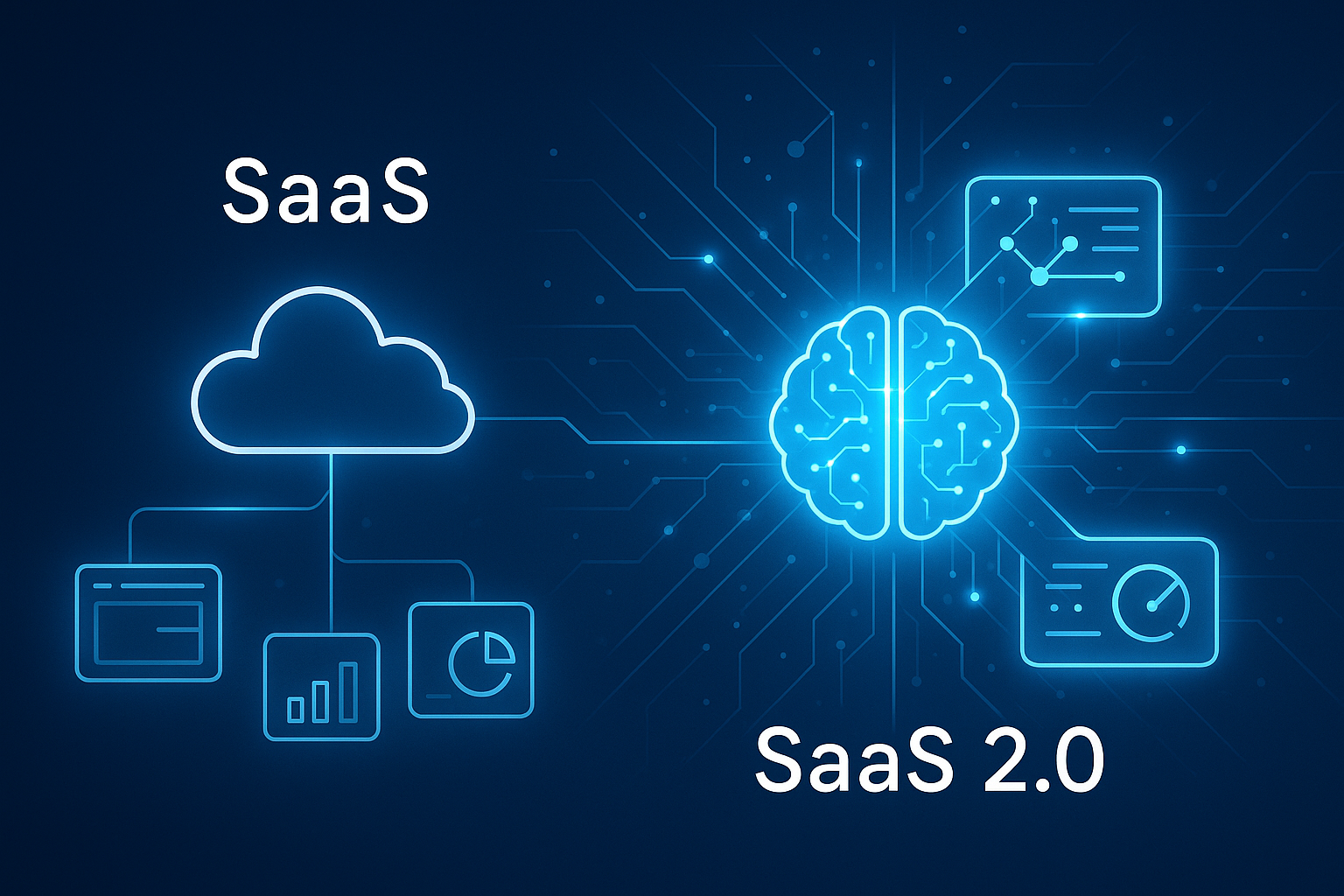
SaaS 1.0 solved the problem of where you run your software. SaaS 2.0 is about how the software runs itself.
The Old Model: Tools in the Cloud
First-generation SaaS was like renting a workshop. All the tools were neatly laid out, they worked fine, and the rent was cheaper than building your own shed. But if you wanted the saw to cut faster or the drill to fit a new kind of screw, you had to wait for the landlord to roll out "Version 2.3" months later.
The truth? The tools didn’t care about your job. They just sat there.
The Shift: Software That Adapts
SaaS 2.0 doesn’t just hand you tools, it works alongside you. It’s like hiring a helper who watches what you’re building, learns your preferences, and starts doing the repetitive stuff before you even ask.
- It spots patterns in your data.
- It nudges you before problems become disasters.
- It quietly rewrites its own playbook to get you better results.
The workshop becomes a living organism.
What Makes It Different
- It learns – Instead of static menus and settings, the system evolves. Your version isn’t my version; it’s shaped by our different needs.
- It plugs in everywhere – APIs, webhooks, and event streams make it less a “product” and more a service layer you can build on.
- It’s outcome-obsessed – The point isn’t how many features you use, it’s whether you hit your business goals faster.
- It never stops updating – Micro-improvements happen invisibly, sometimes uniquely for your account.
The Business Model Grows Up
In SaaS 1.0, you paid per seat. In SaaS 2.0, you might pay based on the value you get: sales closed, processes automated, costs saved. Or you might even share revenue when the platform’s AI-driven optimisations help you make more.
Why It’s Happening Now
Cheap cloud compute, mature AI models, and a world wired together by APIs mean the barriers to adaptive software are crumbling. Your customers now expect their tools to understand them, not just obey commands.
The Takeaway
SaaS 2.0 isn’t an upgrade, it’s a mindset shift: stop thinking about software as something you use and start thinking about it as something you work with. In the future, the winners won’t be the ones with the most features, but the ones that act like a partner in your success.





