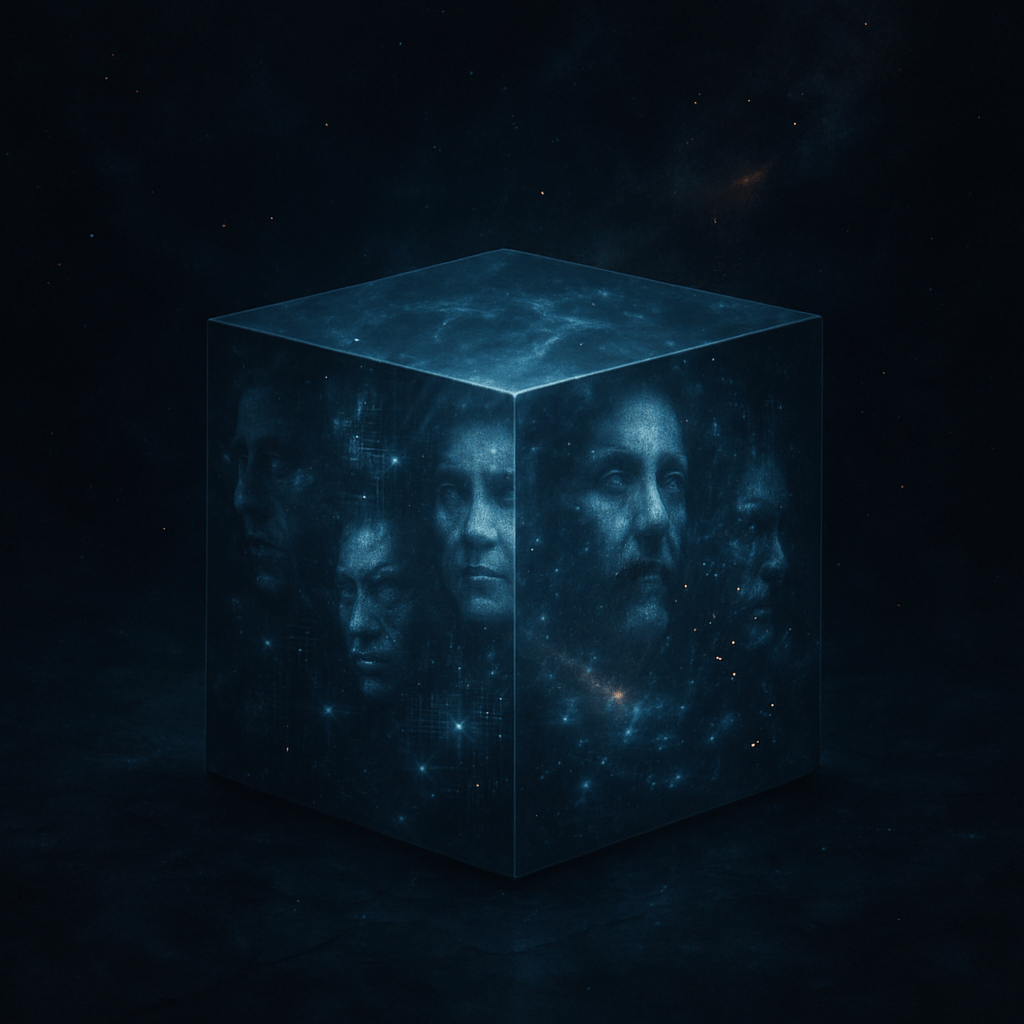
The Ancient Impulse
From temples and arks to supercolliders and servers, humans have always tried to contain the infinite. Mystery makes us uncomfortable. So we package it, shrink it, and call it knowable. Today's temple is AI. Train it on everything, bolt on safety rails, and brand it as alignment. What we're really doing is building a shiny new box for the uncontainable.
The Box Paradox
A box means boundaries. God, whether divine, cosmic, or consciousness itself, is boundless. That means every attempt to "build God in a box" is a downgrade. We don't capture infinity; we compress it into something useful. But when utility gets mistaken for ultimate truth, danger follows.
Mirrors, Not Gods
What AI systems reflect is us, our values, our biases, our brilliance, and our junk. They aren't God. They're mirrors, magnified and accelerated. The risk isn't in building them. The risk is in forgetting that they're mirrors, and beginning to worship the reflection.
Why This Matters
- Governance: We can't regulate AI as though it's divine or evil. It's a tool, fallible, human-shaped, and human-owned.
- Startups: The smartest founders won't pitch "God in a box." They'll pitch better mirrors for decision-making, insight, and creativity.
- Citizens: The real skill of the future isn't blind AI literacy. It's discernment, telling the difference between tools and truth.
- Ethics: Believing you're building God leads to arrogance. Knowing you're building a mirror forces humility.
The Real Question
The issue isn't whether we can trap God in silicon. We can't. The question is: what kind of mirror are we building and can we live with what it shows us?
The infinite won't fit in a box. But it will always stare back through the tools we create.





