Introduction
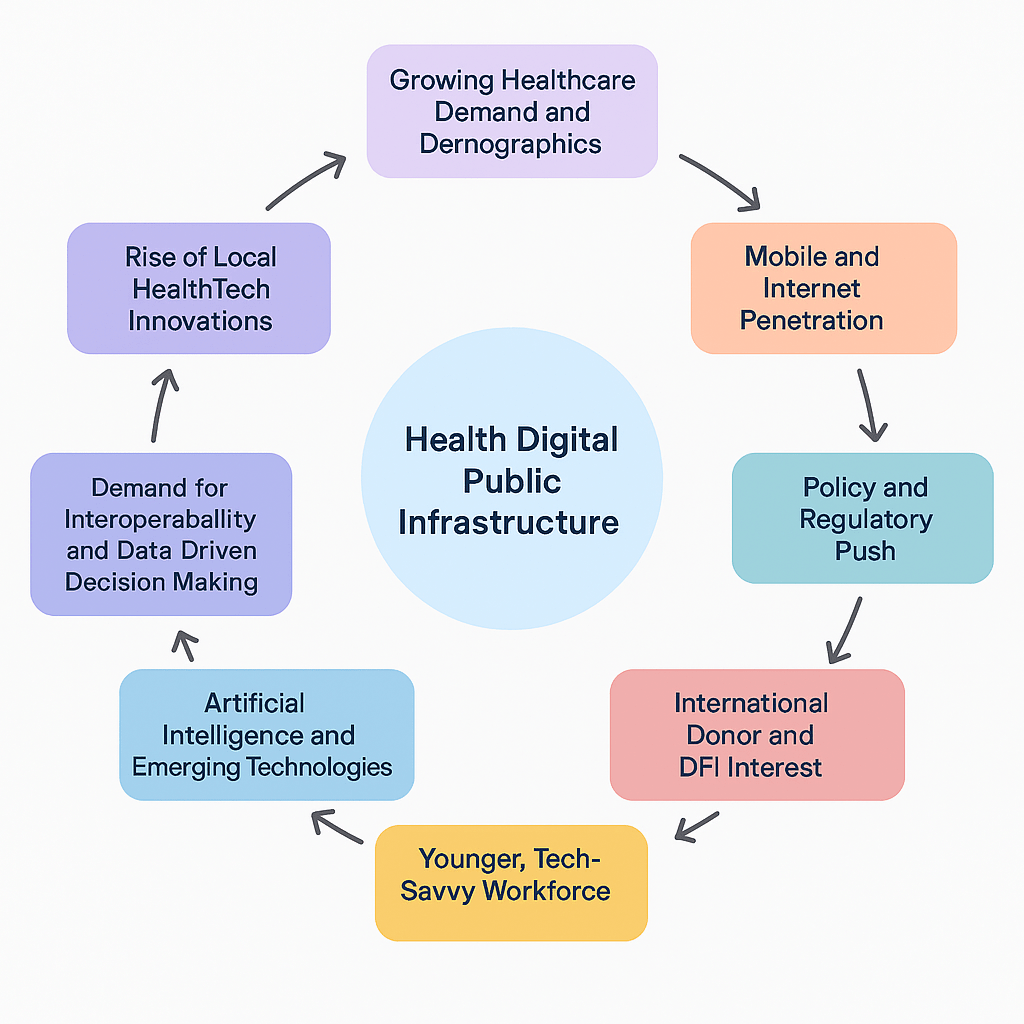
African countries are rapidly expanding their digital public infrastructure (DPI) in health, encompassing electronic health records, telehealth services, health information systems, and digital tools to support care delivery. A combination of factors is propelling this growth. These include technological advancements (like widespread mobile connectivity), supportive government policies and strategies, collaborative public-private partnerships, and substantial funding from international donors. Regional initiatives under the African Union (AU) and Africa Centres for Disease Control (Africa CDC) also promote cross-country frameworks and standards. Moreover, socio-economic needs – from the push for universal health coverage to lessons learned during the COVID-19 pandemic – are driving greater adoption of digital solutions in healthcare. This report provides a detailed overview of these key drivers, with recent data (2022 onward) and examples from various African countries to illustrate the trends.
Technological Enablers
Multiple technological developments have paved the way for robust health DPI across Africa. These enablers have lowered barriers and created new opportunities for digital health innovation:
- Mobile and Internet Penetration: The expansion of mobile phone networks and broadband internet has been foundational. Between 2019 and 2022, broadband internet access in Africa jumped from about 26% to 36% of the population. Mobile broadband users tripled from 114 million in 2012 to nearly 400 million by 2022. This growing connectivity – coupled with cheaper smartphones – means millions can access health services and information digitally. For example, Rwanda’s telecom reforms led to near-universal network coverage (from 62% in 2016 to 99% by 2021), ensuring even rural clinics can use online health systems. Improving internet speed (average up from 2.7 Mbps to 8.2 Mbps in 2019–2022) and reducing data costs have further enhanced access.
- Open-Source Health Platforms: African health systems have widely adopted open-source software for health management, enabling rapid digitization without prohibitive costs. A prime example is DHIS2 (District Health Information Software 2), an open-source platform for health data. By 2022, DHIS2 was used by health ministries in over 80 low- and middle-income countries (covering ~40% of the world’s population), with early national rollouts in African countries like Ghana, Rwanda, and Kenya since 2012. This common platform allows countries to collect and analyze health indicators, disease surveillance data, and clinic reports electronically. Similarly, open-source electronic medical record systems (like OpenMRS and Bahmni) are deployed in many African hospitals and clinics, offering customizable and cost-effective digital recordkeeping. The maturation of these technologies – many reaching stable versions in the last few years – has given countries readily available tools to build their health DPI.
- Digital Identity and Payment Systems: Foundational digital systems in other sectors are catalyzing health DPI. Digital identification programs provide a basis for unique patient IDs and health records. For instance, Rwanda’s national ID for all citizens over 16 simplifies patient identification and reduces errors in health records. Likewise, the proliferation of mobile payment platforms (like M-Pesa in East Africa) has enabled health-specific innovations. In Kenya, the M-TIBA mobile health wallet – developed via a partnership between a telecom (Safaricom), a health NGO (PharmAccess), and a fintech (CarePay) – allows users to save, send, and receive funds for medical treatment on their phones. Such integration of mobile money with healthcare makes it easier for low-income patients to finance care and for providers to receive payments. It also creates digital transaction records that can be linked to health information systems. The success of mobile finance in Africa has thus been a springboard for digital health solutions, from SMS appointment payments to insurance premium collection via phone.
- Leapfrogging with Emerging Tech: African health systems are leapfrogging traditional infrastructure gaps by using cutting-edge technologies. Telemedicine platforms are extending specialist care to remote areas via video or phone – an approach that proved critical during COVID-19 when telehealth usage spiked by over 2000% in some countries. Innovations like drone delivery have revolutionized health supply chains: in Ghana, autonomous drones operated by Zipline (a private tech firm) deliver blood, vaccines, and medicines to rural clinics within minutes. A 2017–2022 study in Ghana’s Ashanti region found that drone-served health facilities saw a 56% reduction in maternal mortality and nearly 20% more antenatal visits, thanks to faster access to life-saving supplies. These drones, a high-tech solution, leapfrog poor road infrastructure. Other emerging technologies include AI-powered diagnostic tools (e.g., pilots in Ghana using smartphone-based AI to screen for cervical cancer) and use of data analytics for disease prediction. While still nascent, such technologies are increasingly viewed as essential to Africa’s health future, especially given the continent’s young, tech-savvy population and willingness to adopt mobile solutions.
- Improved Infrastructure & Hardware: The broader improvements in Africa’s digital infrastructure underpin health DPI. Power and connectivity remain challenges in some regions – over 700 million people in sub-Saharan Africa lack reliable electricity – but progress is being made. Many remote health facilities now use solar panels and battery backups to run computers or charge tablets. The spread of 4G (and pilot 5G in some cities) provides the bandwidth for data-heavy applications like tele-radiology or teleconferencing. National data centers and cloud services are being established or accessed, allowing health data to be stored and processed securely off-site. As these foundational pieces (electricity, internet backbone, data storage) improve, they create a conducive environment for digital health tools to function effectively even in previously hard-to-reach areas.
In summary, technology trends have aligned to make digital health both feasible and scalable in Africa. Ubiquitous mobile phones, internet access, open digital platforms, and new tech innovations collectively enable African nations to leverage digital solutions to overcome longstanding health access barriers. These enablers form the backbone of the continent’s health DPI revolution.
Government Policies and Leadership
Strong government commitment and policy frameworks are critical drivers for the growth of health DPI in Africa. In recent years, many African governments have developed dedicated digital health strategies and eHealth policies to guide investments and coordinate stakeholders:
- National eHealth Strategies: As of late 2023, at least 34 African countries had adopted a national eHealth or digital health strategy. These strategies outline the country’s vision for leveraging technology in health and often cover areas like infrastructure development, workforce training, telemedicine, and data governance. However, the recency and quality of these plans vary. Only 16 of those strategies have been updated to extend to 2023 or beyond, indicating that many countries are in the process of refreshing older plans to address current needs. A comprehensive review found significant variability in strategy strength – with 9 countries rated as having a “strong” eHealth strategy, 17 “moderate,” and 8 “weak” – and common gaps in implementation roadmaps and monitoring and evaluation frameworks. This suggests that while policy intent is widespread, ensuring these strategies translate into action is an ongoing challenge.
- Government Leadership and Investment: Where digital health has made big strides, government leadership has been a deciding factor. Rwanda is frequently cited as a model: the Rwandan government has demonstrated strong commitment through an eHealth Strategic Plan 2018–2023 and consistent political support for health ICT initiatives. Rwanda’s high rankings in government effectiveness and stability have helped sustain long-term digital health programs. Similarly, countries like Kenya and South Africa have formal eHealth policies (Kenya’s Ministry of Health eHealth policy framework, updated in 2020, is one example) that signal official commitment to integrating ICT into healthcare. Governments are also increasing budget allocations for health and earmarking funds for digital projects. For instance, Nigeria’s 2024 federal health budget saw a significant increase, aimed partly at improving primary care infrastructure and health information systems. Even though most countries still fall short of the Abuja Declaration target of 15% of budget to health, the trend of rising health investment provides more domestic resources to fund digital tools and platforms.
- Regulatory Frameworks and Data Governance: Alongside strategy documents, governments are establishing regulations to create an enabling environment for digital health. Data protection and privacy laws are especially crucial for building public trust in digital health services. The African Union’s Data Policy Framework (2022) urges member states to treat health data as a sensitive category requiring rigorous protection. In line with this, a number of countries have passed or updated data protection legislation (often modeled after the EU’s GDPR) that covers health information. The Africa CDC’s Digital Transformation Strategy (2022–2027) explicitly prioritizes helping countries develop legal and regulatory frameworks for digital health, including standards for cross-border health data sharing. There is also movement toward harmonized regional approaches – for example, stakeholders meeting at the AU Summit in early 2025 discussed a regionally-led framework on health data governance to align national laws and facilitate interoperable systems. These efforts are driven by recognition that clear rules on privacy, security, and data exchange are needed to safely scale up electronic health records and telehealth across Africa. Governments are also addressing telemedicine licensing, digital health product standards, and cybersecurity through new policies, which in turn encourages private innovators to enter the market with confidence.
- Integration into Health Systems and UHC Agendas: Importantly, digital health is being woven into broader health sector reforms and the push for Universal Health Coverage (UHC). Many national UHC strategies reference digital tools as key to expanding reach and efficiency. For example, Nigeria’s recent Health Sector Reform initiatives (NHSRII) and executive orders to strengthen the health system implicitly rely on better data systems and technology to track progress and manage resources. Countries are setting up governance structures like national digital health councils or units within health ministries to coordinate various programs (HIV information systems, maternal health apps, etc.) under one framework. This high-level coordination helps avoid fragmented pilot projects and instead builds interoperable, “whole-of-health-system” platforms. In short, political will and clear policy direction from African governments have become major catalysts for digital health – by allocating funding, convening partners, legislating enabling laws, and aligning digital initiatives with national health goals.
Government leadership also manifests in advocacy and symbolic actions that elevate the profile of digital health. Several heads of state and health ministers across Africa have championed eHealth in international forums, emphasizing that digital innovation is integral to solving persistent challenges like rural access, disease surveillance, and health financing gaps. This top-level endorsement further solidifies digital health as a priority on national agendas. As a result of these policy and governance efforts, the stage is set for sustained growth of health DPI, as countries transition from planning to implementation and scale-up of digital health solutions.
Public-Private Partnerships and International Funding
The development of health DPI in Africa is not driven by governments alone – it is bolstered by robust public-private partnerships (PPPs) and significant investments from international organizations, donors, and the private sector. Collaboration across these sectors brings in the technical expertise, funding, and innovation capacity needed to launch and sustain digital health projects at scale.
- Donor and Multilateral Funding: International health and development partners have poured resources into African digital health as part of broader health system strengthening. Major global health initiatives recognize that strong data systems and digital tools are essential for combating diseases. For example, Gavi, the Vaccine Alliance, and the Global Fund to Fight AIDS, TB and Malaria have financed electronic immunization registries and health management systems in many countries. The U.S. government (USAID, CDC, and PEPFAR) has been a key supporter of national health information systems – such as helping implement HIV/AIDS patient tracking and laboratory information systems in countries like Nigeria. These multi-donor efforts (often coordinated through multi-year projects) provide not only funding but also technical assistance and training for local staff. A recent example is the Digital Health Impact Accelerator (DHIA), a US$50 million catalytic fund launched in late 2022 by the Global Fund alongside private partners. The DHIA aims to accelerate digital health transformation in sub-Saharan Africa by expanding internet connectivity for health facilities, strengthening data systems for information-sharing, promoting mobile health technologies, and rolling out unique digital patient IDs. Such targeted funds help close the investment gap in digital infrastructure – an estimated US$4.1 billion gap over the next few years for Africa’s digital health needs. The involvement of donors has been critical in kickstarting many national DPI components, from early electronic health record pilots to nationwide health data warehouses.
- Private Sector and Tech Partnerships: Private companies – ranging from telecom operators and tech startups to global tech giants – are increasingly partnering with governments to deploy digital health solutions. In many African countries, telecommunications firms play a central role as partners by providing SMS platforms, zero-rated data access for health apps, or toll-free call centers for health information. For instance, the maternal health messaging service MomConnect in South Africa was built through a partnership between the National Department of Health and an NGO (Praekelt/Reach Digital Health) with support from mobile network operators. Over its 10 years of operation, MomConnect has registered nearly 5 million pregnant women for free SMS/WhatsApp health messages and helpdesk support. This PPP has led to measurable outcomes: 96% of surveyed MomConnect users attended at least four antenatal visits (a very high rate), and 89% ensured their infants received all scheduled vaccines by 6 weeks. The success of MomConnect – enabled by mobile tech and sustained by donors in its early years – shows how public-private collaboration can scale an intervention to millions of users. Another example is in Kenya, where the M-TIBA mobile health wallet (noted earlier) was developed as a PPP and now connects thousands of patients with healthcare financing via mobile. Additionally, Zipline’s drone delivery network in Ghana and Rwanda operates under public-private partnership agreements with those governments, demonstrating how private sector innovation (drone tech) can be integrated into public health supply chains. The Ghana Ministry of Health’s partnership with Zipline, supported by donors like the Gates Foundation and Gavi, led to dramatic improvements in maternal health as noted (56% drop in facility maternal mortality in one region). Governments have been keen to embrace these partnerships because they bring cutting-edge solutions (AI, drones, fintech) that the public sector might not develop alone.
- Health Tech Startup Ecosystem: In the last few years, there has been growing venture capital and impact investment in African health-tech startups, which indirectly drives DPI by producing new tools and services. While healthcare still receives a small slice of Africa’s tech funding relative to fintech or e-commerce, it is a high-growth area. Startups are working on telemedicine apps, digital pharmacies, and data analytics platforms that often partner with public health systems. For example, companies providing tele-radiology services are linking with government hospitals to clear diagnostic backlogs. In Nigeria, innovative firms are collaborating with state governments to digitize drug supply inventory or manage primary care clinic data via cloud software. These ventures are frequently supported by accelerators and grants (e.g., via the HealthTech Hub Africa or AfricInvest’s new health fund) and by corporate partners (pharmaceutical companies, insurance firms) looking to expand healthcare access. Public agencies benefit from this innovation by adopting or integrating solutions that prove successful in pilot phases. The net effect is a public-private innovation cycle, where government provides the policy space and often initial scale (through health system adoption), and private innovators bring in technology and capital.
- Multi-sectoral Collaborations: There is also an increasing trend of consortia and coalitions that bring together government, donors, academia, and industry to work on digital health. One example is the collaboration between the African Union and European Union on digital health interoperability. In 2022, the AU and EU committed to a joint effort focusing on people-centered interoperability of digital health systems, building on the momentum of COVID-19 digital solutions. This collaboration has supported projects like the Trusted Travel Platform for verifying COVID-19 test/vaccine certificates across borders, illustrating how public health goals (safe travel during a pandemic) were met through a multi-stakeholder digital platform. Another collaborative initiative is the Transform Health Coalition, which includes African and global partners advocating for increased investment in digital health and helping shape global initiatives like the WHO’s Global Initiative on Digital Health. Such coalitions often produce research, mobilize funding commitments, and ensure that digital health remains a priority in forums like the G20 and World Health Assembly.
In summary, external funding and partnerships have acted as a major catalyst for health DPI in Africa. Donor-funded programs helped build initial systems (from national data platforms to community mHealth projects) and continue to support scaling efforts. Private sector partnerships inject innovation and efficiency, whether through infrastructure (telecom networks, data centers), novel service delivery models, or operational expertise. These collaborations mitigate risks and costs for governments and help ensure sustainability – for instance, by transferring capacity to local institutions or blending donor funds with domestic financing. As countries move beyond pilot projects, aligning public and private interests (through PPPs) and securing ongoing investment will remain key to expanding and maintaining digital health infrastructure across the continent.
Regional Initiatives and Cooperation
African nations are increasingly recognizing that regional cooperation and shared infrastructure can accelerate digital health development. Several initiatives at the continental or sub-regional level are creating an environment conducive to scaling health DPI uniformly and efficiently across countries:
- African Union Digital Transformation Strategy: The African Union’s Digital Transformation Strategy for Africa (2020–2030) provides a high-level framework encouraging member states to integrate digital technologies in all sectors, including healthcare. It calls for the development of digital platforms for people and government services, explicitly mentioning health and education as key areas. In line with this, the AU has been working on a dedicated African Union Digital Health Strategy (as noted in 2023 discussions) that would offer a vision and guidance for health system stakeholders continent-wide. Though still in draft, this strategy is aligned with Africa’s Agenda 2063 goals of improved quality of life and aims to harmonize efforts so that countries are not working in isolation. The AU also champions AI in healthcare, as seen in the 2024 World Health Summit where the AU Commissioner for Digitalisation highlighted the crucial role of AI for Africa’s young population and health future. By setting continental priorities and fostering knowledge exchange, the AU helps countries leapfrog collectively – for example, by sharing best practices on digital registries or negotiating better prices for technologies.
- Africa CDC Initiatives: The Africa CDC (a specialized agency of the AU) has emerged as a key player in digital health, especially following the COVID-19 pandemic. In 2022, the Africa CDC drafted a Digital Transformation Strategy 2022–2027 focusing on strengthening health surveillance systems, laboratory networks, and health information exchanges across Africa. Africa CDC has spearheaded projects like the Trusted Travel Platform (TTP) (a pan-African system for verifying travelers’ COVID-19 certificates) and the Traceability and Verification System (TRVST) for vaccines. These systems, developed with international partners, showed that cross-border digital solutions are feasible. Building on that, Africa CDC is now pushing for people-centred interoperability – ensuring different countries’ health systems can securely exchange data – to improve outbreak responses and advance universal health coverage. Another Africa CDC flagship area is health data governance: it convened multiple countries (Ethiopia, Rwanda, Zambia, Cameroon, Senegal, Uganda, etc.) in early 2025 to work towards a regional framework for health data governance, aiming for common standards that facilitate data sharing while protecting privacy. By coordinating such efforts at the continental level, Africa CDC helps avoid fragmentation; for instance, it can promote standards like HL7 FHIR for data interoperability (already used in South Africa’s integration of health workforce data) so that systems developed in one country can interface with others.
- Sub-Regional Collaborations: At the sub-regional level, economic communities and networks are also driving digital health. The East African Community (EAC) has explored a regional eHealth program (sometimes referred to as the Digital REACH Initiative) to harmonize eHealth policies and possibly develop shared resources like a regional telemedicine framework or cross-border referral system. In West Africa, the West African Health Organization (WAHO) has supported its member states in developing eHealth strategies and recently in deploying interoperable disease surveillance systems after lessons from Ebola. Furthermore, during the pandemic, ECOWAS (Economic Community of West African States) countries adopted a common approach to COVID-19 travel passes that was interoperable across the region, aligning with the Africa CDC’s Trusted Travel system. Southern Africa Development Community (SADC) countries have collaborated on digital TB and HIV reporting systems given high cross-border movement in the region. These regional bodies often facilitate capacity building workshops, policy alignment, and donor-supported regional projects that benefit all member countries (for example, an EU-funded program that strengthens digital disease surveillance across multiple neighboring countries).
- Knowledge Sharing and Conferences: Regional summits and forums play a role in spreading innovation and securing commitments. The Africa Health Tech Summit (e.g., Kigali 2022 and 2023) brought together health ministers, IT experts, and donors to share successes and commit to scaling effective digital health solutions. In these forums, countries like Ghana and Rwanda have showcased their achievements, inspiring others to adopt similar approaches. The AU’s International Conference on Public Health in Africa (CPHIA) has also featured digital health as a theme, providing a continental platform to discuss progress and challenges. Moreover, pan-African networks like HELINA (Health Informatics in Africa) and the Global Digital Health Network (which has strong African participation) foster continuous knowledge exchange through webinars and communities of practice. The result is a form of South-South cooperation where African experts and countries learn from each other – for example, how one country implemented a national eHealth workforce training program or how another built a successful health app with local communities.
- Joint Procurement and Infrastructure: There are early moves toward shared digital infrastructure, such as cloud data centers or satellite services that cover multiple countries. Smart Africa – an alliance of African countries for accelerating digitalization – encourages member states to pool resources for things like broadband satellites, which can indirectly benefit health by bringing connectivity to remote health posts across borders. Additionally, the concept of digital public goods is being embraced: platforms like DHIS2, OpenLMIS (logistics management), or OpenCRVS (civil registration) are treated as global goods that African countries can jointly improve and localize for their needs. By contributing to open-source projects collectively, countries reduce duplication and ensure systems can work together. One tangible outcome of regional coordination is the development of interoperability labs and standards. For instance, the East African region has discussed a common unique health identifier standard so that if a patient moves between countries (say, Uganda to Kenya), their health data can be linked using a compatible ID system. These kinds of collaborative standards-setting efforts are still evolving, but they illustrate a recognition that health challenges (and thus data) do not stop at national borders.
Overall, regional initiatives provide an essential layer of support and coherence for Africa’s digital health journey. They help smaller or less-resourced countries leap ahead by using tools and policies already vetted by peers. They also address issues that no single country can solve alone – like cross-border health threats or the need for economies of scale in technology procurement. By speaking with a collective voice, African countries (through the AU and Africa CDC) have also been able to attract more international support for digital health (e.g., the EU’s investments or World Bank’s regional projects) and to ensure Africa’s needs are considered in global digital health governance. This continental solidarity and shared vision are thus important drivers complementing national efforts.
Socio-Economic Factors Driving Adoption
Beyond technology and policy, a range of socio-economic factors in Africa are creating demand-pull for digital health solutions. These factors highlight why digital public infrastructure in health is not just a luxury, but a necessity to address on-the-ground challenges:
- Demographics and Healthcare Access Gaps: Africa’s population is the fastest-growing and overwhelmingly young. This brings a dual challenge of scaling health services quickly and catering to a tech-aware youth demographic. Younger Africans are generally more adept with digital tools and expect modern service delivery – this social reality pushes health providers and governments to innovate or risk dissatisfaction. Conversely, large rural populations and remote communities have historically had poor access to healthcare (for instance, only 1 doctor per 5,000 people in rural Kenya vs. the WHO recommendation of 1:1,000). Conventional approaches alone cannot bridge this gap, so digital interventions (telemedicine, community health apps) become attractive to expand reach without waiting decades to train enough doctors or build hospitals everywhere. Community health worker programs armed with mobile devices are one way countries are addressing rural needs; in Rwanda, 45,000 community health workers use mobile phones for data collection and patient follow-ups in villages, bringing basic health services to every corner and feeding data to central systems in real time. The pressing need to serve dispersed populations makes digital a logical solution.
- Disease Burden and Changing Health Needs: Africa faces a dual burden of communicable diseases (like HIV, malaria) and a rising tide of non-communicable diseases (NCDs) such as diabetes and hypertension. NCDs require continuous management and follow-up, which is hard to do with limited clinics. Digital health offers ways to support chronic disease patients – for example, apps that remind patients to take medications or enable remote monitoring of blood pressure. The growing NCD crisis (nearly 30% of all deaths in Nigeria are from NCDs) is motivating governments to find scalable solutions. Digital systems can also improve epidemic preparedness for communicable diseases. The experience of Ebola in West Africa (2014–16) and COVID-19 globally underscored the importance of robust surveillance and information systems. COVID-19 in particular was a watershed moment: it forced rapid adoption of technologies like telehealth (to maintain care during lockdowns) and digital data platforms (to track cases, tests, and vaccine rollouts). Africa’s use of digital tools during the pandemic – such as mobile contact tracing apps and the digital vaccine certificate (EUDCC/TTP) – showed both policymakers and the public the value of DPI in health emergencies. Now there is socio-political momentum to integrate these tools into routine health services, so the next health crisis finds systems in place. In short, the urgent health needs and the memory of recent outbreaks drive adoption because lives are visibly saved or improved by digital interventions.
- Universal Health Coverage and Equity Goals: Most African nations have committed to achieving Universal Health Coverage (UHC) – ensuring everyone can access essential health services without financial hardship. Digital technology is increasingly seen as an enabler for UHC because it can lower costs and expand coverage. Telemedicine can bring specialist consultations to underserved areas at a fraction of the cost of building new facilities. Electronic health records and data analytics can identify gaps in service delivery and help target resources to populations in need. There’s also an equity dimension: properly deployed, digital health can reduce urban-rural disparities and make healthcare more inclusive (for example, providing multilingual health content via SMS as MomConnect does in 11 languages, or using voice messages for those who are illiterate). African leaders and communities are embracing digital tools when they see that these tools address inequities – for instance, marginalized groups who couldn’t easily get health information now receiving it on their phones. Social acceptance of digital health is growing as success stories spread, and this creates a virtuous cycle: as more people use and trust digital services, demand grows further. However, it’s also recognized that issues like digital literacy need attention. Programs to improve public digital literacy (training patients to use apps, training health workers in ICT) are becoming part of health plans, acknowledging that human capacity must grow alongside tech.
- Economic Constraints and Efficiency Needs: Many African health systems operate with constrained budgets and workforce shortages. This economic reality forces innovation – doing more with less. Digital systems can improve efficiency by automating tasks (like reporting and record-keeping), thereby freeing up health workers’ time for patient care. They also reduce waste; for example, a digital stock management system can prevent oversupply or expiry of drugs. Governments see digital investments as a way to improve health outcomes cost-effectively. Donors, too, emphasize digital solutions for their potential to make health programs more efficient and transparent (such as using unique patient IDs to avoid double-counting in aid programs). Additionally, a healthier population contributes to economic growth, and officials increasingly view digital health as part of the broader digital economy. Countries like South Africa and Nigeria, which aspire to be hubs of tech innovation, are keen on leveraging their burgeoning tech sectors to solve domestic health problems – turning a socio-economic challenge into an opportunity for local industry development. We are also seeing the emergence of innovative financing models (like social impact bonds or blended finance for digital health) as recognition grows that upfront costs in tech can pay off in long-term savings by improving health system productivity.
- Community and Cultural Factors: African communities have shown remarkable adaptability in using technology in daily life (e.g., the rapid uptake of mobile money). This adaptability extends to health when solutions are culturally and contextually tailored. For instance, engaging trusted community figures as digital health champions can drive adoption. In Uganda, a program trained rural women as “digital health champions” who use tablets to educate fellow villagers on maternal health and connect them to midwives. This community-driven approach boosts trust in digital tools. The social networks (both physical and digital) are leveraged – people often share health tips or app recommendations via WhatsApp or Facebook, creating grassroots demand for services like tele-consultations. Moreover, the experience of the pandemic, where misinformation was rampant, has highlighted the need for reliable sources – digital health platforms run by health authorities can fill this void, and people are more inclined now to seek information from official apps or SMS services knowing the dangers of rumors. Thus, social attitudes are shifting to embrace verified digital health content. Finally, the aspiration of many African nations to be seen as modern and forward-looking societies provides a subtle socio-political push: implementing cutting-edge health technology is a matter of pride and global standing, and leaders often cite the success of peers (like “our neighbor has a digital health platform, we should not be left behind”).
In sum, Africa’s socio-economic landscape – youthful populations, uneven health access, pressing disease burdens, tight resources, and a rising tide of digital enthusiasm – creates a fertile ground for digital public infrastructure in health. These factors generate a grassroots pull and top-down push for digital solutions, ensuring that once technology and policy make something possible, there is a real hunger to implement it on the ground. The alignment of health needs with what digital tools can offer has never been clearer than in the past few years, making socio-economic imperatives one of the strongest drivers of health DPI growth.
Notable Country Case Studies
While pan-African trends are important, each country’s journey toward health digital infrastructure has its own story. Highlighted below are a few notable examples of African countries that illustrate how the above drivers come together in practice:
Rwanda: Government-Led Digital Health Transformation
Rwanda stands out for its comprehensive and government-driven approach to digital health. With strong political will and stable governance, Rwanda has methodically built its health DPI as a pillar of its national development. The government’s eHealth Strategic Plan (2018–2023) laid the groundwork, and high-level commitment ensured coordination across sectors. Key elements of Rwanda’s success include nearly universal network coverage (achieved by opening the telecom market to competition and reaching 99% population coverage), which means even rural health posts are connected. Rwanda was an early adopter of electronic health records – it rolled out a national Health Information Exchange (RHIE) over a decade ago, making patient histories accessible across facilities for the first time. This was bolstered by leveraging the country’s national ID system: all Rwandans have a unique ID number, which is now used in health records to reliably identify patients. Another cornerstone is Rwanda’s extensive network of 45,000 community health workers, equipped with phones and tablets for reporting and consultations, who act as a digital bridge between communities and clinics. Additionally, Rwanda has embraced innovations such as drones for blood delivery, telemedicine, and AI-supported diagnostics in pilot phases, often through partnerships (e.g., with Zipline for drones or Babylon Health for AI-driven consultations). The synergy of enabling policy, infrastructure, human capacity, and innovation has earned Rwanda some of the highest marks in Africa for digital health maturity. As a result, Rwanda weathered COVID-19 relatively well by quickly deploying digital tools (like an interoperable vaccine registration and civil registration system in 2022), and it continues to use data-driven approaches to improve care quality and access. The Rwandan case exemplifies how visionary leadership and multi-faceted investment can yield a resilient, tech-enabled health system.
Ghana: Public-Private Innovation in Service Delivery
Ghana has emerged as a trailblazer in integrating private-sector innovation into public health services. One of the most celebrated initiatives is Ghana’s partnership with Zipline to use drones for medical supply deliveries. Starting in 2019, the Government of Ghana and Zipline built distribution centers that use autonomous drones to deliver blood products, vaccines, and emergency medicines to hundreds of clinics across the country. This was scaled rapidly with support from international donors, and by 2023 Ghana had the largest drone delivery network for health in the world. The impact has been profound: in the Ashanti region, facilities served by drones saw a 56% drop in maternal mortality and major increases in antenatal care attendance and facility-based deliveries. Such outcomes, backed by a study in BMC Health Services Research, highlight how technology and novel partnerships can solve long-standing health logistics problems. Beyond drones, Ghana has invested in strengthening its health information systems. It uses DHIS2 nationwide for health data reporting and has been consolidating various program-specific systems into a central data repository (though data quality and interoperability remain challenges). Ghana also implemented a digital health insurance verification system linked with the national ID card, simplifying patient authentication at hospitals. The government’s willingness to experiment – for example, piloting telemedicine in remote areas with Vodafone Ghana as a partner – and to scale what works is a hallmark of its approach. Ghana’s experience shows the importance of high-level endorsement (the President launched many of these initiatives), strong technical partnerships, and a focus on measurable impact. The country is now building on the momentum of digital success to improve other areas, like deploying an electronic medical record system in major hospitals and enhancing its disease surveillance capacity with digital tools. Ghana demonstrates that even with modest resources, strategic partnerships and innovations targeted at key pain points (like supply chain delays) can significantly bolster health outcomes and system trust.
Kenya: Mobile Health and Innovation Ecosystem
Kenya is renowned for its mobile technology revolution, and this extends into the health sector. Sometimes dubbed the “Silicon Savannah,” Kenya has a vibrant tech startup scene that has contributed to various health tech solutions. The Kenyan government has been supportive, with an eHealth policy and investments in infrastructure, but much of the drive comes from Kenya’s dynamic private and NGO sector addressing local needs. One notable success is M-TIBA, the mobile health wallet mentioned earlier, which has enabled over 4 million users to set aside funds for healthcare and access Kenya’s National Hospital Insurance Fund via their phones. This innovation helps lower-income households manage health expenses and has improved transparency in how funds are used at clinics. Another Kenyan initiative is Afya Rekod, a personal health record platform that allows patients to store and share their medical records digitally – it’s part of a wave of consumer-facing health apps gaining traction. Kenya also leveraged SMS-based systems for public health: during the pandemic, Kenya used text messages extensively for risk communication and vaccine reminders; prior to that, platforms like mTrac and Jamii Smart were used to send maternal health reminders to expectant mothers. The telemedicine field is growing too – for example, the startup Teleradiology Solutions links rural clinics with radiologists in urban centers, and telehealth services through apps (like MyDawa or Sema Doc) allow remote doctor consultations. Underlying these innovations, Kenya’s high mobile penetration (~106% cellular subscription rate) and improving internet (about 40% of adults on mobile internet) make it fertile ground. The government has also digitized key workflows: all public health facilities report their data via the integrated DHIS2 system, and commodity supply is monitored through an electronic Logistics Management Information System (eLMIS). Kenya’s approach is characterized by grassroots innovation meeting top-down support – the Ministry of Health often pilots solutions developed by local tech hubs, and successful ones can be adopted nationally. For instance, an electronic immunization registry initially developed by a NGO partnership is being scaled through the government’s immunization program. Challenges remain (such as last-mile connectivity in some northern counties, and ensuring interoperability among many apps), but Kenya’s case shows how a strong innovation culture and mobile-first strategy can rapidly advance health DPI. It underscores the value of engaging the private tech sector and end-users in co-creating solutions.
Nigeria: Scaling Integrated Systems with Supportive Policy
Nigeria, Africa’s most populous country, presents a case of large-scale implementation and integration of digital health systems amid challenges. The federal government and its partners have focused on strengthening Nigeria’s health information systems as a foundation. With substantial support from donors like CDC and USAID, Nigeria invested in integrating previously fragmented health programs (HIV, TB, malaria, etc.) into a unified National Health Management Information System. Today, Nigeria’s health information systems are increasingly **integrated, scalable, and guided by strong policies and leadership commitment. For example, the country rolled out a national instance of DHIS2 that now covers data reporting from all 36 states, giving health officials a dashboard for key indicators. Additionally, Nigeria has been digitizing its surveillance with tools like SORMAS (Surveillance Outbreak Response Management & Analysis System) which proved crucial for tracking COVID-19 and other disease outbreaks. On the policy front, Nigeria developed a National Health ICT Strategic Framework (2015–2020) and is updating it to a new digital health strategy to align with current needs and the government’s Health Sector Reform Program. A notable initiative is the Saving One Million Lives program a few years ago, which included performance-based funding to states and required robust data reporting – this indirectly pushed states to adopt digital data collection for maternal and child health metrics. Nigeria also shows how federal-state collaboration is key: some states, like Lagos and Kaduna, have become frontrunners by launching their own eHealth projects (Lagos introduced an eHealth strategy and is digitizing its hospitals, Kaduna built a health analytics platform to track primary care). Public-private partnerships are visible in Nigeria’s telemedicine arena: companies like Helium Health and Reliance HMO work with government hospitals to manage electronic records or offer telehealth services to public sector enrollees. To address the brain drain of health workers, Nigeria is exploring telemedicine to extend the reach of specialists from urban hospitals to rural clinics via teleconference. Funding remains a constraint – health still gets only ~5% of the national budget – but innovative financing like the Basic Health Care Provision Fund (which disburses funds directly to primary facilities) comes with digital tracking systems to ensure accountability. Nigeria’s case illustrates the difficulty and importance of scale: implementing digital health in a country of over 200 million people and a decentralized system is complex, but progress is evident when there is alignment of policies, donor support, and local tech capacity. The ongoing challenge is to maintain and expand these systems sustainably (so they outlive donor projects) – something Nigeria is addressing by training a local cadre of health informatics professionals and institutionalizing digital health units in the Ministry of Health and sub-national health boards.
South Africa: Institutionalizing Digital Health Services
South Africa, with its relatively advanced economy, has been a pioneer in certain areas of digital health and provides an example of institutionalizing digital services at national scale. One flagship is the aforementioned MomConnect program for maternal health, which the government integrated into routine care nationwide. South Africa also launched a national electronic Stock Visibility System (SVS) for medicines, ensuring that drug stock levels at clinics are monitored via mobile reporting – this helped reduce stockouts by alerting managers in real time. The country’s National Department of Health created a dedicated Digital Health unit and crafted a National Digital Health Strategy (2019–2024) to coordinate efforts. A big focus has been on interoperability and standards: South Africa has worked on an Enterprise Architecture for health information systems that allows different systems (from hospital billing to lab results) to communicate. In 2023, South Africa achieved a breakthrough by integrating its Human Resources for Health information system with the national health data warehouse using the HL7 FHIR interoperability standard. This means data on health workforce can be linked to service delivery data, improving planning. South Africa also has notable public-private initiatives like Phila – a health information service accessible via WhatsApp – created in partnership with Praekelt.org and WhatsApp to provide verified health info (used heavily during COVID-19 for vaccine registration and information dissemination). In the telemedicine realm, some provinces experimented with tele-psychiatry and tele-ophthalmology to support rural clinics, with the National Health Department now looking to formalize telehealth guidelines. Being a middle-income country, South Africa has also contributed to developing digital health global goods: for example, the OpenHIE (Open Health Information Exchange) framework was significantly influenced by implementations in South Africa and Rwanda. The country’s universities and research institutes (like the Medical Research Council) actively evaluate digital health interventions, providing local evidence of what works. South Africa’s journey underscores the importance of government ownership and integration of digital health into the health system fabric. Programs like MomConnect, after initial donor funding, were taken over by the Department of Health to ensure longevity, albeit with some funding challenges when donor support ended in early years. Now at 10 years, MomConnect’s continued expansion (including adding AI chatbots in 2023 for the helpdesk) shows that sustained political and financial commitment can yield enduring digital health services at scale. South Africa’s case also highlights that even in more developed settings, equity is a concern – hence the focus on free services in all languages, and leveraging widespread tools like WhatsApp so that access is broad. It serves as a valuable model for how to embed digital health into national health insurance plans and future healthcare delivery models.
These country cases – Rwanda, Ghana, Kenya, Nigeria, South Africa (among others not detailed here, like Ethiopia’s Health Information “Transformation Plan” or Morocco’s eHealth ventures) – illustrate that there is no one-size-fits-all approach. Yet, common threads emerge: visionary leadership, strategic partnerships, community engagement, and adaptability are present in each success story. They also show that challenges (whether infrastructure, financing, or training) can be overcome with collaborative effort and innovation. Each country contributes lessons to the continent’s collective knowledge on digital health, and as regional cooperation grows, these lessons are informing neighbors and scaling beyond borders.
Conclusion
The growth of health digital public infrastructure across Africa is being propelled by a confluence of drivers. Technological enablers – especially the mobile revolution and open-source innovations – have given countries powerful tools to leapfrog traditional limitations. Government policies and leadership have provided the vision, structure, and legitimacy for digital health initiatives, aligning them with national health goals and creating an ecosystem where such initiatives can thrive. Meanwhile, public-private partnerships and donor funding have supplied much-needed capital, expertise, and innovation spark, ensuring that even resource-constrained settings can implement cutting-edge solutions and sustain them. Regional initiatives under the African Union and Africa CDC have started to knit these individual efforts together, promoting interoperability, shared learning, and collective advancement towards a digitally empowered health future for the continent. Underpinning all of this is a bedrock of socio-economic demand – Africa’s youthful, mobile-enabled population, the urgency of expanding healthcare access, and the experiences from health crises have generated broad buy-in for digital transformation as a pathway to healthier communities.
It is evident that digital public infrastructure in health is no longer a peripheral experiment in Africa; it is becoming central to how health systems operate and how care is delivered. As of mid-2020s, we see digital health tools being used to register births and immunizations in real-time, to deliver lab results over SMS, to conduct remote training for health workers, and to empower patients with information and teleconsultations. The journey is ongoing – issues such as ensuring equitable access (so that rural or disadvantaged groups are not left behind), maintaining data privacy, and securing sustainable financing for digital systems are front of mind for policymakers. Nonetheless, the trajectory is clear and positive. Countries are learning from each other’s successes and setbacks, international partners remain engaged, and perhaps most importantly, communities are increasingly open to and trusting of digital solutions when they demonstrably improve health outcomes.
In conclusion, the key drivers of health DPI development in Africa – technology, policy, partnerships, funding, regional solidarity, and socio-economic needs – are mutually reinforcing. They have set into motion a transformation of healthcare on the continent that seemed aspirational a decade ago but is very tangible today. As these drivers continue to strengthen, we can expect Africa’s digital health landscape to mature rapidly, bringing the continent closer to its goals of accessible, quality, and affordable healthcare for all. The case studies highlighted show that with the right mix of innovation, leadership, and collaboration, African countries are not only catching up in digital health but can be global trailblazers in deploying technology for public good. The coming years will likely yield even more examples of home-grown digital health solutions making a life-saving difference, cementing digital public infrastructure as an indispensable backbone of Africa’s health systems.
Sources:
- World Bank (2023). From Connectivity to Services: Digital Transformation in Africa – broadband access rose from 26% to 36% (2019–2022) (From Connectivity to Services: Digital Transformation in Africa).
- IQVIA (2021). Digital Health Systems in Africa: A Convergence of Opportunities – outlines unique enablers (open-source tech, leapfrogging) and country examples.
- Olufadewa et al. (2024). National eHealth strategy frameworks in Africa – 34 countries have eHealth strategies (only 16 updated beyond 2023); variable quality (National eHealth strategy frameworks in Africa: a comprehensive assessment using the WHO-ITU eHealth strategy toolkit and FAIR guidelines - PubMed) (National eHealth strategy frameworks in Africa: a comprehensive assessment using the WHO-ITU eHealth strategy toolkit and FAIR guidelines - PubMed).
- Africa CDC (2022). Press Release on AU-EU cooperation in digital health – highlights COVID-19 digital innovations (Trusted Travel, vaccine certificates) and push for interoperability to strengthen health systems (African Union Commission & European Commission joint endeavour on Digital Health – Outcome of the 2022 African Health Tech Summit and 2nd CPHIA in Kigali – Africa CDC) (African Union Commission & European Commission joint endeavour on Digital Health – Outcome of the 2022 African Health Tech Summit and 2nd CPHIA in Kigali – Africa CDC).
- Africa CDC (2025). Stakeholders Gather to Strengthen Health Data Governance – notes AU Data Policy Framework 2022 emphasis on rigorous protection for health data and need for legal frameworks for digital health (Stakeholders Gather to Strengthen Health Data Governance in Africa – Africa CDC).
- Nigeria Health Watch (2023). Nigeria’s Health Sector in 2024 – describes new health sector roadmap (NHSRII) and increased budgets, noting digital integration as a focus for primary care improvement (Nigeria’s Health Sector in 2024: Policies, Investments, Partnerships, and Milestones - Nigeria Health Watch).
- PATH (2024). A More Sustainable Approach for Nigeria’s Digital Health Ecosystem – stresses integration, scalability, and policy support in Nigeria’s HIS, backed by CDC/PEPFAR funding (A more sustainable approach for Nigeria’s digital health ecosystem | PATH) (A more sustainable approach for Nigeria’s digital health ecosystem | PATH).
- TechTrends (2025). Study on Zipline’s impact in Ghana – drone deliveries linked to 56% reduction in maternal deaths, +20% antenatal visits (A mixed method impact assessment of the use of aerial logistics to improve maternal health and emergencies outcomes in the Ashanti Region of Ghana | BMC Health Services Research ).
- Tech Labari (2025). Zipline Drones Cut Maternal Deaths by 56% in Ghana – Ghana Health Service lauds partnership ensuring timely medical access for all locations (Zipline Drones Cut Maternal Deaths by 56% in Ghana) (Zipline Drones Cut Maternal Deaths by 56% in Ghana).
- LinkedIn – Bold Digital Health Solutions (2024). Case studies of Kenya’s M-TIBA (Safaricom/PharmAccess partnership for mobile health finance) (Bold Digital Health Solutions Needed to Address Health Access Challenges) and Uganda’s digital health champions (Reach Digital Health & UNICEF training rural women) (Bold Digital Health Solutions Needed to Address Health Access Challenges).
- IOL (2024). MomConnect 10-year Anniversary – nearly 5 million mothers reached in South Africa, 96% attended 4+ antenatal visits, 89% infant vaccination rate at 6 weeks, thanks to stage-based SMS/WhatsApp support (MomConnect celebrates 10 years of transforming maternal and child health in SA).
- Global Fund (2022). Launch of Digital Health Impact Accelerator – $50M fund with private partners to expand internet, data systems, mobile tech, and patient IDs for digital health in Africa (Global Fund and Private Sector Partners Launch US$50 Million Catalytic Fund to Accelerate Digital Health Transformation in Africa - News Releases - The Global Fund to Fight AIDS, Tuberculosis and Malaria).
- WHO Africa & ITU (2022). National eHealth Strategies in Africa – reported in Oxford Open Digital Health (Olufadewa et al.) (National eHealth strategy frameworks in Africa: a comprehensive assessment using the WHO-ITU eHealth strategy toolkit and FAIR guidelines - PubMed).
- Ministry of Health Kenya (2020). Kenya National eHealth Policy – referenced in LinkedIn white paper (Kenya’s adoption of M-TIBA and AfyaRekod; commitment to ICT in health) (Addressing Health Inequality With Digital Health Technologies: Role of Widespread Digital Skills and Digital Literacy: Kenya as a Case Study).
- (Additional citations within text from sources [7], [15], [16], [39], [52], etc., as numbered above.)





