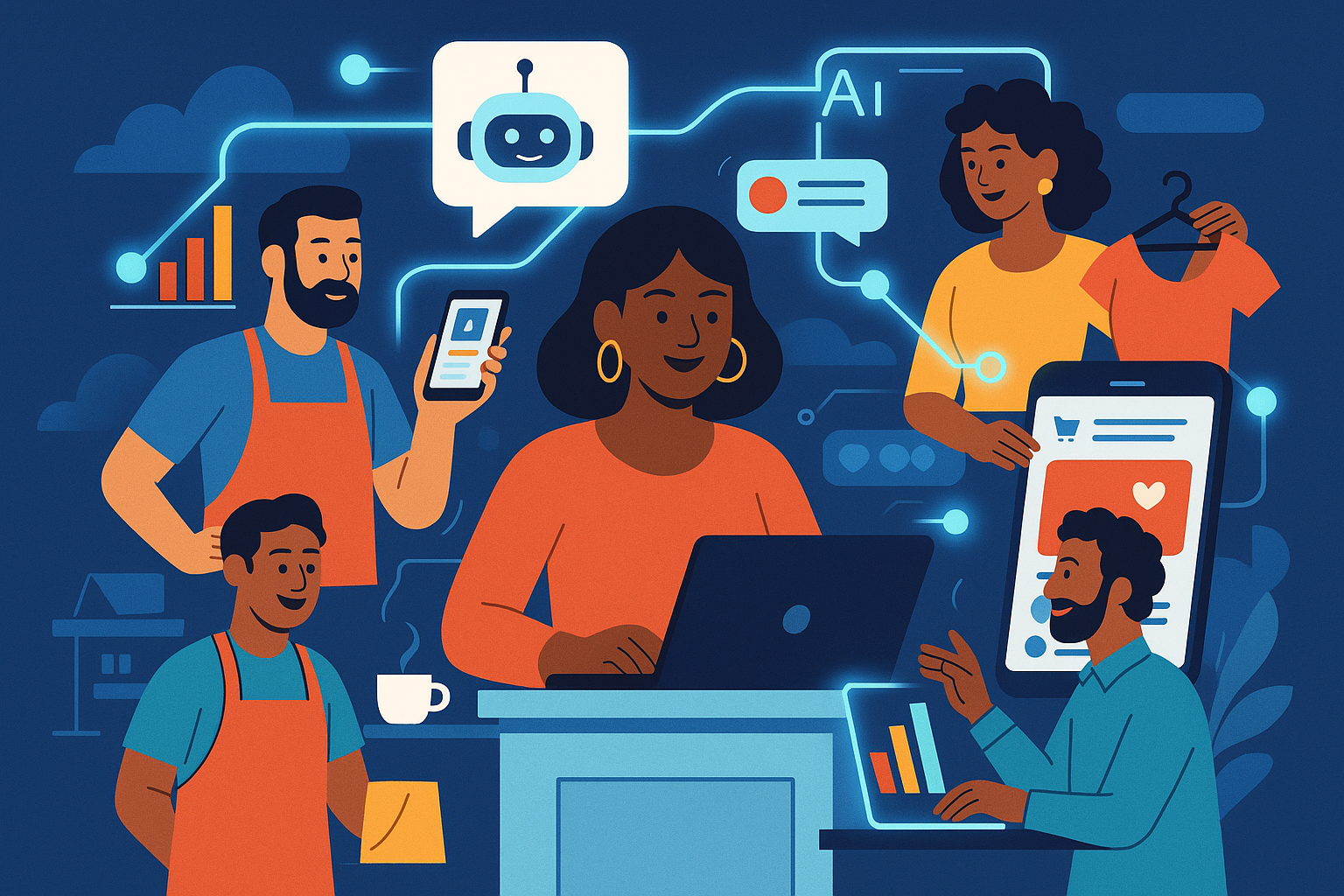
For many small and growing businesses, time and resources are the tightest constraints. Content creation, customer support, and marketing engagement often take a back seat to day-to-day survival. Artificial Intelligence (AI) is flipping this equation. By automating heavy work and amplifying creativity, AI is enabling small businesses to compete with the speed and sophistication of much larger players.
Here are concrete examples of how entrepreneurs and small businesses are already leveraging AI to accelerate growth.
AI for Content Creation
a) Social Media Marketing
Small cafés, boutiques, and agencies are using tools like Canva AI and ChatGPT to generate on-brand social media posts in minutes instead of hours.
- Example: A clothing boutique in Cape Town uses AI to auto-generate Instagram captions, suggest trending hashtags, and create images that align with seasonal campaigns.
- Impact: Consistent posting has grown their online reach without needing a dedicated content manager.
b) Blog Writing & SEO
Entrepreneurs are using AI-driven platforms like Jasper, SurferSEO, and Acalytica AI to draft blog articles that are already optimised for search.
- Example: A small accounting firm in Nairobi generates blog posts answering common tax questions, ranking in search results for queries like "Kenya tax filing tips."
- Impact: Their inbound leads doubled within three months as potential clients found them through search.
c) Video & Podcast Scripts
AI-powered tools like Synthesia and ElevenLabs let small businesses create video ads or training content without studios or production crews.
- Example: A Nigerian fitness trainer uses AI to script, voice, and produce short workout explainer videos daily.
- Impact: Her YouTube channel crossed 50,000 subscribers, attracting new clients and brand partnerships.
AI for Customer Engagement
a) Chatbots for 24/7 Support
Businesses are embedding AI-powered chatbots on their websites and WhatsApp to handle FAQs and bookings.
- Example: A small travel agency in Accra deployed an AI assistant that answers questions on visas, flights, and accommodation.
- Impact: They reduced inbound call volume by 60% and converted more enquiries into bookings.
b) Personalised Email Campaigns
Instead of generic blasts, small businesses use AI tools like HubSpot AI or Klaviyo to segment customers and send personalised recommendations.
- Example: A bakery in Johannesburg sends tailored offers (birthday cakes, gluten-free specials) based on previous orders.
- Impact: Repeat purchase rates rose by 40%.
c) Customer Sentiment Analysis
AI-powered tools analyse reviews, surveys, and social media comments to spot trends in customer feedback.
- Example: A startup selling skincare products in Lagos uses AI to detect when customers complain about packaging or delays.
- Impact: They fix issues faster, boosting retention and building stronger trust.
AI as a Growth Equaliser
What makes these use cases powerful is accessibility. Tools once reserved for corporates are now affordable and user-friendly. Entrepreneurs don’t need in-house data scientists, they can plug into no-code AI platforms that deliver instant leverage.
This means a small design agency in Nairobi or a craft business in Lusaka can operate with the marketing sophistication of a Fortune 500 company, but at a fraction of the cost.
Conclusion
AI is not some future promise for African entrepreneurs, it’s already being used to write blogs, design ads, chat with customers, and personalise engagement. Small and growing businesses that embrace AI are finding themselves punching far above their weight.
The lesson? In today’s market, speed and relevance matter more than size, and AI is the great equaliser.





