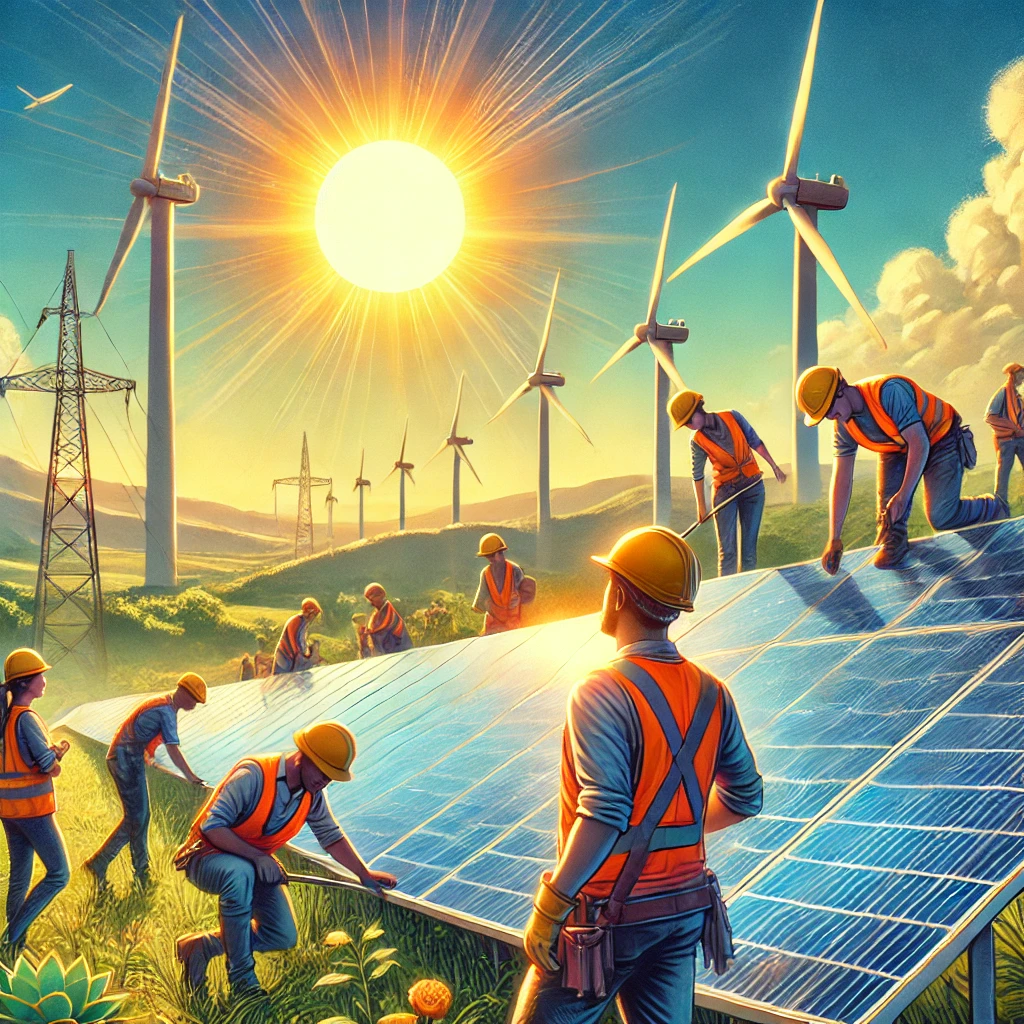
South Africa stands at a critical juncture where the potential for green energy job creation offers a unique opportunity to drive sustainable economic growth, enhance energy security, and contribute to global decarbonization efforts. As one of Africa's largest economies, South Africa's commitment to transitioning towards renewable energy sources is not just an environmental necessity but also an economic strategy with the potential to generate substantial employment opportunities across various green sectors.
According to the "Forecasting Green Jobs in Africa" report, South Africa is expected to generate up to 140,000 new direct jobs in the solar energy sector alone by 2030, with additional opportunities in other renewable energy sectors such as wind, hydro, and geothermal energy. This article explores the strategic importance of green job creation in South Africa, focusing on the potential employment impacts, the required skill sets, and the policy framework necessary to unlock these opportunities.
The Strategic Importance of Green Job Creation
South Africa's economy has traditionally been reliant on carbon-intensive industries, particularly coal mining and energy production. However, the global shift towards renewable energy and the growing need to address climate change have positioned green industries as pivotal to the country's future economic resilience. Green job creation is not only about generating employment but also about transitioning the workforce into sectors that offer long-term sustainability, both economically and environmentally.
The transition to a green economy presents an opportunity to diversify South Africa's economic base, reduce its carbon footprint, and improve energy security. By investing in renewable energy infrastructure, South Africa can mitigate the risks associated with energy shortages and price volatility while creating a more inclusive economy that benefits from the growing global demand for green technologies.
Sectoral Job Creation Potential
Solar Energy
- Solar energy is projected to be the largest contributor to green job creation in South Africa, with an estimated 140,000 new jobs by 2030. The rapid deployment of solar photovoltaic (PV) systems, both in utility-scale and distributed applications, will require a significant workforce across the value chain, from manufacturing and installation to operations and maintenance.
- The jobs in the solar sector will range from unskilled labor for installation to specialized roles such as electricians, technicians, and engineers. With the shortest deployment time among renewable energy sources, solar energy offers immediate job creation potential, particularly in regions with high solar irradiance.
Wind Energy
- Wind energy, while currently underutilized in South Africa, has significant potential for job creation, particularly in the coastal regions. By 2030, wind energy could contribute up to 79,000 direct jobs. The sector will demand a mix of specialized skills, including welders, machine assemblers, and electrical engineers, as well as general administrative roles to manage regulatory and compliance requirements.
- The development of wind farms will not only create direct employment but also stimulate indirect job creation through the supply chain, including manufacturing of wind turbines and components.
Hydropower and Geothermal Energy
- Although hydropower and geothermal energy are expected to create fewer jobs compared to solar and wind, they still represent important components of South Africa's renewable energy portfolio. The Grand Ethiopian Renaissance Dam, for example, is projected to create over 33,000 direct jobs, demonstrating the potential for large-scale hydropower projects to contribute to green job creation.
- Geothermal energy, with its specific geographic limitations, offers niche opportunities for job creation in regions with suitable natural resources. The focus will be on advanced skills in civil and electrical engineering, geology, and pipeline management.
Skills Development and Workforce Transformation
To capitalize on the job creation potential of green energy sectors, South Africa must invest in developing the necessary skills and human capital. The report highlights that approximately 40% of new green jobs will require unskilled labor, while the remaining 60% will demand specialized, general administrative, and advanced skills. This underscores the need for comprehensive workforce development strategies that include vocational training, technical education, and on-the-job training programs.
Policy Framework and Investment Priorities
Realizing the full potential of green job creation in South Africa will require a supportive policy framework that incentivizes investment in renewable energy, fosters public-private partnerships, and ensures a just transition for workers from carbon-intensive industries. Key policy recommendations include:
- Targeted Investment: Prioritizing investment in high-potential sectors such as solar energy, climate-smart agriculture, and recycling.
- Skilling Initiatives: Developing formal education programs and vocational training curricula that align with the needs of the green economy.
- Cross-Sector Collaboration: Encouraging collaboration between government, the private sector, training institutions, and international donors to create cohesive strategies for green job growth.
Conclusion
South Africa's transition to a green economy offers a pathway to sustainable economic growth, energy security, and environmental stewardship. By strategically investing in renewable energy sectors and developing the necessary human capital, South Africa can position itself as a leader in green job creation on the continent. The projected job creation in the solar, wind, and other renewable energy sectors presents a significant opportunity to drive economic transformation and build a more resilient and inclusive economy for the future.
This article serves as a call to action for policymakers, investors, and stakeholders to take bold steps towards realizing South Africa's green job potential and securing a sustainable future for all.
source: https://fsdafrica.org/wp-content/uploads/2024/07/Forecasting-Green-Jobs-in-Africa-2024.pdf





