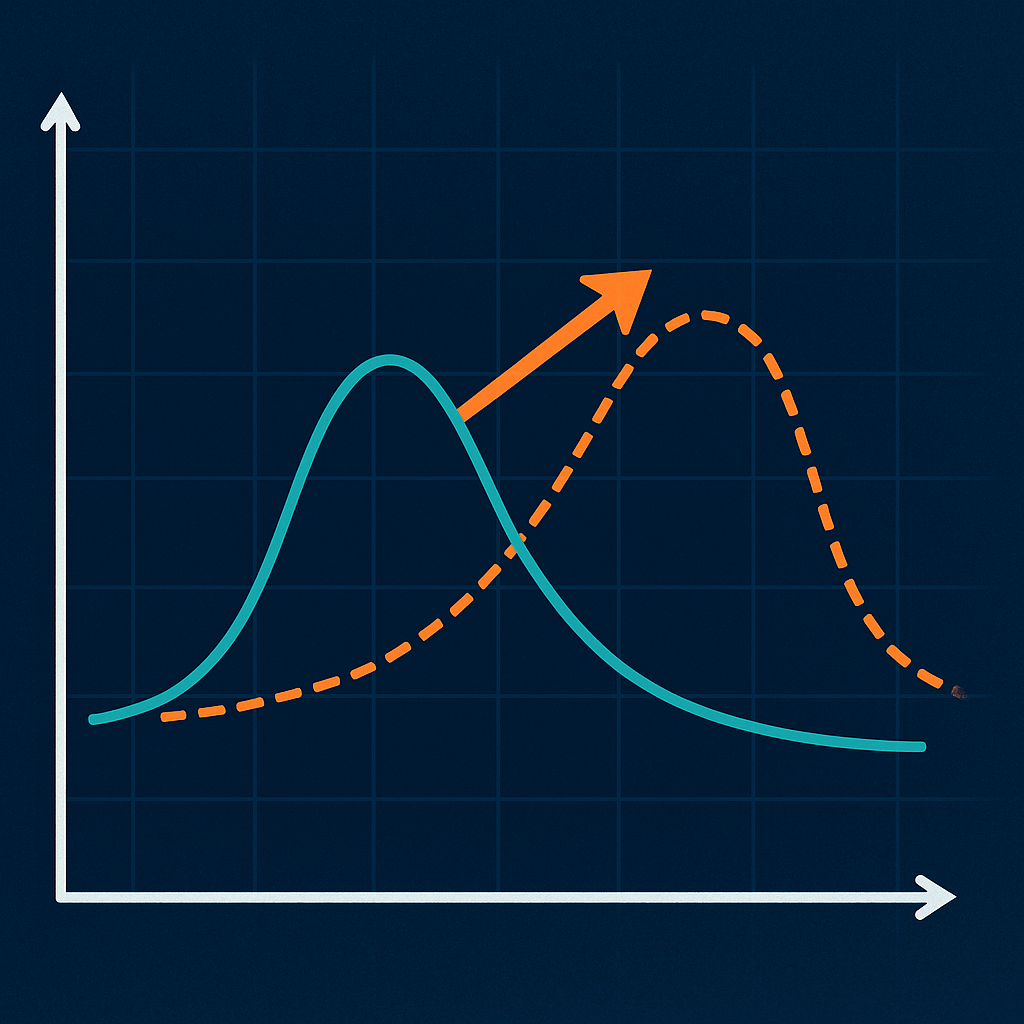
Imagine you build a machine learning model today that predicts who's likely to buy pizza tomorrow. It works beautifully, until payday shifts, a rival launches next door, or TikTok makes pineapple toppings trend. Suddenly, your predictions tank.
That's model drift. The world moved. Your model didn't.
Why Model Drift Happens
A model is like a student who memorised last year’s exam. When the questions change, their answers don’t help anymore. Markets shift. Behaviours evolve. Even the definition of what you’re predicting can change.
Drift comes in three flavours:
- Data drift: Inputs change (e.g., different customer profiles).
- Concept drift: The relationship changes (rain no longer drives umbrella sales when people shop online).
- Label drift: The target itself changes (fraud redefined to include synthetic IDs).
How to Fight Back
You don't eliminate drift. You engineer for it. Here's the playbook:
- Watch the world: Monitor input and output distributions for shifts.
- Measure reality: Compare predictions with ground truth when labels arrive.
- Build in flexibility: Keep retraining pipelines, shadow challenger models, or allow fine-tuning on fresh data.
- Use fallbacks: Keep simple heuristics or rules as safety nets when the model falters.
The Physics of Drift
Drift is like entropy. Left unchecked, order decays. Models don't go bad; reality just keeps moving. The only way to stay relevant is to inject fresh energy, through monitoring, retraining, and human oversight.
Takeaway
Drift is inevitable. But businesses that prepare for it, detect it early, and adapt quickly will stay ahead.
The exam keeps changing. Don't let your model get stuck with last year’s answers.





