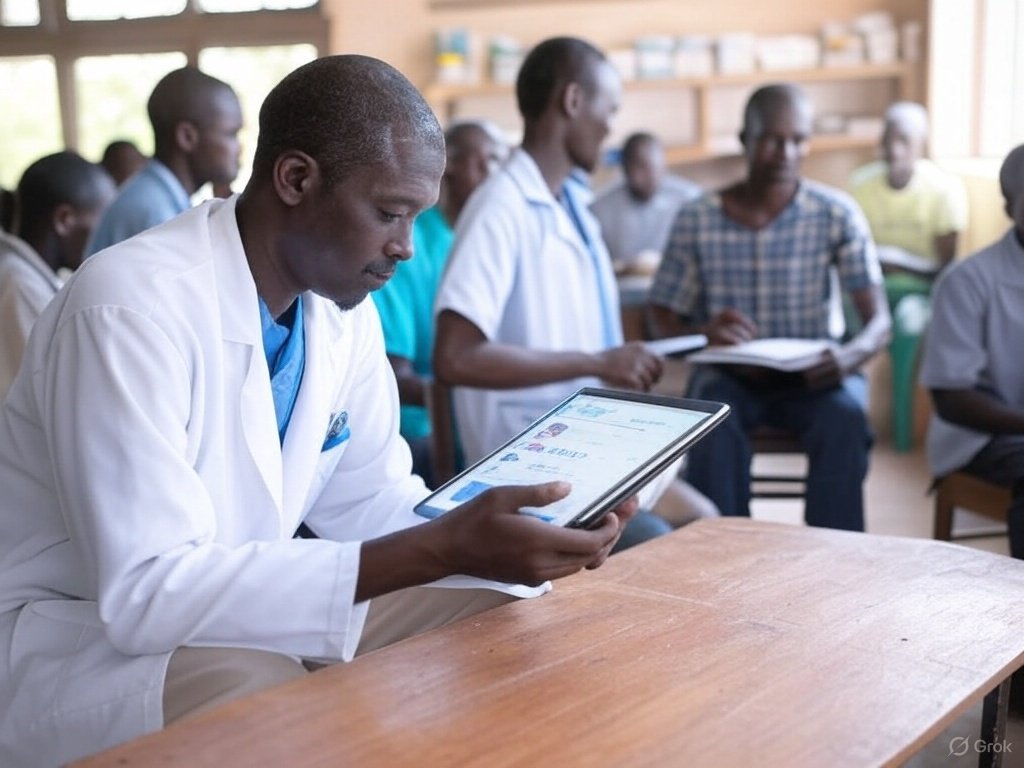
Let’s start with a simple question: What happens when machines start to learn from data—millions of pieces of data—and help us make decisions about health, faster than any doctor can? You get something powerful, but only if the whole system—people, infrastructure, rules—knows how to use it. In Africa, we’re standing at the edge of that transformation.
The Puzzle of Healthcare in Africa
Healthcare in many African countries works like a worn-out engine. Some parts are modern, others belong in a museum. Doctors might have smartphones, but hospitals often don’t have electricity. Patients might walk hours to a clinic, only to wait days for results that could be instant with the right tools. The problem isn’t just about money—it’s about design.
And this is where artificial intelligence steps in, not as a miracle cure, but as a new kind of mechanic. AI can help predict disease outbreaks, optimize where ambulances go, read X-rays, even detect signs of diabetes using just smartphone photos. But here’s the catch: if the system using the AI is broken or missing, the magic fizzles.
Data: The Fuel That Powers AI
AI doesn’t work in a vacuum. It needs data, and lots of it. But in many places in Africa, health data is like scattered puzzle pieces. Paper records, missing information, and a lack of coordination make it hard to train good models. If you feed garbage in, you get garbage out.
So the first challenge is infrastructure—not the concrete kind, but digital plumbing. You need systems to collect data consistently, protect it from leaks, and move it where it needs to go. This isn’t just a tech problem—it’s about trust. Patients need to know their data is safe. Governments need to agree on rules. And everyone needs to speak the same “data language.”
Smarter Systems, Not Smarter Machines
Here’s something easy to miss: AI doesn’t replace doctors. It supports them. Think of it like adding a co-pilot in the cockpit. You still need the pilot, but now they can fly safer, faster, and with better information.
Imagine a clinic with one nurse and 200 patients. An AI tool could help triage who needs urgent care. Another could flag risky medication combinations. A third could translate symptoms into a probable diagnosis—especially helpful in rural areas with no specialists. The real power comes not from each tool, but from how they fit together to help people do their jobs better.
The Policy Engine: Building Rules for the Road
Technology doesn’t move on its own—it follows rules. If there are no clear policies, or worse, if every region makes its own, then AI becomes a patchwork of pilots and failed promises. Africa needs smart regulation—not just to protect people from harm, but to guide innovation in the right direction.
That means policies around data privacy, algorithm transparency, and clinical validation. It means empowering local innovators, not just importing tools made for other health systems. And it means collaboration—across borders, sectors, and disciplines.
Innovation Born at the Edge
Here’s the exciting part: Africa doesn’t have to copy anyone. In fact, the constraints—limited budgets, infrastructure gaps, language diversity—are the very things sparking new ideas. Community health workers with AI-powered decision support. Drones delivering medicine to remote areas. Mobile diagnostics that bypass the need for full-blown hospitals. These aren’t stopgaps. They’re prototypes for the future of healthcare, globally.
By treating AI not as a luxury but as a core part of health strategy, African countries can leapfrog. But it requires intention—building systems, not just apps; supporting policies, not just pilots; and investing in talent, not just tools.
Wrapping It Up
This isn’t science fiction. It’s real, and it’s happening. But to succeed, we need more than good algorithms. We need systems that learn, adapt, and include everyone. We need clear policies that protect and empower. And we need innovation that starts with the problems people face, not the technology we’re excited about.
In short, we need to think clearly, act boldly, and design smartly—because AI for healthcare in Africa isn’t just about machines learning. It’s about systems growing up.





