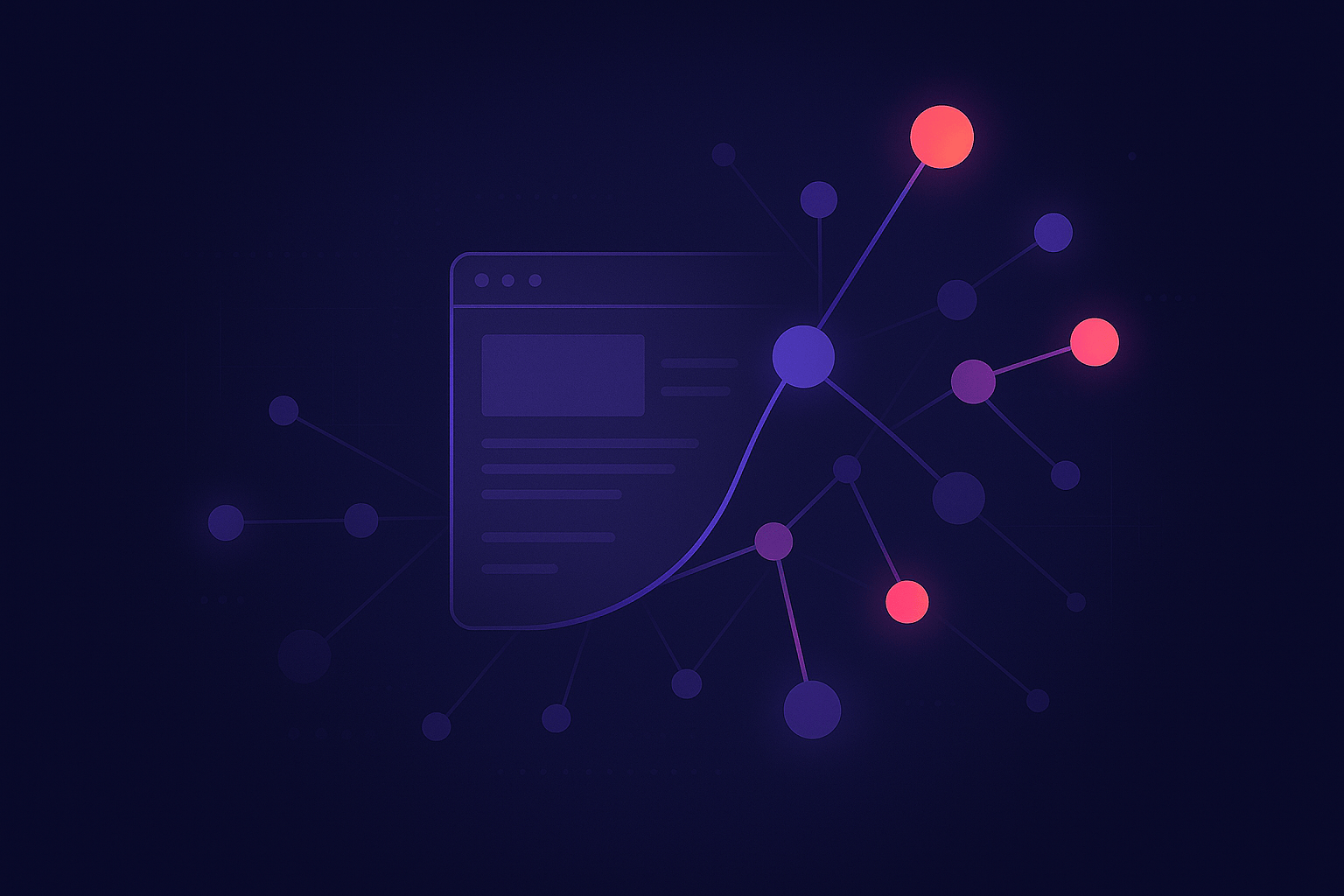
The simplest way to understand 2026 is this: the internet stops being a library and starts behaving like a colleague. Pages, apps and tools won’t wait for instructions. They will observe, predict and act. The shift sounds futuristic, but the mechanics are basic: lower costs of computation, richer behavioural data and models that finally understand context rather than keywords.
To see the shape of 2026, break the world into three forces.
Force 1: Intelligence becomes ambient
For years, AI lived inside products as a feature. In 2026, it becomes the substrate. Instead of typing into a search bar, you describe a goal and the system simulates the trade-offs, drafts a plan and triggers the next action. The old internet showed you links. The new one compresses your cognitive workload.
This is not magic. It’s a simple consequence of models becoming good enough at modelling your intent. When systems track outcomes instead of clicks, the whole ecosystem tilts toward reasoning.
Force 2: Digital identity becomes an operating system
Think of your public presence as a machine. In 2026, that machine becomes automated. Your bio page talks to visitors, adjusts the pitch, rewrites copy, updates offers and maintains a personal knowledge graph. You won’t “post content”. You’ll run a distributed system that adapts to whoever interacts with it.
The result is that people stop following personalities and start subscribing to personal infrastructures that deliver value on demand.
Force 3: Commerce becomes self-driving
A page that A/B tests itself, answers customers, collects payment, runs fulfilment, negotiates upsells and handles support isn’t sci-fi. It’s just what happens when you connect a few reasoning agents to a few basic APIs. Static websites start to look like typewriters. The new baseline is autonomous pages that think and act.
What this means for creators and SMEs
The competitive edge is no longer creativity or effort. Everyone gets that from AI systems. The edge is clarity. You win if you understand the problem better than the model does. Platforms that strip away friction and convert ideas into outcomes will outperform the ones that still rely on dashboards and configuration screens.
SMEs across Africa get the biggest uplift. Infrastructure costs drop. Onboarding becomes one-click. Verification, payments, support and analytics run themselves. When the operational burden collapses, the constraint becomes imagination.
Why this matters in 2026
People are tired of generic futurism. The internet responds to ideas that explain what’s actually happening under the hood. The story of 2026 is not about hype. It’s about a simple, understandable shift: when intelligence becomes cheap, everything that was once manual becomes autonomous.
The opportunity for Acalytica
Acalytica sits inside this transition. A page is no longer a page. It’s a living agent that optimises itself. The creator is no longer forced to be a marketer, designer, analyst and strategist. The platform handles the complexity. The person focuses on the signal: what they want to deliver.
2026 isn’t a revolution. It’s a clean-up operation. The internet finally removes the layers of friction that slowed everyone down. The systems get smarter. The work gets lighter. And the people who understand these forces early get an unfair advantage, because they stop fighting complexity and start letting intelligence do the heavy lifting.


