A landing page is a controlled environment. Its entire purpose is to take a visitor from attention to action with the least possible cognitive effort. The mechanics are predictable once you strip away aesthetics and treat the page as a behavioural system.
Single-purpose design is the core mechanism
A visitor lands with limited working memory. Every extra choice consumes that memory. A landing page works because it removes competing paths. One goal, one message, one action. When there is no ambiguity about what should happen next, the brain defaults to completion rather than evaluation. This is the structural reason landing pages outperform multi-page websites for conversions.
Cognitive load is the real opponent
Design debates often miss the point. The enemy is not an ugly layout; it is unnecessary thinking. Complex pages force users to interpret, compare, and guess. Those micro-decisions cost attention, and attention leaks fast. High-performing landing pages reduce interpretation. They present the essential information in the simplest possible form so the visitor never shifts into analysis mode.
Visual hierarchy guides behaviour without explanation
Humans scan before they read. Order, spacing, and contrast determine what the eye lands on first. A clear headline, a sharp subheading, and a clean action block reduce the mental work required to understand the offer. Good hierarchy turns scanning into comprehension. Poor hierarchy turns scanning into confusion.
Trust must be stabilised early
Visitors hesitate because they fear wasting time, money, or effort. Social proof works by reducing perceived risk. Testimonials, usage claims, and recent activity signals create a sense of legitimacy. Trust elements do not persuade; they anchor. Their role is to remove the emotional friction that stalls decision-making.
Mobile-first is not optional in South Africa
South African users browse primarily on mobile, often under data constraints. Slow load times lead to instant abandonment. Heavy assets punish users financially. A landing page succeeds only if it loads quickly, remains readable under small screens, and prioritises essential content above decorative elements.
The structure of a high-performing landing page is consistent
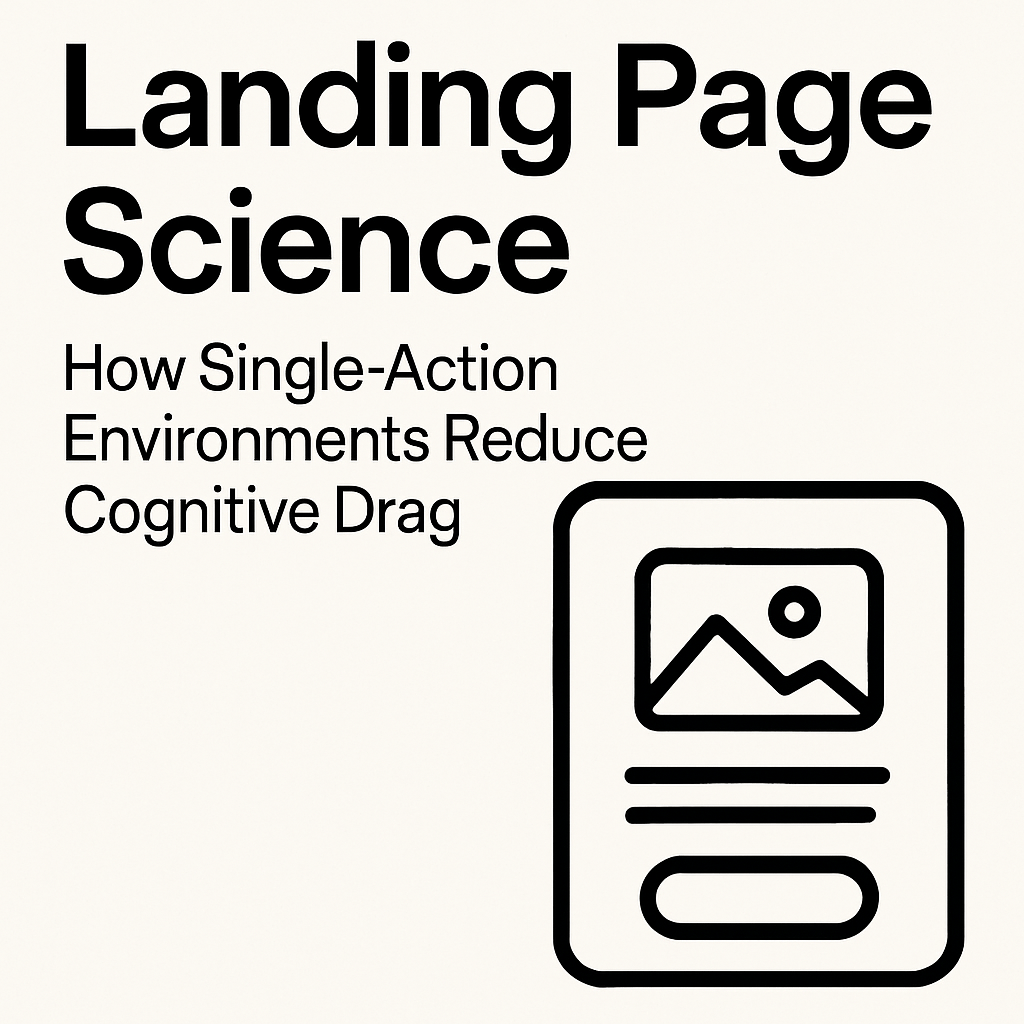
A clear outcome-driven headline frames the value. A tight explanation reduces ambiguity. A trust element removes risk. A single action block directs the next step. Optional supportive content sits below the fold, not above it. The page succeeds when users can understand the offer and act on it without pausing to think.
Landing page science is not design theory
It is behavioural engineering. Every element either reduces cognitive drag or increases it. The winning strategy is simple: remove everything that forces the visitor to work.