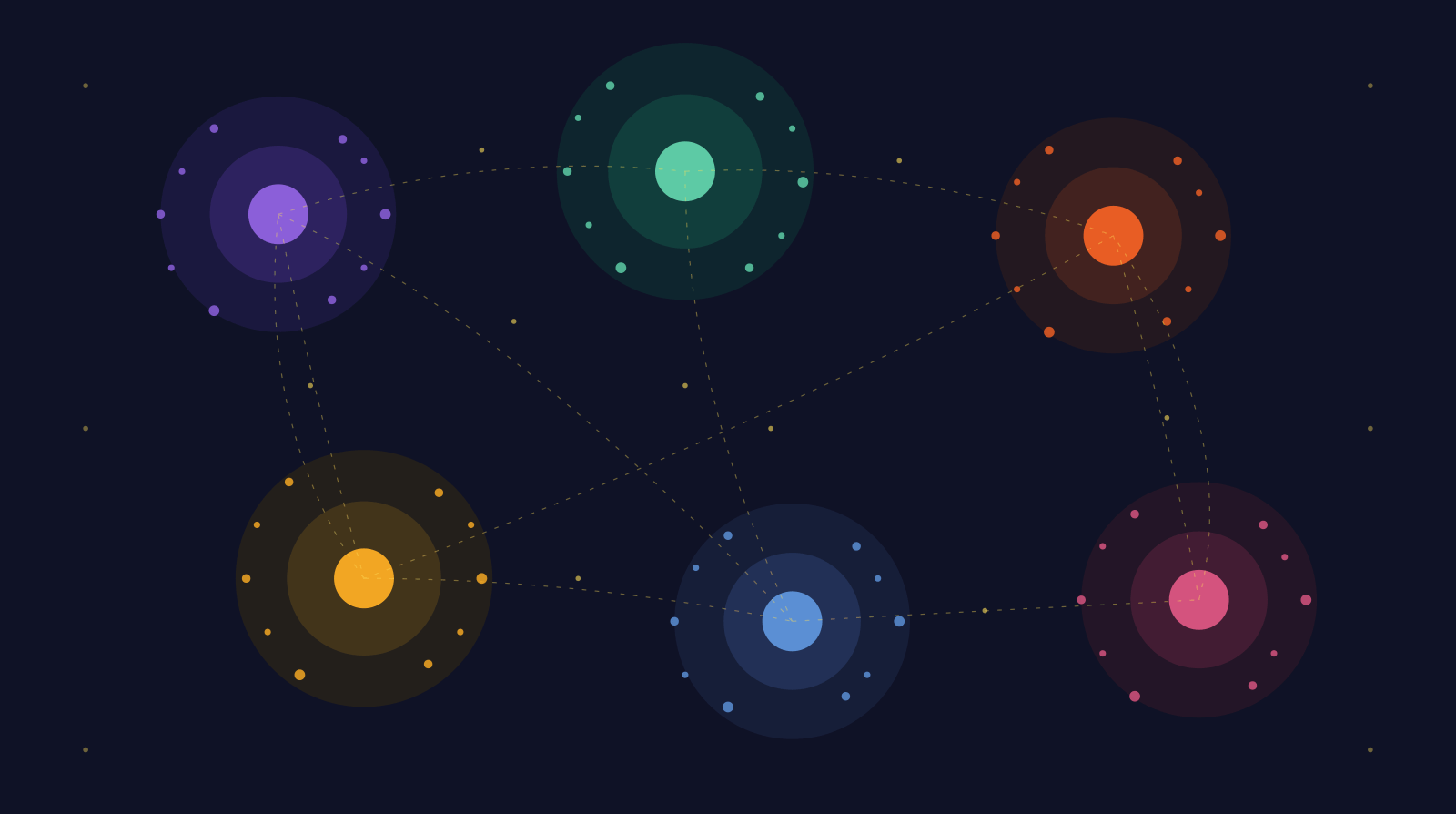
Creator and community fluency is one of those phrases that gets used loosely in industry decks, but underneath the buzzword there's a real and uncomfortable shift in what kind of work actually moves audiences. The short version: the cultural centre of gravity for most consumer audiences has migrated from brand-owned channels into spaces that brands don't own, can't control, and historically didn't understand, and the agencies that have learned to operate inside those spaces are doing fundamentally different work than the ones still treating influencer marketing as a media line item.
The starting point is recognising what changed. Ten years ago, "influencer marketing" was an extension of celebrity endorsement: find someone with reach, pay them to say nice things about your brand, treat the relationship as a transaction, and measure it like media. That model still exists, and at the high end it still occasionally works for awareness, but it's increasingly disconnected from where culture actually happens. What's replaced it isn't a bigger version of the same thing, it's something structurally different. Audiences have organised themselves into communities (around interests, identities, formats, platforms, and individual creators) that have their own languages, norms, status hierarchies, and bullshit detectors. A brand entering one of these communities the way it would buy a TV slot is immediately, visibly out of place, and the audience punishes it. A brand that earns its way in over time becomes part of the community's shared context, which is worth far more than any media buy.
Fluency is the difference between those two outcomes, and it isn't a tactic, it's a set of literacies most agencies historically didn't develop because they didn't need to.
The first literacy is understanding that creators are not media properties. A creator is a small business with a relationship to an audience, and that relationship is the actual asset. When a brand treats a creator like a billboard, sending locked-in scripts, demanding rigid usage rights, dictating posting schedules, the creator either says no (if they have leverage) or says yes badly (and produces content that visibly underperforms their normal work, because their audience can tell). Agencies that are fluent here approach creators as collaborators with creative authority over how their audience is addressed. The brief is a starting point, not a script. The creator brings the format, the language, the comedic timing, the trust. The brand brings the product, the proof points, the strategic intent, and the willingness to accept that the work won't look like a brand ad, that's the entire point. Agencies that can't get their clients comfortable with this loss of control are doing influencer marketing in name only. Agencies that have built the muscle for it are unlocking work that genuinely changes brand perception in ways traditional media can't.
The second literacy is knowing how to identify the right creators for a specific job, which is much more nuanced than buying reach. Reach is the metric everyone defaults to, and it's almost always the wrong one. The questions that actually matter are: does this creator have genuine credibility on the topic the brand cares about? Does their audience actually trust them on category-relevant decisions, or just enjoy their content? Is the audience composition real (and not bought)? What's their typical engagement quality, comments full of substance, or empty fire emojis? How do they handle brand work, do they integrate sponsorships in ways their audience tolerates, or do they get roasted in the comments? How often do they post brand work, and what's the saturation tolerance of their audience? Have they worked with competitors, and if so, did it go well? A fluent agency has a research methodology for answering these questions before sending the first DM, and it usually involves a mix of social listening tools, manual review by humans who actually consume the creator's content, and increasingly some AI-assisted analysis of comment sentiment and audience composition. The agencies still picking creators by sorting a database by follower count are doing the equivalent of buying media by reading rate cards and ignoring the actual programming.
The third literacy is fluency in the formats themselves, which is much harder than it sounds. TikTok is not Reels is not Shorts is not YouTube long-form is not Twitch streaming is not Substack is not a Discord server. Each platform has its own grammar, what kind of opening hook works, how long is too long, what counts as authentic vs. performative, what tropes are fresh vs. exhausted, what the algorithm rewards this month vs. last month. The half-life of any specific format insight is measured in weeks. Agencies that are fluent here have people on the team who actually live in these platforms, not as work, as life, and bring back working knowledge that can't be acquired by reading trend reports. Agencies that don't have this capability tend to produce creator content that feels six months out of date the moment it ships, and they can't always tell why. The clients can tell, and so can the audiences.
The fourth literacy is understanding community dynamics, which goes beyond individual creators to the spaces where audiences actually congregate. A subreddit isn't a media channel, it's a social context with rules, moderators, in-jokes, and a long memory for brands that misbehaved. A Discord server has its own culture. A Slack community for a specific profession has norms about what's welcome. A fandom around a TV show, a sports team, a video game, or a musician has internal politics and factions an outsider can't read without sustained attention. Brands that try to "do community marketing" by showing up and posting promotional content get rejected in ways that are sometimes funny and sometimes career-defining for the marketer who approved it. Agencies that have built community fluency know which spaces a brand can earn its way into, which it should support without entering, which it should partner with native voices to access, and which it should leave alone entirely. This is closer to ethnography than to advertising, and most agencies don't staff for it.
The fifth literacy is the long game of relationship building, which is the part that's hardest to commercialise but matters most. The creators and community leaders worth working with the third time are usually the ones the brand worked with the first and second time on terms that felt fair, paid properly, treated as partners, given creative latitude, not ambushed with last-minute changes, supported when something went wrong. This builds a roster of people who will actually make the brand look good when it matters, who will say yes to a fast turnaround because the relationship is real, and who will recommend the brand to other creators in their network. Agencies that approach creator work as one-off transactions never build this, every campaign starts from zero and has to overcome the creator's well-earned suspicion of brands. Agencies that approach it as relationship-building over years end up with networks that compound, the same way first-party data does, and for the same reasons: trust takes time to build and can't be bought.
The sixth literacy, increasingly important, is understanding how creators and communities interact with the platforms' algorithms and commerce systems. A creator economy in 2026 isn't just about content, it's about TikTok Shop, Amazon storefronts, affiliate links, creator-led product launches, livestream commerce, subscription-only content, and the increasingly complex ways audiences discover and buy through people they trust. The agencies doing serious work here understand the entire creator-to-conversion path, not just the impression count. They know which creators drive clicks vs. saves vs. follows vs. actual purchases. They know how to set up the measurement infrastructure to attribute creator content properly even with limited signal. They know how to structure briefs that work for both brand objectives and platform commerce mechanics. This is real technical work, and it sits at the intersection of creator strategy, performance marketing, and e-commerce, three disciplines that traditional agencies kept separate and now can't.
Underneath all of these literacies is a deeper cultural shift that most agencies are still resisting: the locus of creative authority has partially moved outside the agency. For decades, the agency's value was that it employed the best creative talent and that its creatives made the work. In a creator-led world, a meaningful share of the best creative talent isn't on any agency payroll, it's running its own audience, making its own format decisions, and producing work that resonates in ways the agency's in-house creatives sometimes can't match for a specific community. This is a hard truth for agencies because it implies that the agency isn't always the one making the creative, sometimes the agency's job is to identify the right external creative voices, brief them well, give them room, and protect their work from the brand's instinct to over-control. That's a different role than traditional creative leadership, and it requires a kind of humility that doesn't come naturally to most creative directors. The agencies handling this well have repositioned their internal creative talent as concept architects and quality stewards, with the actual execution often coming from external creators. The agencies handling it badly are competing with their own creator partners, producing in-house "creator-style" content that feels off, and wondering why it doesn't perform.
A few honest observations about how this plays out in practice.
Most influencer agencies are not creator-fluent, they're creator transactional. They have rosters and rate cards and project management systems, but the actual relationship work, the format fluency, and the community understanding aren't there. When you look closely, the difference shows up in specific places: how they brief creators (lock-and-load scripts vs. collaborative starting points), how they handle revisions (granular changes vs. trust the creator's instincts), how they think about measurement (impressions vs. relationship outcomes), and what their roster looks like over time (constantly rotating vs. deepening with the same partners). A fluent agency and a transactional one can produce decks that look identical and end up doing very different work.
The seam between paid creator work and earned cultural moments is where the magic actually happens, and it's almost impossible to plan. The biggest creator-led wins for brands in the last few years have generally not been the campaigns that were briefed and executed exactly as intended, they were moments where a creator did something organic with a product, the brand recognised it in real time, and the agency had the agility to amplify and extend it in hours rather than weeks. Building the operational capacity for this is hard: it requires being permanently listening, having decision-making authority sitting close to the listening function, and having pre-approved budgets that can be deployed without going back to procurement. Agencies that have built this capability look more like newsrooms than ad shops, and that's the right comparison.
Community work is unfair on the agency P&L. The work it takes to actually build a relationship with a specific community over months, showing up, listening, contributing value before asking for anything, partnering with native voices, accepting that some efforts won't produce visible ROI in any quarter, doesn't fit cleanly into a billable retainer or a campaign budget. The agencies that do it well usually have to fight their own commercial structures to make the time, or they bundle the unglamorous work into bigger engagements where the headline deliverable hides the slow community investment underneath. Until pricing models catch up, which is happening slowly, mostly through outcome-based and partnership-style contracts, this is going to remain a discipline where doing it right is harder to commercialise than doing it shallowly, and shallow community work is what most brands end up paying for.
The talent question is acute. People who are genuinely fluent in creator culture and community dynamics are usually not traditional agency hires. They came up as creators themselves, or as community managers, or as fans who turned their fandom into a profession, and they often have an allergic reaction to traditional agency culture, the meeting calendars, the deck approvals, the formal hierarchies. Agencies that can create environments where this kind of talent thrives are doing work nobody else can match. Agencies that try to slot them into account director career paths usually lose them within a year or two. The accommodation goes both ways: the agency has to bend toward these people's working style, and the people have to accept that some institutional friction is the price of operating at the scale and with the resources an agency provides.
Brand safety and creator risk management are real and underdiscussed. Working with creators means taking on the risk that a creator says or does something, past, present, or future, that the brand can't be associated with. The careful agencies have actual due diligence processes (not just a quick scan for slurs in old tweets), contractual protections that work in the creator's favour too (otherwise creators won't sign), crisis playbooks for when something goes sideways, and the willingness to occasionally tell a client they shouldn't work with someone the client wants to work with. The careless agencies skip this until the inevitable incident, then scramble. This isn't a reason to avoid creator work, it's a reason to do it with the seriousness it deserves.
Measurement is genuinely harder here, and the agencies pretending otherwise are lying. A creator post lives in a context that traditional media measurement can't fully capture: comments that build over weeks, saves that turn into purchases months later, secondary mentions in other creators' content, screenshots in group chats the brand will never see, the slow cultural drift of being mentioned in the right places by the right people. Trying to force this into a CPM or a CPA framework misses most of what creator work actually does for a brand. The agencies that have built honest measurement here use a portfolio approach: some short-term performance metrics for the parts that can be tracked, some medium-term brand health tracking for the cumulative effects, and some genuinely qualitative assessment of cultural relevance, usually involving humans who actually understand the spaces in question reading what's being said and interpreting it. This is messy and requires judgment, which is why a lot of agencies prefer to keep showing dashboards instead.
The deeper strategic point is that creator and community fluency isn't a service line agencies should add, it's a fundamental rewiring of how the agency understands where culture happens and how brands can earn a place in it. The agencies that have been at this for years, who have built the relationships, developed the literacies, hired the right kinds of people, and learned the hard lessons about what works and what doesn't, are doing work that's increasingly hard for in-house teams or platform services arms to replicate. The relationships are personal. The judgment is built from experience. The cultural reading takes time to develop. None of those are things you can buy on a SaaS subscription or hire for in a single quarter.
The agencies still treating creators as a media supplement and communities as a target are doing 2018 work in a 2026 market. The audiences moved; the work has to move with them, or it stops mattering. The agencies that recognise this, and accept the uncomfortable implications for how they staff, operate, measure, and commercialise the work, are building one of the few capabilities left that the platforms can't take and the clients can't easily in-house. The agencies that don't are slowly becoming irrelevant to the conversations that actually shape how brands grow.





