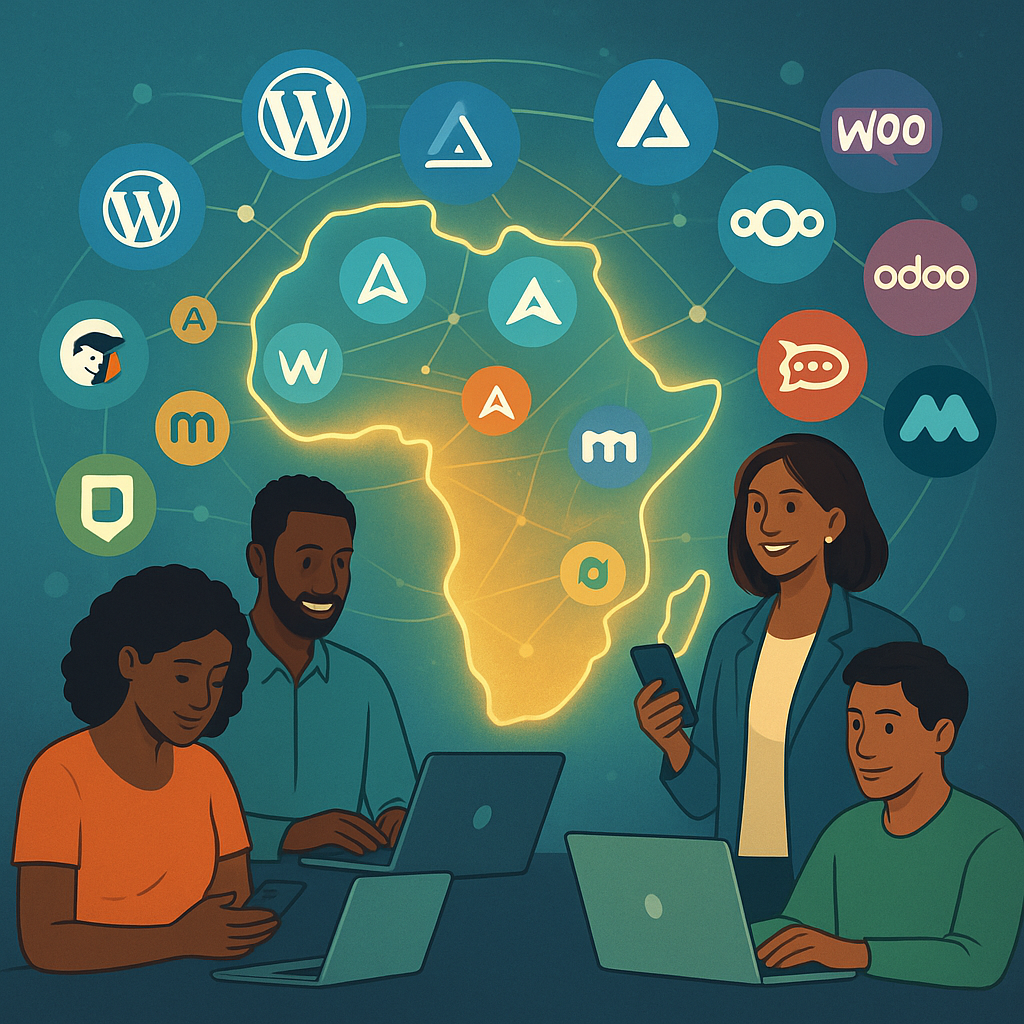
Complementary Digital Infrastructure (CDI) refers to privately-owned digital platforms that support DPI-aligned principles—inclusion, interoperability, and safeguards—while remaining free to access and use. These platforms empower users, especially in emerging markets and underserved communities, by lowering barriers to digital growth.
Below is a curated list of 10 platforms that exemplify CDI, providing free access to essential digital capabilities for commerce, communication, education, and analytics.
🇿🇦 1. Acalytica (South Africa)
- Use Case: Digital storefronts, QR codes, web analytics, and social proof tools.
- Why CDI: 100% free since June 2025; removes the need for payment gateway accounts; focuses on township/rural inclusion.
- Free Features: Storefronts, page analytics, link tools, digital product sales.
🌍 2. OpenCart
- Use Case: E-commerce for small businesses.
- Why CDI: Open-source and globally used; enables merchants to go digital independently.
- Free Features: Storefront management, product listings, themes, and extensions.
🌍 3. WordPress.com
- Use Case: Website and blog creation.
- Why CDI: Its free plan supports DPI goals—access to digital presence tools without cost.
- Free Features: Basic site builder, templates, hosting.
🌍 4. WooCommerce
- Use Case: Turning WordPress into a fully functional e-commerce platform.
- Why CDI: Free, open-source, and integrates payment gateways; highly extensible.
- Free Features: Store setup, product catalog, tax and shipping settings.
🌍 5. PrestaShop
- Use Case: Building multilingual e-commerce websites.
- Why CDI: Open-source and enables global market access for small vendors.
- Free Features: Store creation, inventory management, customer tools.
🌍 6. Moodle
- Use Case: Online learning environments.
- Why CDI: Used by educators in low-resource settings worldwide; emphasizes inclusivity and localization.
- Free Features: Course creation, enrollment, quizzes, certification tools.
🌍 7. Odoo Community Edition
- Use Case: ERP, CRM, and basic business management.
- Why CDI: Free Community version supports SMEs with critical tools for growth.
- Free Features: CRM, project management, invoicing, POS.
🌍 8. Nextcloud
- Use Case: File hosting, collaboration, and secure data sharing.
- Why CDI: Self-hosted and privacy-focused, enabling sovereign control over data.
- Free Features: File sync, calendar, task management, team collaboration.
🌍 9. Rocket.Chat
- Use Case: Team messaging and communication.
- Why CDI: Free for small teams; ideal for civic tech, cooperatives, or early-stage ventures.
- Free Features: Real-time chat, channels, video conferencing.
🌍 10. Matomo
- Use Case: Web analytics.
- Why CDI: Privacy-compliant alternative to Google Analytics, giving users full data control.
- Free Features: Visitor behavior analytics, goal tracking, real-time reporting.
✅ Why These Platforms Matter
These platforms:
- Reduce dependency on commercial Big Tech ecosystems.
- Are often open-source or offer generous free tiers.
- Align with DPI values of affordability, autonomy, and empowerment.
- Serve as digital public goods—even when privately maintained.
🔎 Observations
- Acalytica is unique as an African-born platform that explicitly embraces the CDI identity and adapts for local payment realities.
- Most others are implicitly CDI—they don’t brand themselves this way but fit the framework due to openness, accessibility, and community benefit.





