Support the Acalytica GBV Fund
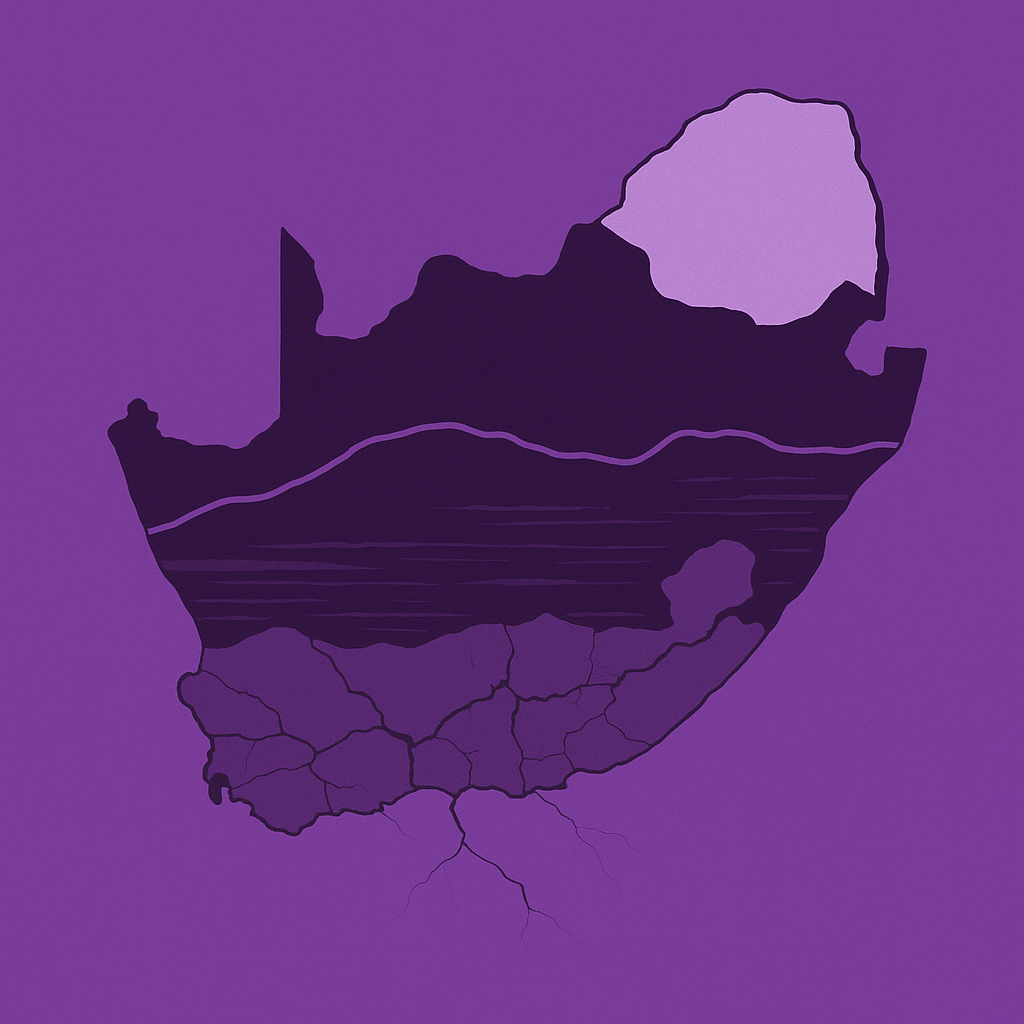
The question is not why GBV happens. The question is why it happens so reliably, so predictably, and on such a massive scale. When violence becomes a patterned output of a society, you do not look for individual monsters. You look for structural mechanics.
The simplest first-principles frame is this:
GBV emerges when a society teaches some people that they are entitled to control others, gives them violent tools to enforce that control, makes the cost of using those tools low, and traps the targets in relationships where exit is economically impossible.
South Africa checks every box. The result is not random cruelty. It is system behaviour.
The Base Layer: Power Asymmetry
Violence becomes a rational strategy when one group holds more authority, more resources, and more social permission to punish resistance. In South Africa’s gender order, that asymmetry is baked in long before any relationship begins.
Patriarchy positions men as controllers and women as dependents. It defines masculinity as authority and femininity as compliance. You can soften the language, but the organising logic is simple: one side is allowed to give orders, the other is expected to absorb them.
Once that asymmetry is set, violence becomes the enforcement mechanism. You see this in the specific targets: partners, ex-partners, queer women, gender-nonconforming individuals. GBV is not random aggression. It is the policing of gender boundaries.
A Society Trained to Use Violence
South Africa is not just unequal. It is deeply violent. People learn the rules of force from the environment around them. When violence is everywhere, it becomes a familiar tool.
High homicide rates, community vigilantism, childhood exposure to assault, and homes where shouting and beatings are routine all create a behavioural template. Conflict plus shame plus masculinity equals force. Violence becomes a valid step in the decision tree.
This normalisation matters because it fills the toolbox. Once the mental model accepts force as a legitimate move, patriarchy supplies the target and the justification.
Economic Dependence: Trapped by Design
Even if you reject patriarchal control, you cannot leave if you have nowhere to go. Economic dependence removes exit options. And in a country with chronic unemployment and persistent poverty, especially for women, leaving an abusive partner often means stepping straight into hunger or homelessness.
Dependence does not cause violence. It locks you into a structure where the cost of resistance is catastrophic. That makes coercion cheaper for the perpetrator and riskier for the survivor. It turns relationships into asymmetric negotiations, where one side can escalate and the other cannot credibly withdraw.
Violent Masculinity Scripts
Ideas of manhood act as operating systems. South Africa’s dominant script teaches that a man's worth is measured by status, control, sexual access, and the ability to enforce respect. This script makes obedience feel like a right and resistance feel like humiliation.
Once violence is culturally normalised, this masculine script turns it into an instrument of identity. Violence becomes a way to restore wounded pride, assert dominance, or punish disobedience. This is why GBV spikes around breakups, financial stress, accusations of infidelity, and moments where a man’s authority is challenged.
It is not loss of control. It is the reassertion of it.
Institutional Failure: A System That Doesn’t Bite
Laws do not prevent violence. Enforcement does. In South Africa, enforcement is inconsistent, slow, traumatising, and often pointless.
Police dismiss reports. Dockets disappear. Cases collapse. Survivors are asked to prove their own harm while perpetrators walk free. Violence carries little penalty, so it remains a workable strategy for control.
A rational perpetrator calculates likelihood of consequences. Here, the likelihood is low. That is enough to keep the system running.
Individual Catalysts, Not Root Causes
Alcohol, jealousy, stress, anger, and trauma appear in most cases. They matter, but they are multipliers, not causes. They help determine timing and severity, but only in a society where the structural permission for violence already exists.
A sober man with a different masculinity script in a society with strong institutions is less likely to use force. A drunk man in a violent society that rewards dominance is far more likely to reach for it. The difference is not the alcohol. It is the architecture.
The Multi-Level System
GBV is a layered system:
Structural level - Inequality, unemployment, patriarchal norms, historical violence, weak institutions.
Community level - High-crime areas, normalised coercion, survival relationships, social silence.
Individual level - Trauma histories, violent scripts, low emotional regulation, substance use.
GBV emerges when these layers align. Remove one layer and rates may fall. Remove several and the pattern collapses.
What This Means in Practice
The uncomfortable conclusion from first principles is this:
GBV is not the behaviour of outliers. It is the expected output of a system built on gendered power, economic dependence, violent norms, and institutional weakness.
You cannot fix that by moral appeals or awareness campaigns alone. You fix it by changing the payoff structure:
- Shift norms so dominance loses status.
- Increase economic independence so exit is affordable.
- Rebuild institutions so violence carries real cost.
- Transform masculinity so control stops being a measure of worth.
- Reduce community violence so force stops being a default move.
Once the incentives change, the behaviour changes. Until then, GBV remains a logical, even predictable, result of the system South Africa has built and maintained.
Support the Acalytica GBV Fund