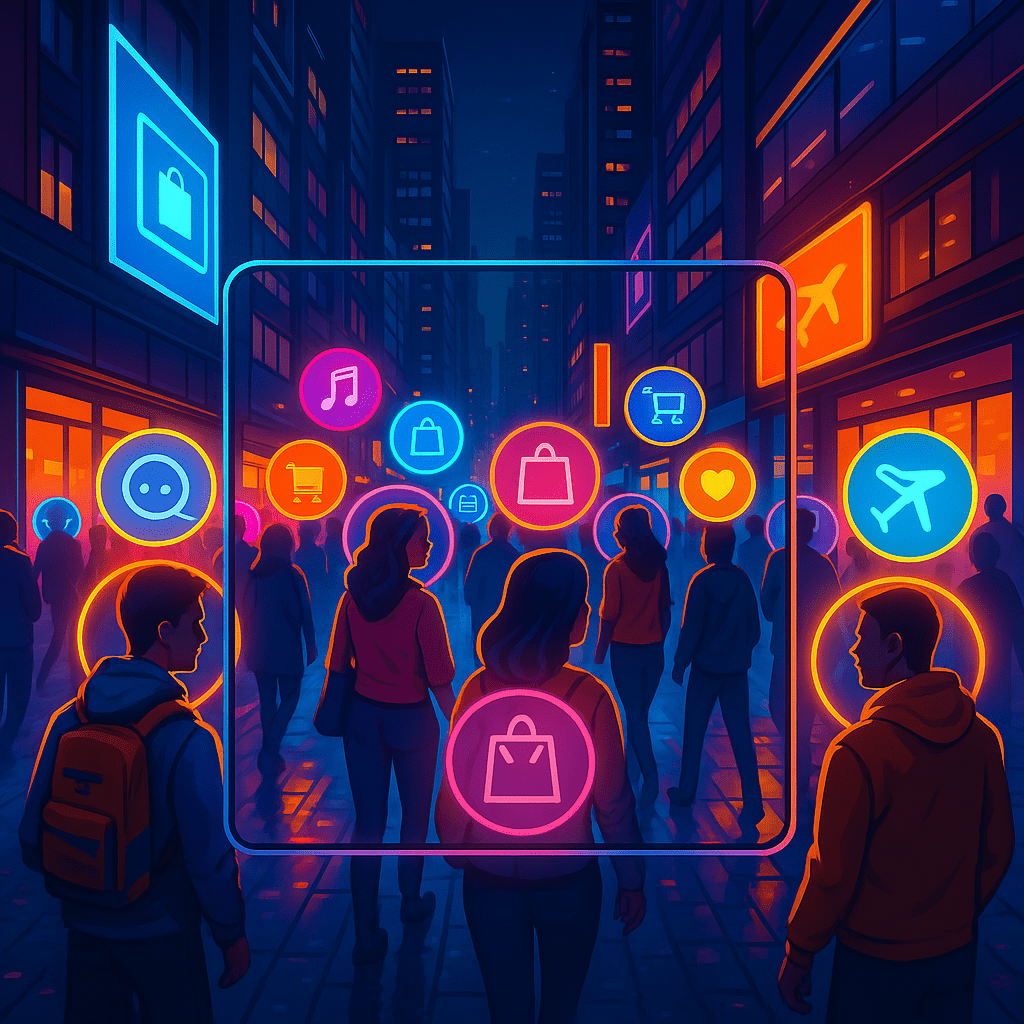
Marketers used to talk about "the average consumer." That mythical person who is 35 years old, earns X a month, watches Y hours of TV, and responds to Z adverts. The truth? That person never existed. No one is average. Yet for decades, brands designed everything for the "middle."
AI and data have finally killed the idea of the average customer. What we're entering now is the age of hyper-personalisation, where your brand wins or loses by how well it understands individuals, not segments.
Why "Average" is a Dead Concept
Imagine you're designing a T-shirt for ten people. If you average their sizes, you end up with a size that fits no one. Traditional marketing was like that: averages smoothed over the edges, but they also erased the individuals. Hyper-personalisation flips this. It says: design for the edges, not the middle.
How Hyper-Personalisation Works
- Data as the raw material. Every click, scroll, purchase, and pause tells a story. The challenge is connecting those dots without drowning in noise.
- AI as the engine. Humans can't spot the thousands of micro-patterns that define behaviour, but AI can. It can tell when a customer is most likely to buy, what tone of message resonates, and which products to recommend.
- Experience as the outcome. Personalisation isn't about creepy "we know your secrets" tactics. It's about relevance. A customer should feel, "This brand sees me."
Why This Matters for Brands
- Trust grows when customers feel understood. Think about Netflix. People stick with it not because of its logo but because the recommendations feel tailored.
- Personalisation drives loyalty. Once someone feels your brand "gets them," they'll resist switching, even if competitors are cheaper.
- Efficiency skyrockets. Instead of wasting money on broad campaigns, brands can target only the people who are most likely to act.
The Pitfalls
Hyper-personalisation isn’t free of risk.
- Privacy concerns. Push too far, and you look like Big Brother.
- Automation fatigue. If every message feels machine-generated, the brand loses its humanity.
- Data dependency. Garbage data = garbage personalisation. If your inputs are biased, your outputs will be too.
Making It Real Without Being Creepy
- Be transparent. Tell customers how you use their data and give them control.
- Add a human layer. Use AI for the groundwork, then let humans inject empathy and nuance.
- Personalise the journey, not just the sale. It's not just about recommending the right product. It's about shaping every interaction: emails, service calls, even packaging.
The Bottom Line
The age of "average" is over. In its place is a marketplace where every customer expects to be treated as unique. The brands that master hyper-personalisation won’t just sell more, they'll feel indispensable.
The irony is that when you stop treating people like averages, your brand becomes universal. Because nothing is more human than being seen as an individual.





