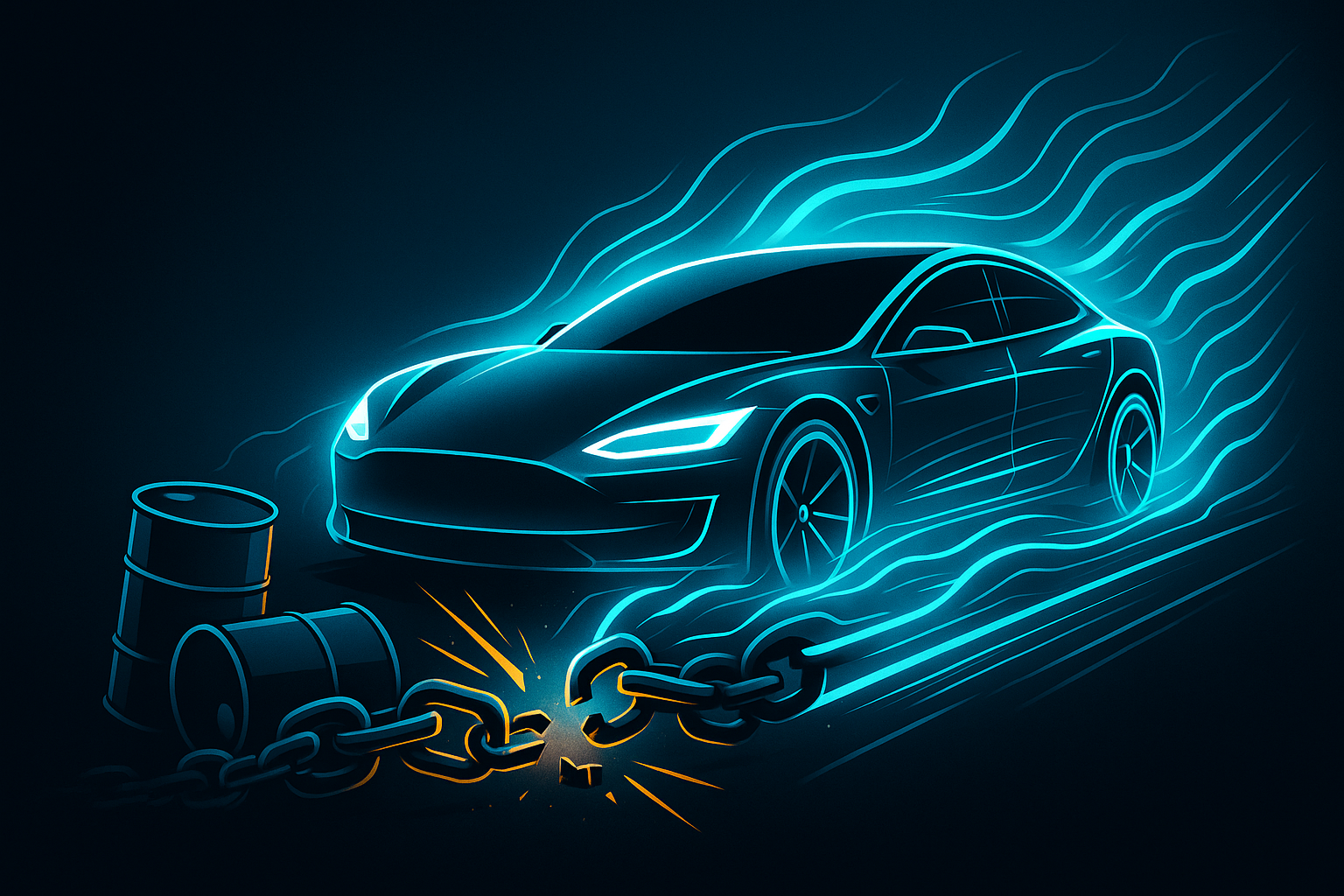
Most companies think branding is about polish. New logo. Clever tagline. A few glossy ads with happy people driving on mountain roads. That's decoration. It's like painting rust, looks good for a while, but the metal underneath is still weak.
Tesla didn't start with polish. They started with physics.
Breaking the Assumptions
Take a car. What is it, really? A box on wheels that moves you from A to B. For 100 years, people assumed that meant a gas tank, pistons, exhaust fumes, and noise. Everybody marketed around that: speed meant "more cylinders," luxury meant "more leather," safety meant "thicker steel."
Tesla asked a dumb question, the best kind: Why does a car need petrol at all? A car needs energy. Petrol is just one way to store it. Batteries are another.
Then came the next assumption: "Electric cars are slow, boring, and ugly." Where did that come from? From the golf cart. But a golf cart is just a bad implementation, not the law of nature. There's nothing stopping an electric motor from outrunning a Ferrari. In fact, motors are better, instant torque, fewer moving parts.
So they broke it down:
- We don't need petrol.
- Electric doesn't have to be boring.
- Green doesn't have to mean self-sacrifice.
Rebuilding the Brand
Once you smash the old rules, you can build new ones. Tesla decided the brand wasn't about cars at all. It was about energy, speed, and the future.
Instead of saying, "Look, it's good for the environment," they said, "This car will smoke your Porsche at the traffic light. Oh, and it happens to save the planet too."
That’s first principles thinking in branding:
- Figure out what people actually want (status, thrill, meaning).
- Ditch the inherited categories ("eco = slow," "luxury = leather").
- Reassemble the story from the fundamentals.
The Move Nobody Expected
Here's the neat trick. Everyone thought: "If you want mass adoption, you must start cheap." That's conventional MBA wisdom. But Tesla looked at it from physics and economics: batteries were expensive. So why not sell them first in a product where expensive is acceptable? Sports cars.
They launched the Roadster, flashy, fast, high-margin. That funded the Model S, then the Model 3. They inverted the whole market ladder. It's like building a skyscraper from the penthouse down.
And all along, Tesla barely spent on advertising. No glossy campaigns. No celebrity endorsements. The product itself was the brand. The waiting lists, the launch events, the "ludicrous mode" button, those told the story better than a thousand billboards.
The Result
Tesla turned "electric car" from a punchline into a status symbol. People bragged about owning one. Sustainability stopped being about sacrifice and became about being smarter than everyone else.
The brand wasn't just cars. It was a cause: accelerating the world's transition to sustainable energy. You weren't just buying wheels; you were buying a ticket to the future.
The Takeaway
First principles thinking in branding means you don't accept the categories handed down to you. You ask: What do people truly want? Then you reframe the story from scratch.
Tesla showed that branding doesn't live in ads or logos. It lives in the physics of what you build and the clarity of the story you tell. Strip away the rust, get to the bare metal, then build up something solid. That's how you get a brand people tattoo on their skin.





