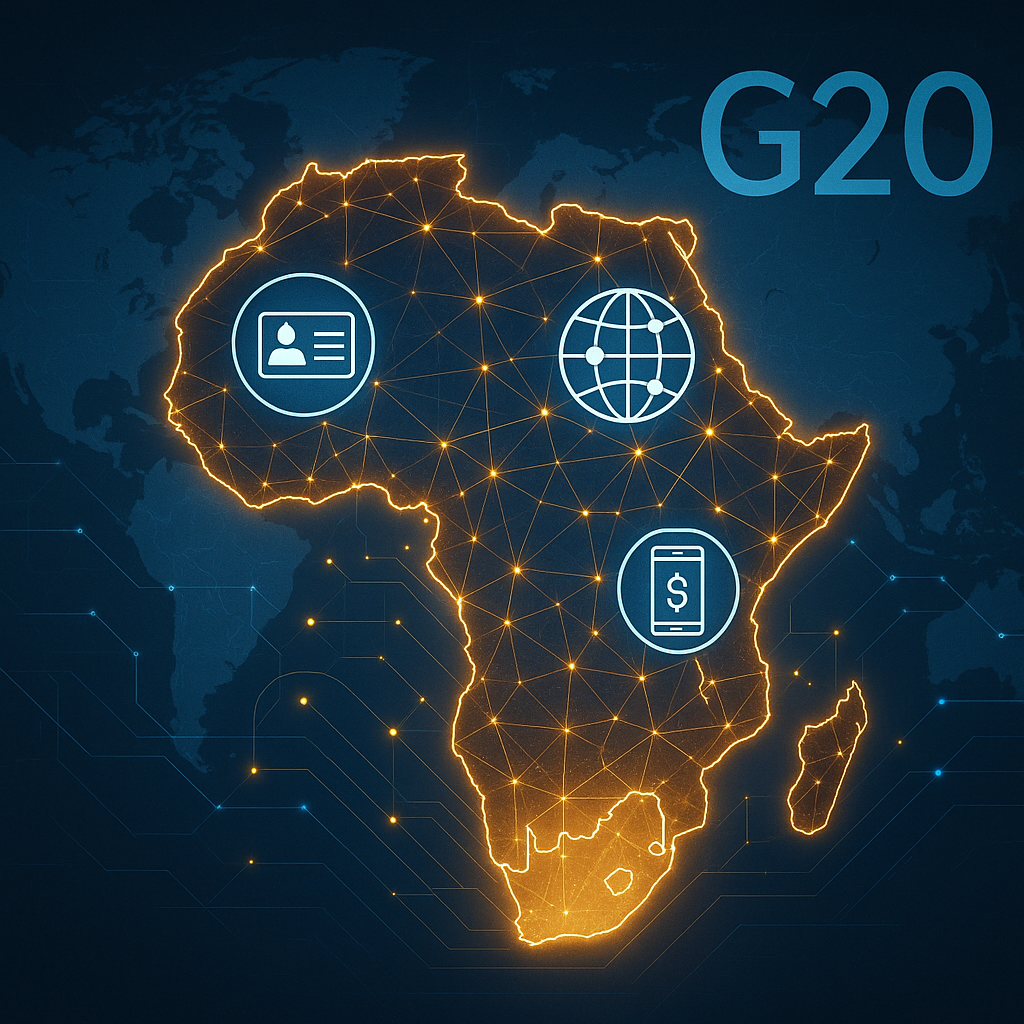
As South Africa moves with its historic G20 presidency in 2025—the first for any African nation—it faces a pivotal opportunity to shape a global agenda that addresses the structural digital divide across the Global South. Central to this opportunity is the elevation of Digital Public Infrastructure (DPI) as a transformative lever for inclusive economic growth, governance modernization, and investment mobilization. By championing DPI, South Africa can not only accelerate digital transformation within Africa but also reframe digital development as a sovereign capability, critical to resilience, innovation, and global competitiveness.
1. The Strategic Imperative: DPI as a Global South Priority
Digital Public Infrastructure—comprising interoperable layers such as digital identity, payments, data exchange, and trust frameworks—is fast becoming the foundation of modern economies. For nations across Africa, where formal economic activity remains limited and public service delivery is fragmented, DPI offers a pathway to leapfrog legacy systems and build inclusive digital economies.
South Africa’s G20 presidency offers a timely opportunity to shift the DPI conversation from pilot projects and donor-driven initiatives to a political, economic, and investment priority for developing nations.
2. Positioning DPI Within South Africa’s G20 Agenda
South Africa’s G20 leadership can focus on three mutually reinforcing priorities:
Mainstreaming DPI in Global Policy Discourse
- Promote DPI as a core component of development finance and digital cooperation frameworks.
- Embed DPI within G20 discussions on financial inclusion, climate resilience, education, and health.
- Leverage platforms such as the G20 Digital Economy Working Group to set norms around open standards, interoperability, and data governance aligned with the needs of the Global South.
Mobilizing Investment in DPI Ecosystems
- Launch an African DPI Investment Compact—a blended finance initiative to crowd in private capital, development finance, and sovereign commitments for DPI infrastructure.
- Encourage G20 nations and multilateral institutions to back DPI financing windows within global climate and infrastructure funds (e.g., Global Gateway, Just Energy Transition Partnerships).
- Advocate for DPI-related investment to qualify under SDG-aligned impact metrics, enabling greater flows of ESG capital.
Championing Regional Platforms and Interoperability
- Position African Union digital initiatives (e.g., Smart Africa, PIDA) as integral to global DPI architecture.
- Promote cross-border interoperability through alignment of African DPI platforms with global frameworks like MOSIP, OpenG2P, and the G2P Connect initiative.
- Advance south-south knowledge exchange, creating an institutional mechanism for sharing DPI experiences among G20 emerging economies (e.g., India, Indonesia, Brazil, South Africa).
3. Accelerating Africa’s Digital Transformation: Strategic Levers
National DPI Infrastructure as a Sovereign Asset
South Africa must demonstrate DPI as a strategic state capability, much like electricity or transportation infrastructure. This includes:
- Investing in digital identity frameworks, such as a modernised Home Affairs National Identification System (HANIS).
- Expanding national payment rails to reach the informal economy.
- Deploying secure, consent-based data sharing protocols to unlock AI, health, and education innovation.
Private Sector Enablement Through Open DPI
- Develop public-private partnerships (PPPs) around DPI implementation, especially for last-mile connectivity, verification APIs, and digital credentials.
- Foster local DPI-complementary platforms (Complementary Digital Infrastructure, or CDI) that can scale service delivery, particularly in MSMEs, healthtech, and edtech sectors.
Continental DPI Diplomacy
- Use its diplomatic clout to harmonize digital regulations under AfCFTA, ensuring that African DPI is interoperable and investible.
- Convene an African DPI Forum alongside G20, drawing lessons from India's G20 DPI strategy while localizing it to African realities.
4. Mobilizing Capital: Bridging the DPI Investment Gap
To bridge Africa’s estimated $100 billion digital infrastructure gap, South Africa can:
- Propose a G20-AU DPI Financing Task Force with MDB participation.
- Advocate for DPI assets (digital ID systems, payment switches) to be included in public investment pipelines and sovereign development bonds.
- Explore tokenized DPI investment models, leveraging blockchain and smart contracts to crowd in diaspora and retail investment into verified DPI projects.
5. What This Means for Policymakers and Development Partners
- Anchor DPI in Budget Frameworks: Ministries of Finance must begin treating DPI as core infrastructure, budgeting accordingly.
- Prioritize Capacity Building: Institutional capability to design, govern, and maintain DPI must be built across all levels of government.
- Align Incentives: Regulatory bodies must create clear and predictable rules to encourage innovation while maintaining citizen trust and data sovereignty.
- Coordinate Multilateral Support: UNDP, the World Bank, AfDB, and others should harmonize efforts to prevent fragmentation and reduce duplication.
Conclusion
South Africa’s G20 presidency is more than a diplomatic milestone—it is a call to leadership on behalf of the Global South. By elevating DPI from a technical construct to a cornerstone of sovereign development, South Africa can define the terms of digital transformation in Africa and beyond. This moment requires bold vision, institutional courage, and collaborative execution. If done right, it can rewrite the development script of an entire continent—and catalyze a digitally empowered future for the Global South.





