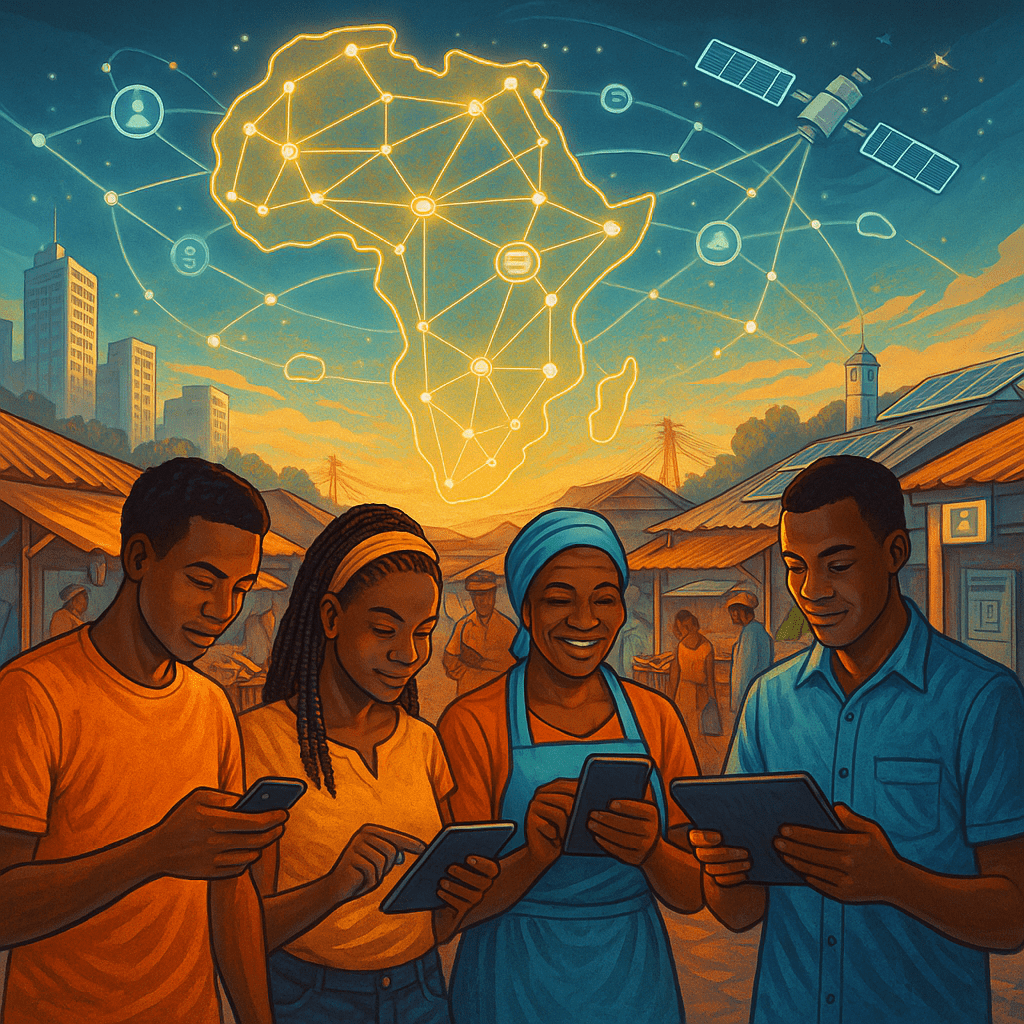
Imagine trying to build a house in the middle of a storm. You’d need a strong foundation, some solid tools, and the wisdom to know which walls to put up first. That’s where we are with the digital economy. The storm is the aftermath of a global pandemic, an explosion of new technologies, and a world rethinking how it works, earns, and lives. The house? It’s the digital future we’re all trying to build—fairer, smarter, and inclusive.
Now, here comes an interesting twist: South Africa is in charge of the G20 this time around. That’s 19 of the world’s largest economies and the European Union sitting at a table with South Africa in the lead chair. And they’re not just talking about inflation or trade. They’re talking about digital transformation—how to wire up the world in a way that actually works for people.
Let's Start with the Basics: Why Connectivity?
When you think “digital economy,” it’s tempting to picture gleaming data centers or AI models making stock predictions. But if people don’t have access to the internet—or worse, can’t afford to use it—it’s like talking about running a marathon with no shoes. Connectivity isn’t the cherry on top; it’s the base of the cake.
So one of South Africa’s big G20 goals is to get everyone connected—not just with any signal, but with meaningful connectivity. That means fast enough, affordable enough, and stable enough to actually use for school, health, or work. They’re looking at models, both public and private, that don’t just patch gaps, but close them permanently.
What’s This Digital Public Infrastructure Thing?
This is where it gets fascinating. Digital Public Infrastructure (DPI) is the skeleton of the digital economy. Think of it as roads, water pipes, and electricity lines—but for bits and bytes. It’s the stuff that helps people get an ID, send money, register a business, or access health services online. And just like plumbing, if you build it wrong, it leaks. If you build it right, people barely notice it—but everything flows.
South Africa wants the G20 to look hard at how to design DPI that’s not only powerful but also fair. It’s about asking good questions: Who owns the data? Who benefits? Is it interoperable across borders? Can it serve both cities and villages?
They’re even designing tools—blueprints, checklists, cost-benefit templates—that help countries figure out if they’re ready to build DPI and how to do it without creating digital elites or leaving communities behind.
The Unsung Heroes: Small Businesses and Local Innovators
Here’s something most tech conferences forget: most of the world’s jobs come from small businesses. In Africa, MSMEs (Micro, Small and Medium Enterprises) aren’t just part of the economy—they are the economy. So if your digital transformation doesn’t work for them, it’s not really a transformation.
That’s why South Africa is spotlighting MSMEs and digital innovation ecosystems. They’re not just talking theory—they’re hosting events to showcase real-world solutions made by real people, sometimes in garages and townships, solving problems that multinationals can’t even see.
The goal is to learn from them, not just teach them. To fund them, not just train them. And to make sure the platforms they use aren’t gate-kept by fees, algorithms, or foreign policy.
And Then There’s AI
Now let’s talk about the tricky one: Artificial Intelligence. The potential is massive. But so is the risk. Without checks, AI can widen inequality, spread misinformation, and concentrate power in a handful of places.
South Africa isn’t shying away from this. They’re asking hard questions: Can AI be just? Can it be inclusive? Can we avoid building machines that learn from the past just to repeat its mistakes?
So, they’re bringing together researchers, policymakers, and business folks to figure out how to govern AI with a scalpel, not a sledgehammer. There will be toolkits, guidelines, and workshops—not to shut down innovation, but to keep it human-centered.
Why This Matters
If you think this is just bureaucracy, think again. This is about building systems that decide who gets a loan, who can start a business, who gets to vote, who gets seen online. The digital world is no longer separate from the real one. It is the real one—at least partly.
And for once, a country from the Global South is leading the design conversation. That’s important. It’s not enough to be invited to the table—you have to have the pen when the blueprint is drawn.
South Africa’s G20 presidency isn’t about pushing buttons or downloading the latest app. It’s about making sure that in a world buzzing with signals, nobody gets left out of the conversation.





