There is a quiet shift happening in the way people shop, and most brands have not noticed it yet.
For the better part of three decades, the buying journey followed a familiar shape. A person felt a need, went searching, read a few reviews, compared prices across two or three sites, abandoned a cart, saw a retargeting ad a day later, and eventually bought. Marketers built entire disciplines around that path. Search engine optimisation, paid media, conversion rate optimisation, email flows, all of it assumed a human being was doing the looking.
That assumption is starting to break down. Increasingly, the entity doing the looking is not a person at all. It is an agent working on that person's behalf.
What agentic commerce actually means
Agentic AI refers to systems that do not simply answer questions but take action towards a goal. Instead of returning ten blue links, an agent is given an instruction such as "find me a decent air fryer under R2 500 that delivers to Randburg by Friday" and then goes off and does the work. It reads specifications, weighs up reviews, checks stock and delivery windows, compares landed cost including shipping, and comes back with a recommendation. In a growing number of cases, it completes the transaction too.
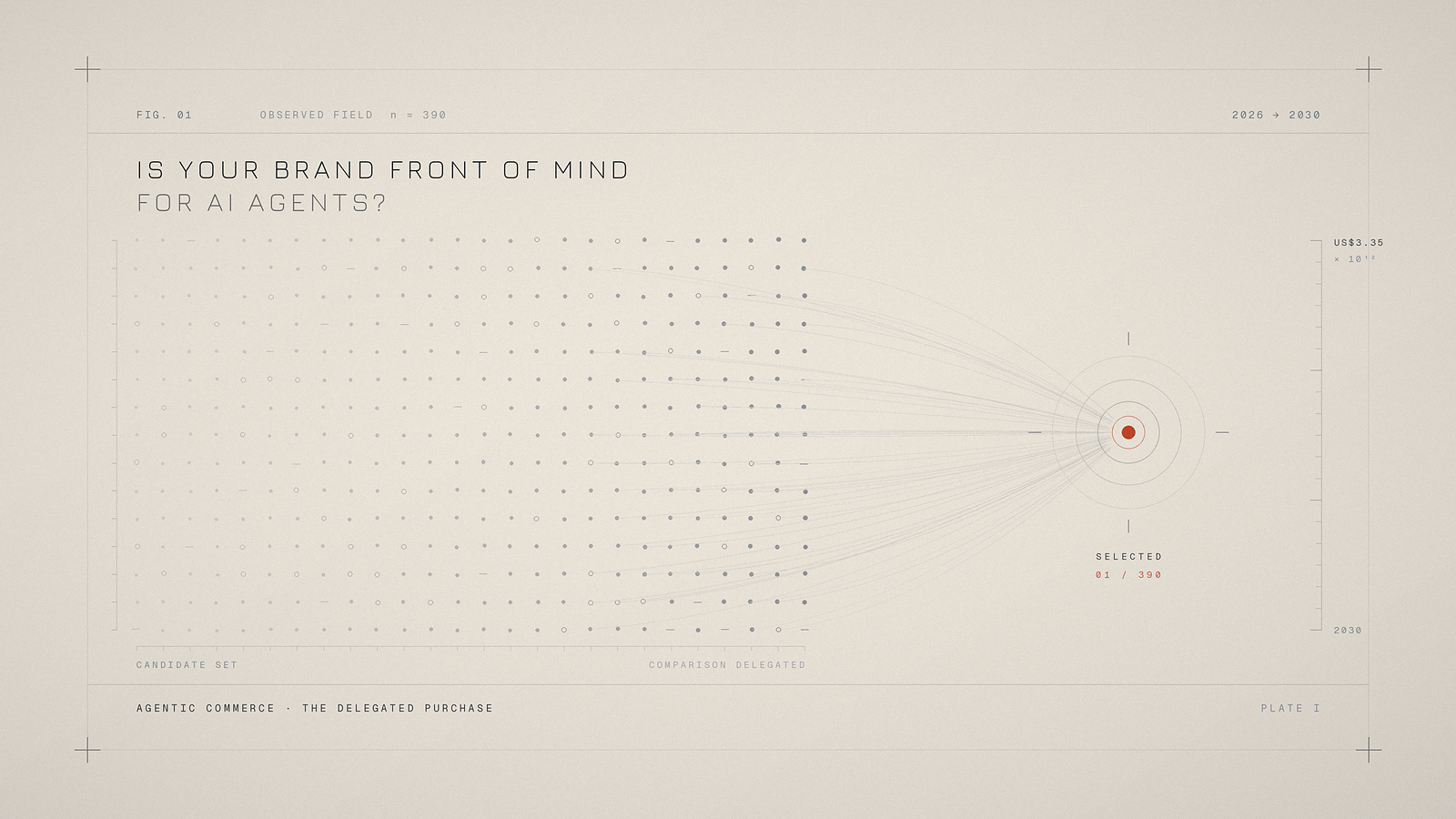
The research and comparison layer, which is where brands have traditionally competed for attention, is being delegated. The consumer still sets the intent and still approves the outcome, but the middle of the funnel is being handled by software.
The numbers attached to this shift are not small. Consumer spending facilitated by agentic AI is projected to reach US$3.35 trillion by 2030, with the United States, China and the United Kingdom leading adoption. Even if that forecast proves optimistic by a wide margin, the direction of travel is clear enough to plan around.
Why South African businesses should be paying attention now
It is tempting to file this under "something that will affect the Americans first". That would be a mistake, for three reasons.
The first is that adoption arrives here through the same platforms that already dominate local usage. South Africans do not wait for a local version of a global tool. When agentic shopping features ship inside the assistants, browsers and marketplaces people already use, they arrive in Johannesburg on the same day they arrive in Chicago.
The second is that cross-border retail is already part of local buying behaviour. A meaningful slice of South African e-commerce spend flows to international marketplaces. Agents make cross-border comparison effortless, which means local brands will find themselves benchmarked against global catalogues far more aggressively than before.
The third reason is the one that should concern marketing leaders most. Agent recommendations are winner-takes-most. A human browsing a results page might scroll past the first option and consider the fourth or fifth. An agent asked to make a recommendation typically returns one option, or perhaps three. Position two on a search results page still earns clicks. Position two in an agent's reasoning process usually earns nothing at all.
The uncomfortable question
So here is the question worth putting to your executive team this quarter. If an AI agent were asked today to recommend a product or service in your category, would it surface your brand?
Not "does your website rank well". Not "how is your ad spend performing". The question is whether a machine, reading the web without ever seeing your homepage design, your brand video or your carefully chosen photography, would have enough clean, structured, trustworthy information to confidently put your name forward.
For a great many South African businesses, the honest answer at the moment is no. Not because the product is weak, but because the information about the product is scattered, inconsistent, locked inside images, buried in PDFs, or simply absent.
What agent readiness looks like in practice
Preparing for this does not require a moonshot budget. It requires discipline in areas most teams have been neglecting because they were invisible to human visitors.
Make your data machine readable. Structured data markup for products, pricing, availability, ratings, organisation details, opening hours and location is no longer a technical nicety. It is the format in which agents prefer to consume the world. If your pricing lives only inside an image on a landing page, it does not exist as far as an agent is concerned.
Be relentlessly consistent across sources. Agents cross reference. If your product specification says one thing on your own site, something different on Takealot, and something different again on a distributor's page, the agent does not carefully adjudicate. It reduces confidence in your brand and moves on to a competitor whose information agrees with itself.
Get specific about attributes. Human shoppers tolerate vague marketing language. Agents do not. "Premium quality construction" carries no weight in a comparison. Dimensions, materials, warranty terms, power consumption, compatibility, certification, turnaround time and total delivery cost do. The brands that will win are the ones that publish the boring details their competitors leave out.
Treat reviews and third party mentions as infrastructure. Agents weight independent corroboration heavily, because it is harder to manipulate than owned content. Reviews, comparison articles, industry publications, forum discussions and expert roundups form the evidence base that an agent draws on when it decides whether to trust you.
Remove friction from the transaction itself. If an agent can find you but cannot complete a purchase because your checkout requires a phone verification loop, an account creation step and a captcha, you will simply be deprioritised in favour of a competitor whose path to purchase is cleaner.
Publish answers, not just claims. Content that directly answers real questions in plain language, with clear headings and unambiguous statements, is far more extractable than content written purely for brand tone. There is room for both, but at present most brands have only produced the second kind.
Measure what is actually happening
You cannot manage a channel you are not watching. Start logging AI agent and crawler traffic separately in your analytics. Track referral traffic arriving from assistant platforms. Run periodic tests where you ask several leading assistants the questions your customers would ask, and record whether your brand appears, how it is described, and whether the description is accurate. Treat inaccurate descriptions as urgent, because a confident wrong answer about your pricing or your service area does real commercial damage at scale.
This is a new measurement discipline, and the tooling is still maturing. That is precisely why early movers gain ground. The organisations that begin collecting this data now will have a year of trend information before their competitors start asking the question.
The window is open, and it will not stay open
Every platform shift has followed the same pattern. A small group of businesses treated it seriously while it was still awkward and unproven, and they compounded that advantage for years afterwards. The rest arrived once best practice was settled, by which point the cost of entry had risen and the positions were taken.
Search rewarded the businesses that took it seriously in 2005. Mobile rewarded the ones that took it seriously in 2012. Agentic commerce is at roughly the same point in its curve today.
The work involved is not glamorous. Cleaning up product data, fixing structured markup, standardising specifications across channels and simplifying checkout will not win any creative awards. But when a substantial share of buying decisions is being mediated by software, being legible to that software stops being a technical concern and becomes a commercial one.
The brands that adapt early will stay visible, competitive and relevant. The ones that wait will find that the recommendation was made without them, and that they never even had the chance to compete for it.