Artificial intelligence likes to think it can go solo. But reality is stubborn. When algorithms leave the lab and hit the road, literally, in Uber’s case, they meet the messy, unpredictable world. Cameras blur. Sensors misfire. Pedestrians jaywalk. Data gets noisy. And no matter how sophisticated the model, bad data guarantees bad decisions.
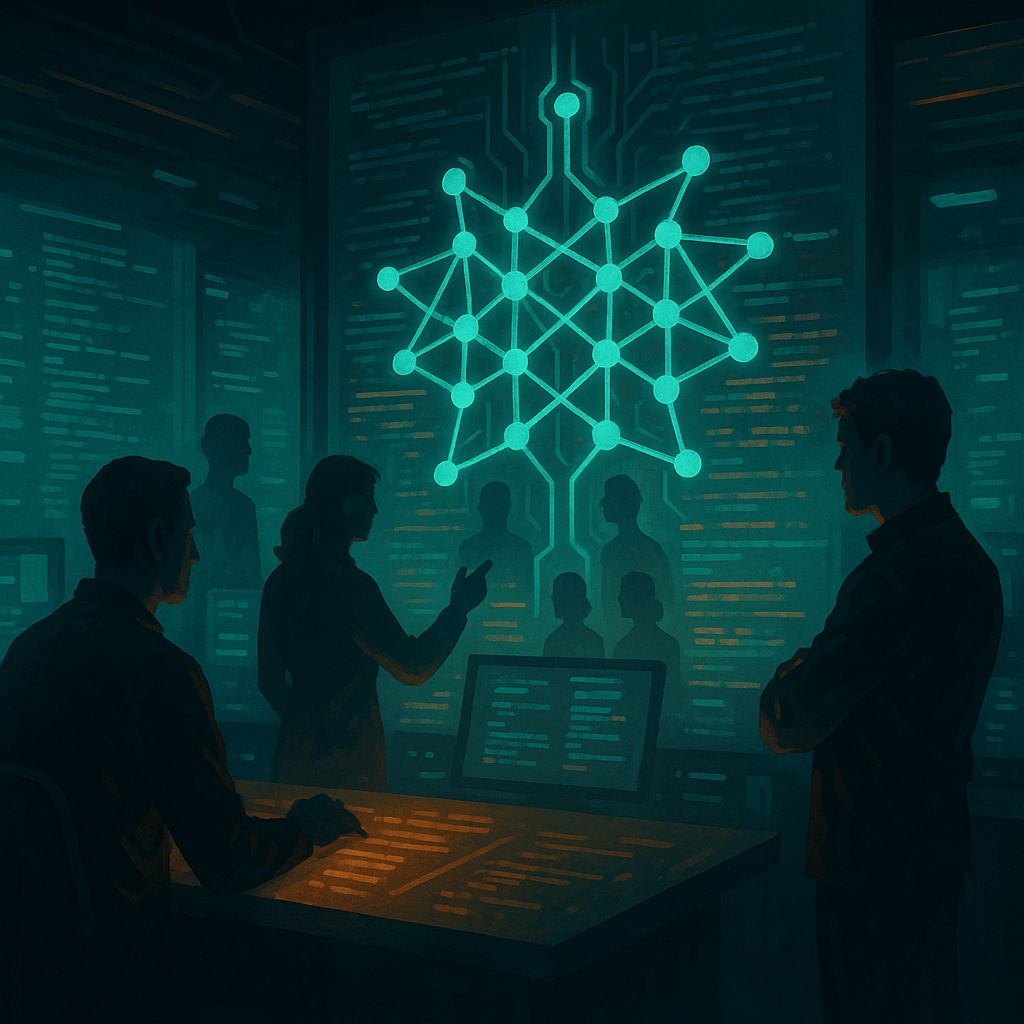
Uber’s Human-in-the-Loop Validation for Physical AI project is the admission that intelligence, artificial or otherwise, needs grounding. The system must learn not just from machines but from the very humans it hopes to replace in repetitive judgment tasks.
The Problem: AI That’s Blind to Its Blind Spots
Self-driving cars and delivery robots see the world through sensors. But sensors don’t “see.” They measure. A camera records light; a LiDAR pulse measures distance. The interpretation, the meaning of what’s seen, comes from data labelled by humans.
The problem is that the world doesn’t label itself. A neural network can’t tell a plastic bag from a pothole unless someone has shown it both, in all lighting, angles, and contexts. If that data is wrong, incomplete, or biased, the car learns bad habits. That’s how you end up with accidents caused not by malfunctioning hardware but by misunderstanding reality.
The Solution: Teaching Machines by Arguing About Reality
Uber’s solution is simple but powerful: make humans part of the feedback loop. Every data point the AI ingests goes through multiple human eyes before it becomes ground truth.
Imagine you have a million images of intersections. Instead of trusting one labeler to mark where pedestrians are, Uber uses several. If they disagree, the case is flagged. The disagreement itself becomes information, the system learns where humans tend to err or differ. Over time, both humans and machines get better at understanding ambiguity.
It’s not just about accuracy. It’s about epistemic humility. The machine is told, “You might be wrong, and so might we.” That’s what makes the loop intelligent rather than mechanical.
Anatomy of a Human-in-the-Loop System
- Ingestion – Raw sensor data flows in from vehicles: images, LiDAR, radar, telemetry. This is the sensory chaos of the world.
- Pre-Validation – Machines do the first cleaning pass: removing duplicates, aligning timestamps, detecting corrupt frames.
- Annotation – Humans label the cleaned data: “That’s a cyclist,” “That’s a shadow,” “That’s glare.”
- Consensus – Uber doesn’t trust a single opinion. Two or three labelers must agree. Where they don’t, the data is escalated for review.
- Quality Metrics – The system measures inter-annotator agreement with statistical tools like Cohen’s Kappa. Low agreement triggers retraining or more review.
- Feedback Loop – Once validated, the data feeds back into training. The AI updates its understanding, and the next round of annotation becomes easier.
This is how you build trustable intelligence: by formalising doubt and designing for correction.
The Principle: Automation Without Abdication
Uber’s real innovation isn’t its neural networks. It’s the structure around them. Most companies automate to remove humans. Uber automates to amplify them.
Automation without oversight is abdication, it outsources judgment. Human-in-the-loop systems do the opposite: they use automation to concentrate human judgment where it matters most. The machine handles the routine; humans handle the exceptions. Over time, the boundary shifts, but the loop remains intact.
This principle generalises beyond physical AI. Any algorithm that influences people, search, recommendations, credit scoring, hiring, needs a validation loop anchored in human reasoning. Bias doesn’t die with more data; it mutates. Continuous auditing is the only antidote.
Why It Matters Beyond Uber
Every digital platform, from social media to marketing analytics, faces the same epistemic tension: the model optimises what it can measure, not what’s true. Without human validation, systems drift toward error that looks efficient.
For a company building AI for digital growth or creator economies, the same architecture applies:
- Automate ingestion and detection, but let humans audit anomalies.
- Quantify disagreement instead of suppressing it.
- Treat model confidence as a hypothesis, not a fact.
The future of reliable AI isn’t autonomous, it’s symbiotic. Uber’s “physical AI” is a prototype for all domains where algorithms meet reality.
The Deeper Lesson
Human-in-the-loop is not a technical patch. It’s an epistemological correction. Intelligence, whether biological or artificial, emerges from feedback. The loop is the learning.
Uber’s engineers have rediscovered a truth scientists have known for centuries: the observer is part of the experiment. When machines act in the world, humans must stay in the loop, not as supervisors but as co-learners.





