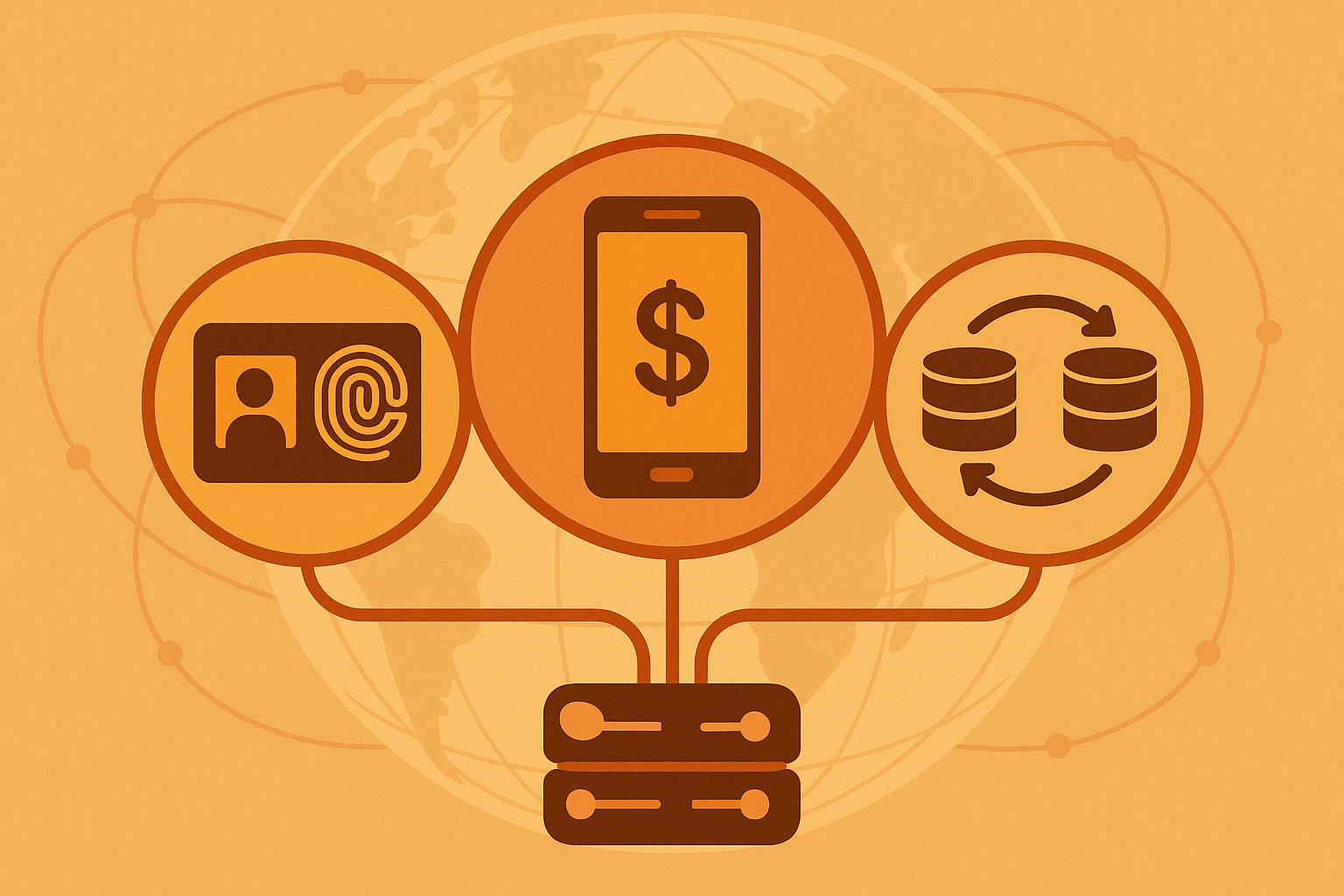
Traditional poverty alleviation strategies often struggle with inefficiency, fragmentation, and exclusion. Digital Public Infrastructure (DPI) offers a fundamentally different approach—one that uses shared digital systems to rewire how social protection is designed, delivered, and scaled. By leveraging DPI components such as digital identity, digital payments, and consent-based data sharing, governments can build inclusive safety nets that are accurate, rapid, and resilient. DPI is now at the heart of a new social contract—where services reach the last mile and dignity is embedded in delivery.
The Problem with Traditional Social Protection
Global poverty remains a persistent challenge despite decades of investment. According to the World Bank, over 850 million people lack any form of official identification, excluding them from access to state support and financial services. Many low-income countries operate parallel digital and manual systems that cannot interoperate, leading to administrative inefficiency and corruption.
Cash transfer programs, when digitized in isolation, often fail to reach the most vulnerable due to lack of accurate registries, weak authentication systems, and exclusionary digital literacy requirements. Even where digital identity exists, data is often siloed, limiting the ability to target, verify, and support at scale.
DPI as a Social Protection Game-Changer
Digital Public Infrastructure breaks through these bottlenecks by providing foundational systems that support the end-to-end lifecycle of social protection—from beneficiary identification to disbursement and grievance redress.
Key DPI contributions include:
- Digital identity systems that verify beneficiaries with precision and enable authentication across programs.
- Digital payments platforms that facilitate rapid, low-cost transfers directly to recipients’ mobile wallets or bank accounts.
- Consent-based data-sharing frameworks that allow secure coordination between different agencies and programs.
The result is a unified, inclusive, and agile social protection system.
Real-World Examples: Togo and India
In Togo, the Novissi program used a blend of voter ID, mobile money, and machine learning to identify and transfer emergency COVID-19 assistance. Within just 10 days, 12% of the national population received aid—many of them first-time beneficiaries of any public support.
The system was built using CIDER, an open-source toolkit, and enabled targeting through mobile data and geospatial analytics. Women received higher benefits, reflecting a gender-sensitive policy design. Novissi’s ability to scale and adapt would not have been possible without DPI-like infrastructure.
In India, Aadhaar, the national digital identity platform, has been used to verify recipients of public welfare programs, such as pensions and food rations. Paired with the Unified Payments Interface (UPI), India successfully disbursed billions in COVID-19 relief to bank accounts linked to verified identities. This architecture has reduced leakages and increased trust in the system.
Enabling Economic Mobility Through Credit Access
Beyond direct transfers, DPI plays a catalytic role in expanding economic opportunity through digital credit ecosystems.
India’s Open Credit Enablement Network (OCEN) is a DPI framework that enables micro, small, and medium enterprises (MSMEs) to securely share credit-related data with financial institutions. It reduces loan approval times, improves interest rates, and allows non-traditional borrowers to access tailored credit products. By turning user-generated data into a portable, verifiable asset, DPI facilitates financial inclusion at scale.
OCEN and similar platforms are transforming credit from an elite service into a foundational economic right.
What This Means for Policymakers
- Build DPI into the DNA of social protection - Don’t treat DPI as an afterthought. Design welfare programs around identity, payments, and data-sharing systems that are modular and extensible.
- Invest in cross-sector integration - Link health, education, agriculture, and employment data using consent-based mechanisms to enable holistic support for individuals and families.
- Promote inclusion and offline accessibility - Ensure that DPI systems support feature phones, assisted onboarding, and offline verification methods to reach the digitally marginalized.
- Strengthen local innovation ecosystems - Enable communities, fintechs, and civic tech organizations to build new services atop DPI, including grievance mechanisms, verification tools, and analytics platforms.
- Anchor DPI in legal and governance frameworks - Enshrine the right to privacy, redress, and non-discrimination in the laws governing digital systems to build long-term trust.
Conclusion
DPI is not a magic bullet, but it offers a powerful lever to deliver targeted, dignified, and scalable social protection. In a world facing rising inequality, economic shocks, and climate-related displacement, the ability to respond quickly and inclusively is essential.
By shifting from reactive safety nets to proactive digital systems, DPI transforms social protection from a stopgap to a foundation for opportunity. The future of poverty alleviation is digital—but only if it's public, open, and equitable.





