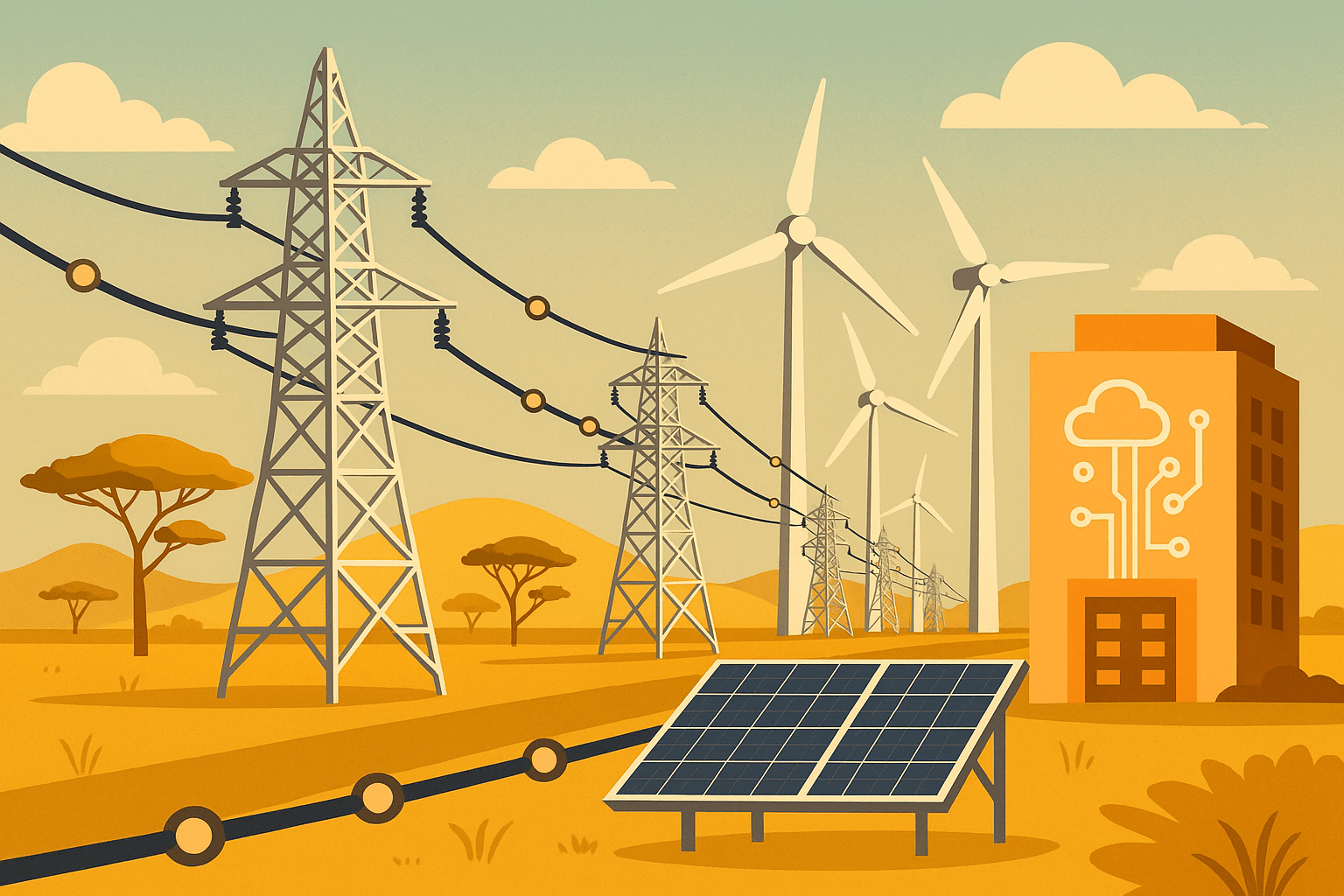
Africa’s energy corridors—once built for coal and copper—now face a bold new destiny. What if these same routes could carry not just electricity, but data, identity, and finance? By integrating Digital Public Infrastructure (DPI) into power corridors, Africa can build smart, dual-purpose infrastructure that fuels both digital economies and clean energy access.
The Idea: Dual-Use Infrastructure for Energy + Digital Transformation
Historically, Africa’s energy investments focused solely on generation and transmission. But by embedding fiber optics, sensor networks, and digital access layers into existing and future energy corridors, countries can:
- Reduce infrastructure duplication
- Expand internet and financial access
- Enable real-time monitoring and predictive maintenance
- Create a platform for DPI-enabled services in remote regions
Why This Matters Now
- Over 45% of Africa’s population still lacks internet access
- Digital transformation goals (e.g., AfCFTA, AU Digital Strategy) require last-mile connectivity
- Energy corridors already cut across vast, underconnected regions
- Climate-smart infrastructure is a top AU and DFI investment priority
How to Integrate DPI into Energy Corridors
- Fiber-Over-Grid (FoG) Deployment - Lay fiber-optic cables alongside high-voltage transmission lines, enabling broadband and DPI platform access in underserved regions.
- Smart Metering + Energy IoT Platforms - Use DPI-linked sensors to monitor grid health, energy theft, usage patterns, and enable dynamic pricing via digital payments.
- Edge Data Centers and Sovereign Cloud Nodes - Build mini data centers at energy substations to host DPI services (digital ID, payment gateways, registries) locally—minimizing latency and boosting resilience.
- DPI-Powered Electrification Hubs - Design rural mini-grid nodes that combine solar/wind + fiber + mobile money + digital ID registration for integrated service delivery.
Strategic Benefits for Africa
- Cost efficiency: Dual-use corridors reduce CAPEX for both energy and connectivity projects.
- Resilience: Local DPI hosting protects services from internet blackouts or foreign service failures.
- Inclusion: Expands both electricity and digital access to rural communities.
- Innovation: Startups can build on localized DPI layers for fintech, edtech, agtech, and e-health.
What Governments and AU Can Do
✅ Update Infrastructure Policy for Dual-Use Mandates
Make it a requirement that all new energy projects assess digital infrastructure co-deployment potential.
✅ Provide DPI Toolkits for Energy Utilities
Equip public utilities and PPPs with modular, open-source DPI components to layer into energy corridors.
✅ Map Energy + DPI Opportunity Zones
Use geospatial and socio-economic data to plan where dual investments can maximize developmental returns.
✅ Push for DFI Support of Dual-Use Projects
Lobby multilateral banks and climate funds to prioritize funding for energy corridors with DPI layers.
Conclusion:
Africa doesn’t have to build two roads—one for power, one for digital. By reimagining energy infrastructure as DPI-enabling highways, the continent can fast-track development, drive inclusion, and power a digital-first, green future. From fossil to fiber, Africa can leap forward—twice.





