Most South African enterprises now have AI somewhere in the building. A copilot licence here, a chatbot pilot there, a data science team quietly proving a model works. What far fewer have is an operating model that turns any of that into governed, repeatable, board-level value.
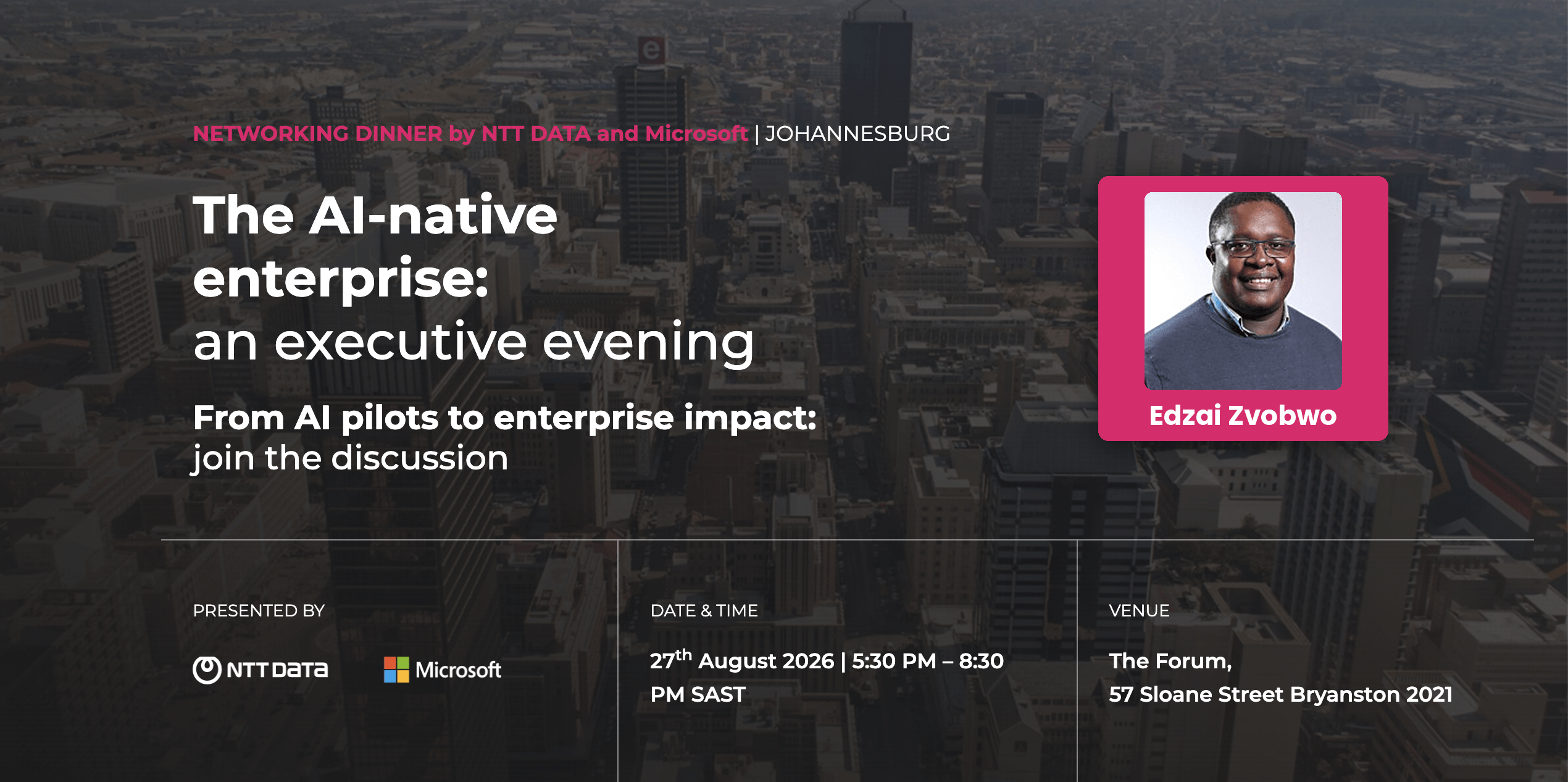
That gap is the subject of an executive evening hosted by NTT DATA and Microsoft at The Forum in Bryanston this evening, running from 5:30 PM to 8:30 PM SAST. The framing is deliberately unglamorous: from AI pilots to enterprise impact. Not what AI could theoretically do, but what actually changes when an organisation moves from experimentation to scale.
Why this conversation, and why now
The organisers describe the rise of the AI-native enterprise as a defining moment for South Africa, the point at which organisations move beyond pilots and experimentation to governed, scalable AI execution with measurable business impact.
The distinction matters more than it sounds. A pilot answers the question can this work? An enterprise AI operating model answers a harder set of questions: Who owns the model in production? What happens when it drifts? How does it clear compliance in a regulated bank or insurer? What is the ROI, and who signs for it? Those are governance and operating questions long before they are technology questions, and they are exactly where most AI programmes stall.
What's on the agenda
The evening is built around three formats rather than a lecture:
A keynote from Edzai Conilias Zvobwo, AI strategist, innovator, and CEO of Acalytica, setting the frame for what an AI-native operating model looks like in practice.
An expert panel, unpacking the move from fragmented AI initiatives to a structured, enterprise-wide approach.
Facilitated industry roundtables, grounded in South Africa's priority sectors, financial services, insurance and retail banking, manufacturing, automotive, healthcare, retail and the public sector.
Across those sessions, the discussion looks at where AI agents can create measurable value: improving customer engagement, accelerating knowledge work, strengthening governance and compliance, and simplifying operations.
No slides, no pitch decks
The format is worth flagging, because it shapes what attendees get out of the room. Common Sense Events runs a conversational, story-telling approach designed for peer learning, where every participant's voice shapes the discussion, explicitly without slides or pitch decks.
The room is also small by design: an executive peer group of 10 to 12 senior leaders. That is closer to a working dinner among peers than a conference session, and it changes the quality of what gets said. Executives tend to be candid about what has failed when they are not being presented to.
Who should be in the room
This is aimed at CIOs and senior technology and business leaders who are past the "should we do AI" stage and into the messier middle: several initiatives running, unclear aggregate return, growing pressure to show enterprise-wide impact rather than isolated wins.
The promised takeaway is boardroom-ready perspective on the three things that decide whether AI programmes survive contact with the enterprise, ROI, governance and scale, plus a path for keeping the organisation at the front of South Africa's AI-native shift.
The details
| Event | The AI-native enterprise: an executive evening |
| Hosts | NTT DATA and Microsoft |
| Date & time | 27 August 2026, 5:30 PM – 8:30 PM SAST |
| Venue | The Forum, 57 Sloane Street, Bryanston 2021 |
| Format | Keynote, expert panel, facilitated roundtables, networking dinner |
| Attendance | Invitation-based; no cost for qualified attendees |
Applications are reviewed before an invitation is confirmed, along with a calendar invite and venue directions.
Enquiries go to MEA.ZA.SA-Marketing@global.ntt, and full details are on the event page.
The interesting question this evening is not whether South African enterprises will adopt AI, that is settled. It is which of them will do the unglamorous work of governance, ownership and operating design that turns adoption into advantage.