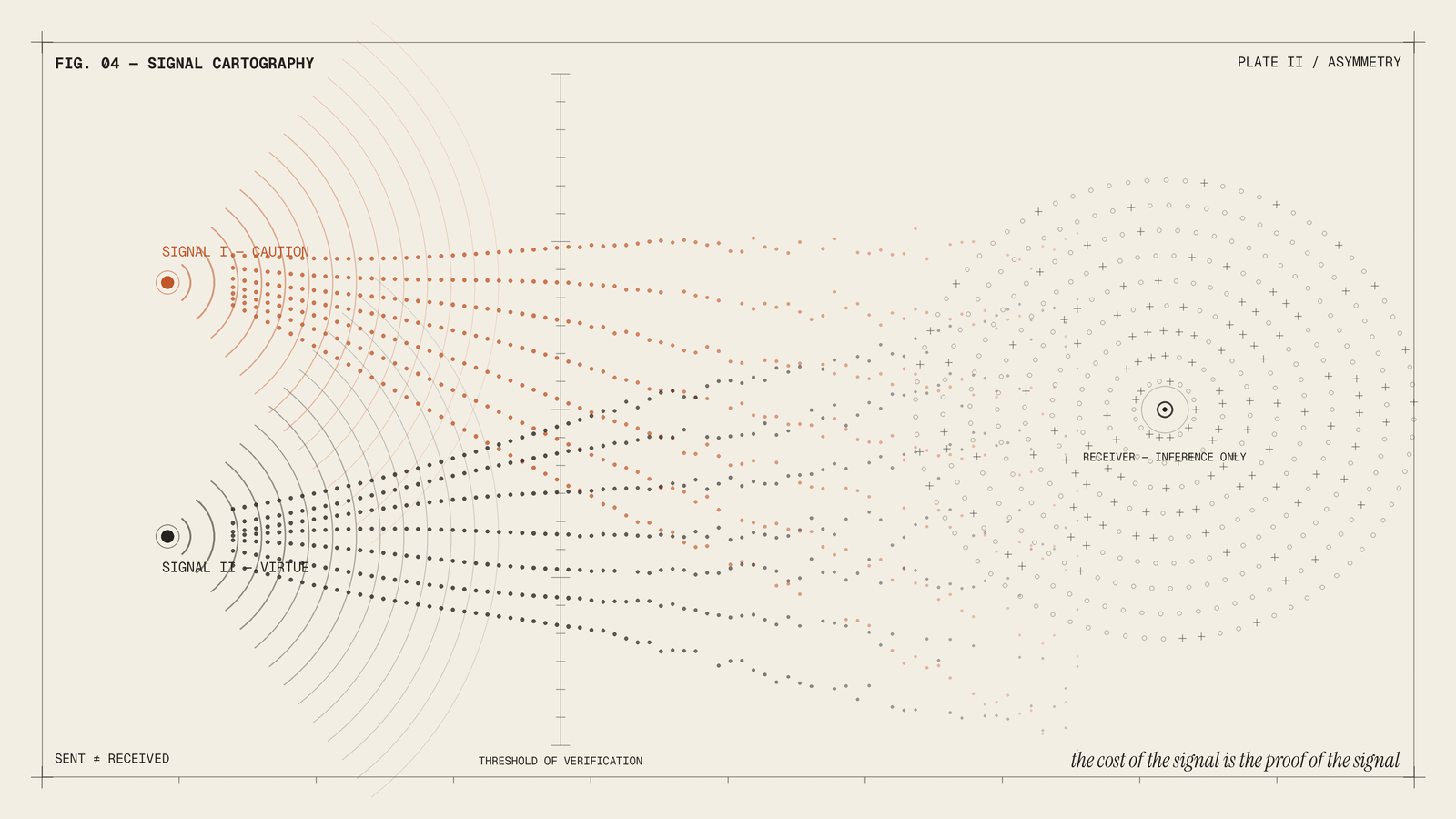
Anthropic occupies an unusual position in the artificial intelligence industry. The company builds some of the most capable AI systems in the world, yet its public identity rests on warnings about how dangerous such systems could become. To admirers, this is principled leadership. To critics, it is a marketing strategy dressed up in moral clothing. The accusation, put plainly, is that Anthropic uses fear and morality as signals to win trust, talent and market share. It is worth taking that claim seriously, and also worth testing it properly.
The critics' case
The argument starts with a simple observation from economics. In markets where buyers cannot easily judge quality, firms send signals. A bank builds an imposing head office; a manufacturer offers a long warranty. Large language models are precisely this sort of market. An enterprise choosing an AI provider cannot inspect the model's inner workings, so it relies on reputation. Branding yourself as "the safety company" is, in this reading, a shrewd way to stand out in a crowded field.
Critics go further, though. They point out that the fear element does peculiar work. When a company warns that its own technology could pose catastrophic risks, it raises the perceived stakes of the entire industry while positioning itself as the responsible custodian. The message becomes: this is terribly dangerous, which is exactly why we must be the ones to build it. Some commentators call this safety-washing. Others argue that doom-laden rhetoric conveniently supports regulation that would burden smaller entrants far more than well-funded incumbents, entrenching the position of the very labs sounding the alarm.
There is also the cheap talk objection. Words about safety cost little. Meanwhile, the observable behaviour looks familiar: raising billions in funding, shipping ever more capable frontier models, and competing hard for commercial customers. If the warnings were fully sincere, the sceptics ask, would the company not simply slow down?
The counter-case
Signalling theory itself offers the rebuttal. What separates a credible signal from empty talk is cost. A signal that is expensive to fake carries real information, and some of Anthropic's choices do appear costly. The company publishes interpretability and safety research that competitors can use freely. It has supported regulatory proposals that would bind its own operations. It is structured as a public benefit corporation with an unusual governance trust designed to override commercial interests in extreme scenarios, and it has at times restricted or delayed what it releases. None of this proves purity of motive, but it is not nothing. These are actions with genuine commercial downsides, which is precisely what the theory says to look for.
There is also a coherent worldview behind the strategy, even if one disagrees with it. If you sincerely believe that powerful AI is both dangerous and inevitable, then building it carefully from the inside is a defensible position rather than an obviously cynical one. The founders left OpenAI over disagreements about exactly these questions. Critics fairly note that this belief happens to be convenient for those who hold it, but convenience does not automatically make a belief insincere.
Where the truth probably sits
The honest answer is that both readings are likely true at the same time, because that is how organisations tend to work. Anthropic's safety commitments look substantive when measured against the costly signal standard, and the safety identity clearly delivers commercial value. It attracts a particular kind of researcher, reassures cautious enterprise buyers, and earns goodwill with policymakers. Sincerity and strategic benefit are not mutually exclusive, and it would be naive to pretend a venture-backed company operates outside commercial logic.
The real test is what happens when the two pull in opposite directions. When a safety commitment threatens revenue or competitive position, which one gives way? Outsiders cannot fully observe those internal trade-offs, and that is the crux of the matter. The same information asymmetry that makes safety branding valuable in the first place also makes the accusation almost impossible to settle definitively. Sceptics cannot prove cynicism; the company cannot prove sincerity. Both sides are arguing about motives that sit behind a veil.
What to watch
Rather than trying to read hearts, observers would do better to track behaviour over time. Does the company keep publishing research that helps rivals? Does it support rules that genuinely constrain it, or only rules that burden competitors? Does it ever absorb a visible commercial cost for a stated principle? Signals accumulate, and patterns are harder to fake than press releases.
The accusation against Anthropic is neither baseless nor conclusive. It is a reasonable question aimed at a company that has invited scrutiny by claiming the moral high ground. In an industry moving this quickly, that scrutiny is healthy. The companies asking for our trust should expect us to keep checking whether they have earned it.





