Introduction
As the World Economic Forum prepares to convene its 56th Annual Meeting in Davos-Klosters, Switzerland, from 19 to 23 January 2026, leaders from across the globe are being called to engage with five defining questions under the theme "A Spirit of Dialogue."
The meeting arrives at a pivotal moment marked by breakthroughs in artificial intelligence, biotechnology, and clean energy, alongside shifting markets and geopolitical uncertainty. With up to 3,000 leaders from nearly 130 countries expected to attend, including around 60 heads of state and government, Davos 2026 will serve as an impartial platform for exchange of views and ideas at a time when dialogue has never been more essential.
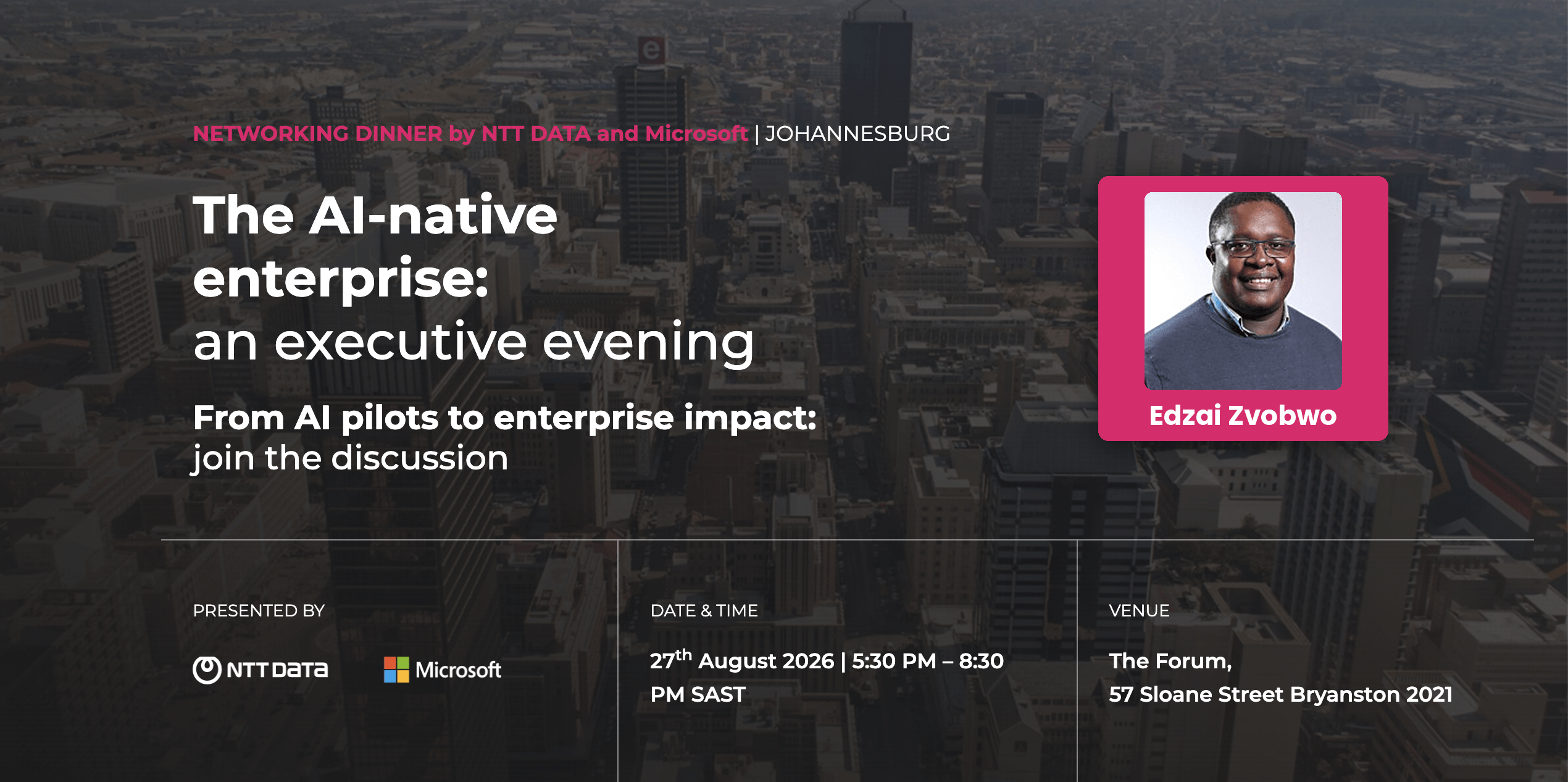
Among the voices contributing to this global conversation is Edzai Conilias Zvobwo, a Zimbabwean-born mathematician, education evangelist, and technology entrepreneur whose work sits at the intersection of STEM education, digital infrastructure, and inclusive capitalism. As founder of MathsGee (an AI-driven learning platform that has reached over a million learners), CEO of Acalytica (Africa's digital growth platform for creators and SMEs), and an Expert Contributor to the African Union's High-Level Panel on Emerging Technologies (APET), Zvobwo brings a distinctly African perspective to these global challenges.
His credentials include recognition as a Bill & Melinda Gates Foundation Goalkeeper, the SABC Ambassador for STEM, an Agenda 2063 Champion for Skills Development, and a 2018 Archbishop Desmond Tutu Leadership Fellow through the African Leadership Institute and Oxford University's Saïd Business School. He is also a member of the Council for Inclusive Capitalism.
Here, Zvobwo addresses each of the five thematic questions that will shape discussions at Davos 2026.
1. How Can We Cooperate in a More Contested World?
Cooperation in a contested world begins with recognizing that every region has something valuable to contribute. For too long, Africa has been positioned as a consumer of foreign innovations rather than a co-creator. True cooperation means building partnerships where African solutions are developed by Africans, for Africans, but shared with the world.
Through my work with the African Union's High-Level Panel on Emerging Technologies (APET), I've seen that meaningful cooperation requires moving beyond donor-recipient dynamics toward genuine knowledge exchange. Platforms like MathsGee demonstrated this, it was a crowdsourced, peer-to-peer learning community where anyone could contribute and anyone could learn. This was cooperation as equals.
We must also invest in South-South collaboration, connecting African innovators with counterparts in other developing regions facing similar challenges. Geopolitical tensions between major powers shouldn't prevent the rest of us from building bridges. Mathematical thinking teaches us that complex problems have multiple solution paths, the same applies to global cooperation.
2. How Can We Unlock New Sources of Growth?
Growth in the 21st century will come from democratizing access to digital infrastructure and empowering the billions who have been excluded from the formal economy. This is why I built Acalytica, a Complementary Digital Infrastructure (CDI) that enables creators, artisans, and SMEs across townships like Alexandra, Khayelitsha, and Soweto to launch digital storefronts, process payments, and grow their brands from their phones.
The untapped potential lies in Africa's young population and their entrepreneurial energy. We don't need more workshops and theory, we need practical, ready-to-use tools that bridge the gap between training and implementation. When a hairdresser in Soweto can accept mobile payments and track her analytics, that's growth. When a musician in Harare can monetize their content directly, that's growth.
New sources of growth also mean leapfrogging outdated systems. Just as Africa leapfrogged landlines to mobile phones, we can leapfrog traditional business infrastructure to digital-first economies. The key is ensuring this infrastructure is free, accessible, and designed for local realities, not imported solutions that don't fit our context.
3. How Can We Better Invest in People?
I've dedicated my career to this question. My firm belief is that Africa can be liberated if her people are mathematically literate and can apply structured problem-solving methodologies to address social, political, and economic challenges.
Investing in people means making quality education accessible regardless of geography or socioeconomic status. Through MathsGee, we've provided just-in-time learning support to over a million learners, integrating with platforms like Moodle, Blackboard, and Canvas. The format of questions and answers puts learners in the driver's seat.
But investing in people goes beyond formal education. It means prioritizing girls and women in STEM, my work on bridging the gender digital divide recognizes that empowering women multiplies impact across entire communities. It means shifting from theory to experiential learning; as AI transforms how we work, education must emphasize creating products, not just memorizing theory about them. And it means building local capacity for emerging technologies, Africa needs skilled workforces to deploy, manage, and harvest the benefits of 5G, IoT, and AI, not just import expertise.
The World Economic Forum's Future of Jobs Report 2025 revealed that one in four jobs is likely to change by 2030 and that 39% of current skills will become obsolete. Human capital development is the foundation everything else rests upon.
4. How Can We Deploy Innovation at Scale and Responsibly?
This is precisely the work I'm engaged in with the African Union's APET panel on 5G and IoT. Responsible innovation at scale requires three things.
First, African agency. While developed nations race ahead with emerging technologies, we must ensure African solutions are developed by Africans. The potential for 5G and IoT to address our most pressing challenges, healthcare access, agricultural productivity, education delivery, is immense, but only if we act decisively and own the process.
Second, complementary infrastructure. Innovation doesn't scale on its own, it needs supporting systems. Acalytica was designed as Complementary Digital Infrastructure, filling gaps where public systems are inadequate. Responsible scaling means building ecosystems, not just standalone technologies.
Third, ethical grounding. When ChatGPT emerged, I immediately engaged with questions about AI ethics in African education systems. Technology should augment human capability, not replace human judgment or exacerbate inequality. We need frameworks that ensure innovation benefits the many, not just the few.
The gaming mathematics work I've done internationally taught me that every system has assumptions built into it. Responsible deployment means surfacing those assumptions and ensuring they align with inclusive values.
5. How Can We Build Prosperity Within Planetary Boundaries?
Prosperity within planetary boundaries requires recognizing that digital infrastructure is the sustainable infrastructure of our time. Just as roads and electricity drove industrial growth, platforms like Acalytica can drive economic participation without the same environmental footprint.
I've been actively aligning my work with South Africa's Just Energy Transition, recognizing that climate action and economic development aren't trade-offs, they are intertwined. Digital tools that help artisans and SMEs operate more efficiently reduce waste. Financial inclusion through mobile payments reduces the need for carbon-intensive physical infrastructure.
For Africa specifically, this question has a particular resonance. We contribute the least to climate change but face the most severe consequences. Building prosperity within planetary boundaries means deploying renewable-powered digital infrastructure, using data and causal AI to measure real-world impact of our interventions, ensuring our development path doesn't replicate the extractive models that damaged other regions, and leveraging our demographic dividend, young people who can be trained in sustainable industries from the start.
The World Economic Forum's research suggests that transitioning to nature-positive business models could unlock $10 trillion annually by 2030. The mathematical models I work with show that optimization under constraints produces the most elegant solutions. Planetary boundaries are constraints, and they can inspire innovation rather than limit it.
Conclusion: A Spirit of Dialogue from Africa
As leaders gather in Davos under the theme "A Spirit of Dialogue," voices like Zvobwo's remind us that meaningful progress requires listening to perspectives often marginalized in global conversations. His mantra, "Maths is to the mind what love is to the heart", captures his belief that addressing these challenges requires both analytical rigor and deep care for humanity's shared future.
The five questions facing Davos 2026 are interconnected, and so too must be the solutions. From empowering African creators with digital storefronts to shaping continental policy on 5G and IoT, from demystifying mathematics for millions of learners to advocating for inclusive capitalism, Zvobwo's work demonstrates that innovation doesn't have to come from traditional centers of power to have global impact.
In a contested world searching for new sources of growth, the answer may lie not in competition but in cooperation—in investing in people, deploying innovation responsibly, and building prosperity that respects the planet we all share.
About Edzai Zvobwo
Edzai Conilias Zvobwo is the Founder and CEO of Acalytica and MathsGee, Chairman of The Education Support Forum (TEDSF), and an Expert Contributor to the African Union's High-Level Panel on Emerging Technologies (APET). He holds a BSc Honours in Mathematics from the University of Zimbabwe, a Masters in Applied Leadership and Management from Arizona State University (Thunderbird) and completed the Archbishop Desmond Tutu Fellowship Programme at Oxford University's Saïd Business School. His accolades include recognition as a Bill & Melinda Gates Foundation Goalkeeper, SABC Ambassador for STEM, Top 40 African EdTech Innovator, and Tony Elumelu Foundation Entrepreneur. He is based in Johannesburg, South Africa.
About the World Economic Forum Annual Meeting 2026
The 56th Annual Meeting of the World Economic Forum takes place in Davos-Klosters, Switzerland, from 19 to 23 January 2026, under the theme "A Spirit of Dialogue." The meeting convenes leaders from government, business, civil society, and the scientific and cultural domains to address five interconnected questions: cooperation in a contested world, unlocking new sources of growth, investing in people, deploying innovation responsibly, and building prosperity within planetary boundaries. For more information, visit www.weforum.org.