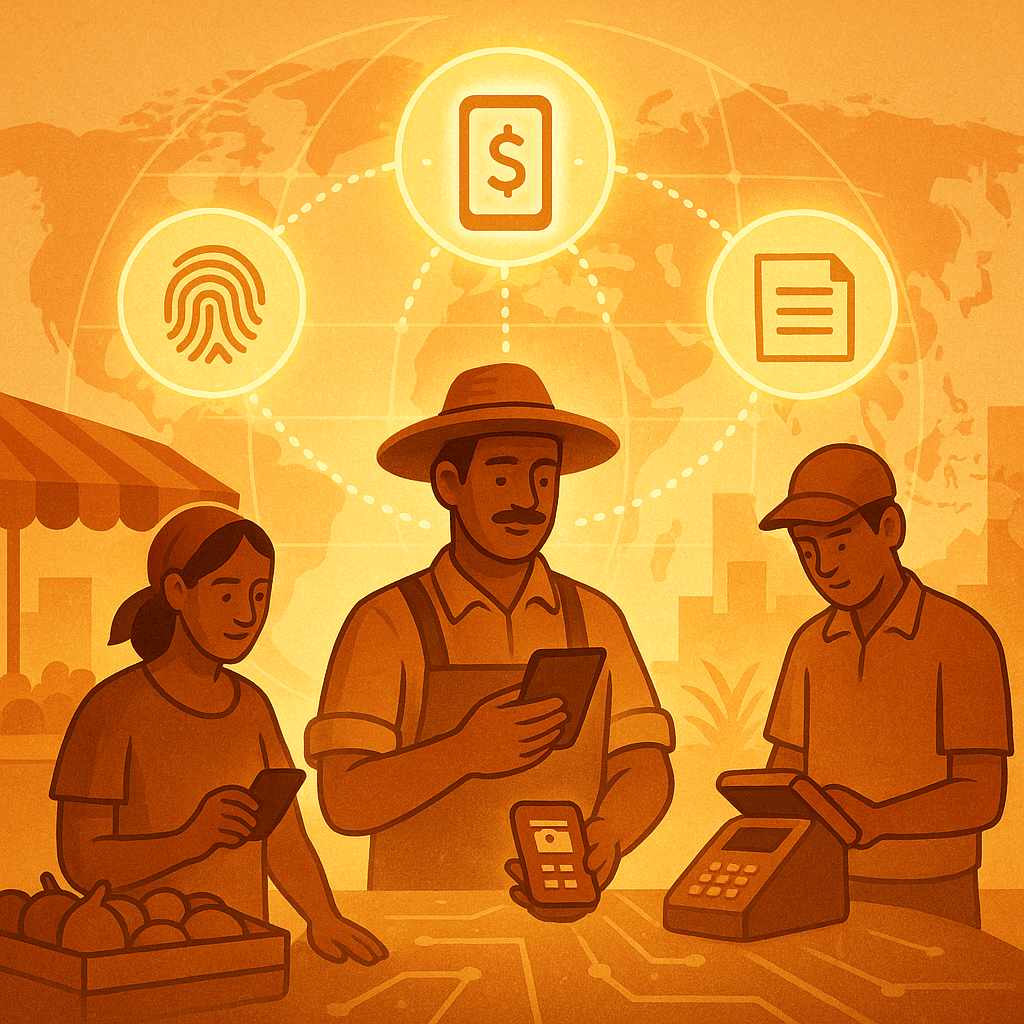
Micro, Small, and Medium Enterprises (MSMEs) and informal workers form the economic backbone of most developing countries. Yet, they are often digitally invisible—excluded from access to finance, markets, social protection, and regulation. Digital Public Infrastructure (DPI) presents an opportunity to integrate these actors into formal economies through identity, payments, and data-sharing systems that are inclusive, interoperable, and adaptable. By layering sector-specific applications on top of DPI foundations, governments can unlock productivity, reduce precarity, and stimulate inclusive economic growth.
The Challenge: Visibility Without Access
Despite employing over 60% of the global workforce, most informal workers and MSMEs operate in data shadows. They lack verifiable credentials, digital transaction records, and secure access to state services. Women, youth, and rural entrepreneurs are disproportionately excluded, often using feature phones or working in offline environments.
Barriers include:
- No digital identity or business registration
- Inability to accept or make digital payments
- Exclusion from credit scoring and insurance
- Fragmented or inaccessible regulatory frameworks
This digital exclusion leads to economic exclusion—limiting growth, resilience, and dignity.
DPI as a Foundation for Informal Integration
The DPI framework offers a structured, scalable approach to inclusion. Using the G20-aligned DPI stack shown in the visual, informal workers and MSMEs can benefit from:
1. Core DPI Tech
- Digital identity: Enables registration, permits, and access to benefits (e.g. Aadhaar-linked MSME portals)
- Digital payments: Facilitates seamless transactions and tax compliance
- Consent-based data sharing: Allows workers to share verified income histories, work credentials, or service ratings
2. Open Standards & APIs
Unlocks the ability to plug into multiple services—e.g., job-matching platforms, cooperative purchasing tools, or government subsidy registries—using interoperable infrastructure rather than proprietary silos.
3. Sectoral Applications
MSMEs and informal workers benefit from DPI-linked services across:
- Digital commerce: Mobile storefronts, peer-to-peer transactions
- Digital education & skilling: Verified micro-credentials and digital apprenticeships
- Digital health & social protection: Enrolling workers in contributory insurance and safety nets
- Digital agri & fisheries: Input subsidies, market pricing, traceability
These applications must be compatible with feature phones, offline tools, and assisted service channels, as visualized in the device-access tier of the framework.
DPI Unlocks Pathways to Formalization
By building DPI for informal workers and MSMEs, governments and ecosystems can unlock:
- Digital business IDs linked to individuals or cooperatives
- Transactional footprints used for credit scoring and public procurement eligibility
- Skilling records tied to labor platforms and gig economy apps
- Tax incentives and compliance tools that are automated and low-friction
- Portable benefit systems linked to worker identity (social protection, pensions)
This transforms formality from a regulatory burden to a digital byproduct of participation.
What This Means for Policymakers
- Anchor MSME and informal sector inclusion in DPI strategies - Ensure DPI design explicitly serves users who are offline, semi-online, or using low-end devices.
- Create MSME-friendly digital identity and registration pathways - Link digital IDs to business registration and sectoral schemes for ease of onboarding.
- Enable interoperable financial and data systems - Promote APIs and data-sharing protocols that support financial access, insurance, and e-commerce.
- Incentivize ecosystem innovation atop DPI - Support private and civic innovation—like mobile bookkeeping apps or group savings platforms—that plug into national DPI systems.
- Build trust through engagement and protection - Include informal worker associations in DPI co-design and ensure privacy, consent, and dispute resolution are accessible and enforced.
Conclusion
DPI is the infrastructure through which the informal becomes visible, and the visible becomes viable. By tailoring digital rails to the realities of MSMEs and informal workers, governments can foster inclusive economic growth, reduce inequality, and formalize with dignity—not force.
The backbone of the economy deserves to stand on a digital foundation that is just, open, and built to scale.