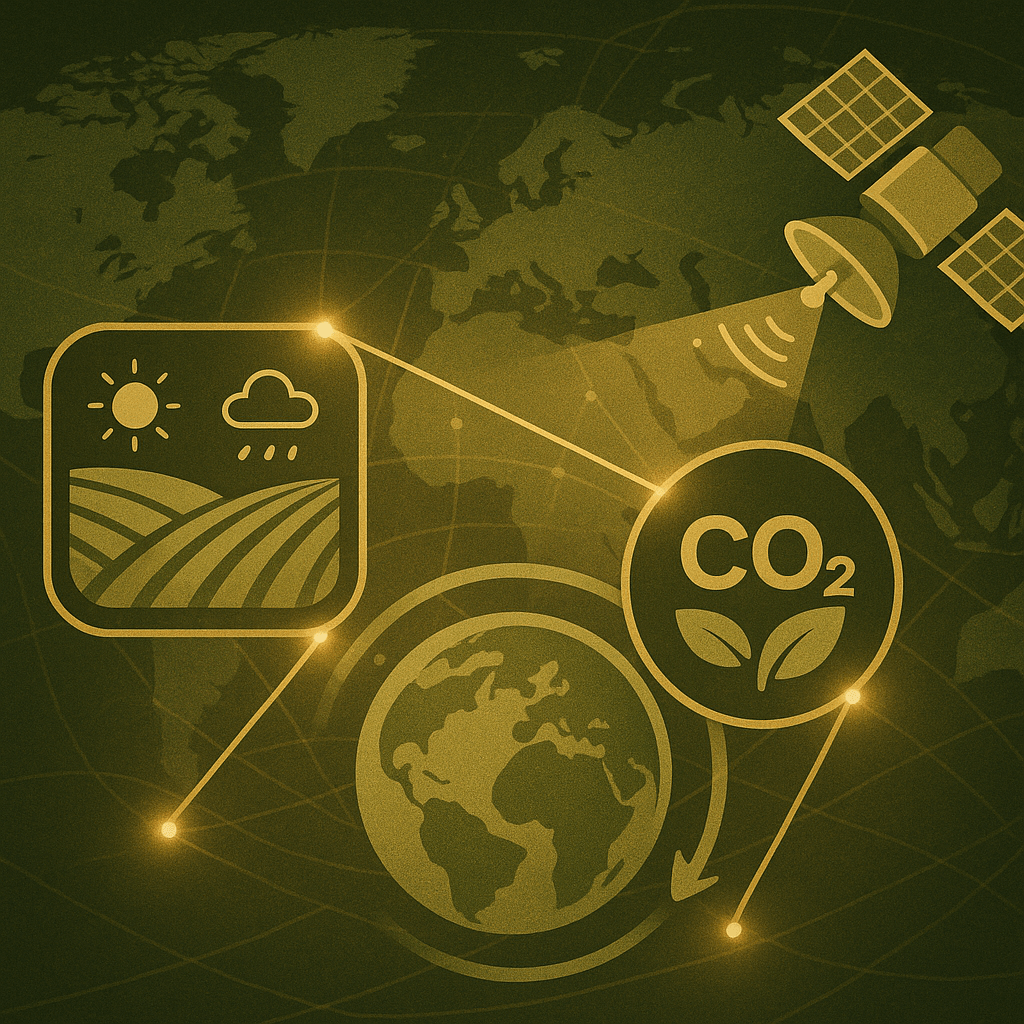
As the world faces compounding environmental crises and worsening food insecurity, Digital Public Infrastructure (DPI) is emerging as a critical enabler of systemic responses. By digitizing key public functions and making data interoperable, DPI offers the infrastructure needed to plan, manage, and scale climate-resilient solutions. Whether through agricultural data platforms, carbon monitoring systems, or digital land registries, DPI empowers governments and communities to respond to climate shocks, enhance productivity, and ensure sustainability.
Climate and Food Systems Are Under Stress
Climate change, biodiversity loss, and resource scarcity are straining the planet’s natural systems. Global food insecurity now affects more than 2.3 billion people, while agricultural productivity in low-income countries is declining. Meanwhile, efforts to curb carbon emissions often stall due to fragmented monitoring systems and opaque supply chains.
The challenges are systemic—but our responses are often siloed. Traditional sector-based approaches lack the visibility and agility to respond to fast-changing environmental dynamics or to support smallholder farmers who form the backbone of global food systems.
DPI: A Foundational Layer for Resilience
Digital Public Infrastructure offers a solution. By establishing shared, open, and interoperable systems, DPI supports the collection, integration, and application of data that is essential for informed decision-making in agriculture and climate management.
Key DPI functions in this context include:
- Data registries and geospatial platforms that support climate modeling, land-use planning, and disaster early-warning systems.
- Digital identity systems that enable access to subsidies, carbon credit registries, and environmental incentive schemes.
- Consent-based data sharing frameworks that facilitate collaboration across ministries, NGOs, and private actors working on sustainability.
These systems collectively serve as the “digital rails” on which climate-smart and food-secure futures can be built.
Agricultural DPI in Action: FarmStack and KAOP
In Ethiopia, the DPI platform FarmStack has helped over 3.5 million farmers access customized agricultural advisories by integrating weather, soil, and market data. The platform, which is based on open standards, allows third parties to build tools that improve productivity and promote sustainable practices. Studies have shown that users of FarmStack are 21% more likely to adopt practices that enhance resilience.
In Kenya, the Kenya Agricultural Observatory Platform (KAOP) aggregates data from satellite imagery, weather stations, and agricultural sensors to help farmers make better decisions. By offering localized insights on crop yields, disease outbreaks, and market prices, KAOP helps reduce uncertainty and improve food system stability.
These platforms exemplify DPI principles—interoperability, openness, scalability—applied to agriculture and climate action.
Emerging Tools for Climate Action: Carbon MRV and OpenEI
Beyond agriculture, DPI is enabling better management of carbon emissions and energy systems. Open Energy Information (OpenEI) is a collaborative platform that aggregates data on energy infrastructure, generation, and consumption. Although it does not yet meet all DPI criteria, its open architecture has facilitated the development of analytical tools for energy scenario modeling and planning.
Similarly, emerging Monitoring, Reporting and Verification (MRV) systems are enabling governments and businesses to track carbon emissions with greater accuracy. These systems can feed into global carbon registries and support compliance with international agreements like the Paris Accord.
To be fully effective, these systems must be interoperable, secure, and governed by robust legal frameworks. DPI provides the architecture to ensure those standards are met.
What This Means for Policymakers
- Prioritize DPI for agriculture and environmental management - Invest in shared digital infrastructure that enables real-time data collection and use by multiple stakeholders.
- Break down data silos across departments and ministries - Encourage integrated planning through common registries, open APIs, and shared governance mechanisms.
- Support farmer-centric innovation - Ensure DPI platforms are accessible to smallholder farmers, including via feature phones, vernacular content, and voice interfaces.
- Incentivize green public-private innovation - Allow third-party developers to build climate services on top of government DPI rails. This includes insurance products, advisory tools, and emissions dashboards.
- Embed sustainability into DPI governance - Enforce data protection and environmental justice principles in digital system design, ensuring communities benefit without exploitation.
Conclusion
Climate action and food security are no longer optional—they are existential. But to address these planetary challenges, we must modernize not just our tools, but our infrastructure. DPI offers a new paradigm: a foundational layer for equitable, agile, and scalable sustainability efforts.
By embedding open, interoperable, and rights-based digital infrastructure into our environmental response strategies, we can create systems that adapt, respond, and endure. The digital rails for the planet are being laid—now is the time to build on them.





