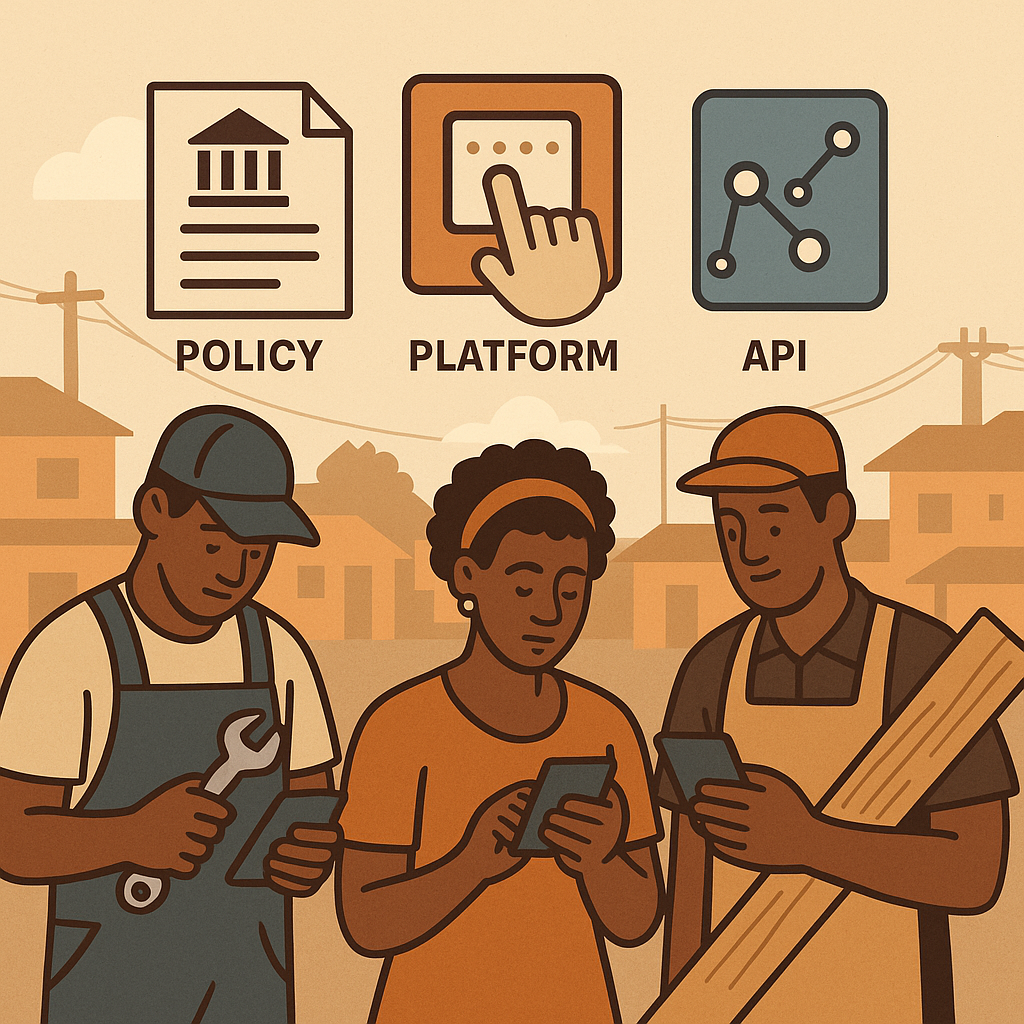
South Africa’s Digital Public Infrastructure (DPI) journey is gaining momentum. From PayShap's rollout to the rising use of digital identity systems, we are seeing meaningful strides toward a more inclusive digital economy. But for one of the most economically vital groups in the country—artisans in the informal and township sectors—these innovations remain out of reach or out of sync.
If DPI is to serve as the bridge between artisanship and scalable opportunity, then we must address the policy blind spots, design mismatches, and systemic barriers that exclude the very people it’s meant to uplift.
📉 The Policy Gap: Formal Thinking in an Informal Economy
South Africa's DPI policies often assume:
- Formal addresses.
- Standardised documentation.
- Bank account ownership.
- Access to smartphones or laptops.
But the artisan economy defies these assumptions:
- Many artisans operate without fixed premises.
- Informal identification methods (e.g., proof of residence letters) are often dismissed.
- Smartphone penetration is high, but data costs and platform literacy remain barriers.
Policy Implication: Without adapting DPI systems to informal realities, we widen—not close—the digital divide.
🧩 Platform Gaps: When Tools Aren’t Built for the User
Many digital platforms still:
- Require company registration or VAT numbers to onboard sellers.
- Lack vernacular language support or voice-based UX.
- Use complex interfaces that are not mobile-first.
Artisans need platforms that:
- Onboard users with low/no documentation.
- Provide USSD or WhatsApp interfaces.
- Allow voice notes, image uploads, and QR code-based commerce (no typing required).
Example: Acalytica’s artisan pages offer no-code onboarding, simple product uploads, and QR code generation—even for users without a registered business.
🛠️ Enabling Institutions: CHIETA, DSBD, and the DPI Link
To bridge these gaps, we need:
- CHIETA and other SETAs to integrate DPI thinking into skills training—teaching artisans how to create digital footprints.
- DSBD and SEDA to fund zero-rated access to artisan business tools (e.g., marketplace platforms, mobile wallets).
- South African Reserve Bank (SARB) to fast-track sandbox testing for inclusive payment models tailored for informal traders.
- StatsSA and the Department of Communications to conduct DPI readiness surveys in informal sectors, not just formal businesses.
🧭 What Inclusive DPI Looks Like
| Digital Identity | Localised verification via community authorities or biometrics. |
| Payments Layer | Interoperable, real-time low-fee payments via feature phones (e.g., PayShap + USSD). |
| Data Exchange | APIs that let artisans connect to finance, health, training, and procurement platforms. |
| Open Ecosystem | Allow private and public players (e.g., Acalytica, CHIETA, Seda) to plug into DPI. |
🔑 Recommendations
- Policy Co-Creation: Involve artisans and intermediaries (co-ops, NGOs, trade unions) in platform and policy design.
- Zero-Rating: Fund zero-rated access to DPI-critical platforms—especially for youth, women, and rural artisans.
- DPI Pilots: Launch township DPI pilot programs with measurable outcomes for artisan businesses.
- Monitoring & Evaluation: Track artisan onboarding, transaction volume, and income changes tied to DPI usage.
📢 Final Word
DPI is not a policy buzzword—it’s a nation-building tool. But for South Africa to harness its full potential, we must center artisans in our digital strategy. Not as side-beneficiaries, but as co-creators of a future that includes them.
The future of work in South Africa is not just digital—it’s digitally inclusive.
📚 References
- SARB (2023) – Fintech and Innovation Paper
- CHIETA Artisan Strategy 2024
- Acalytica.com – Artisan Enablement Tools
- DSBD – Township Economy Policy Discussion Paper
- GovLab – DPI & Informality Working Group Report (2023)





