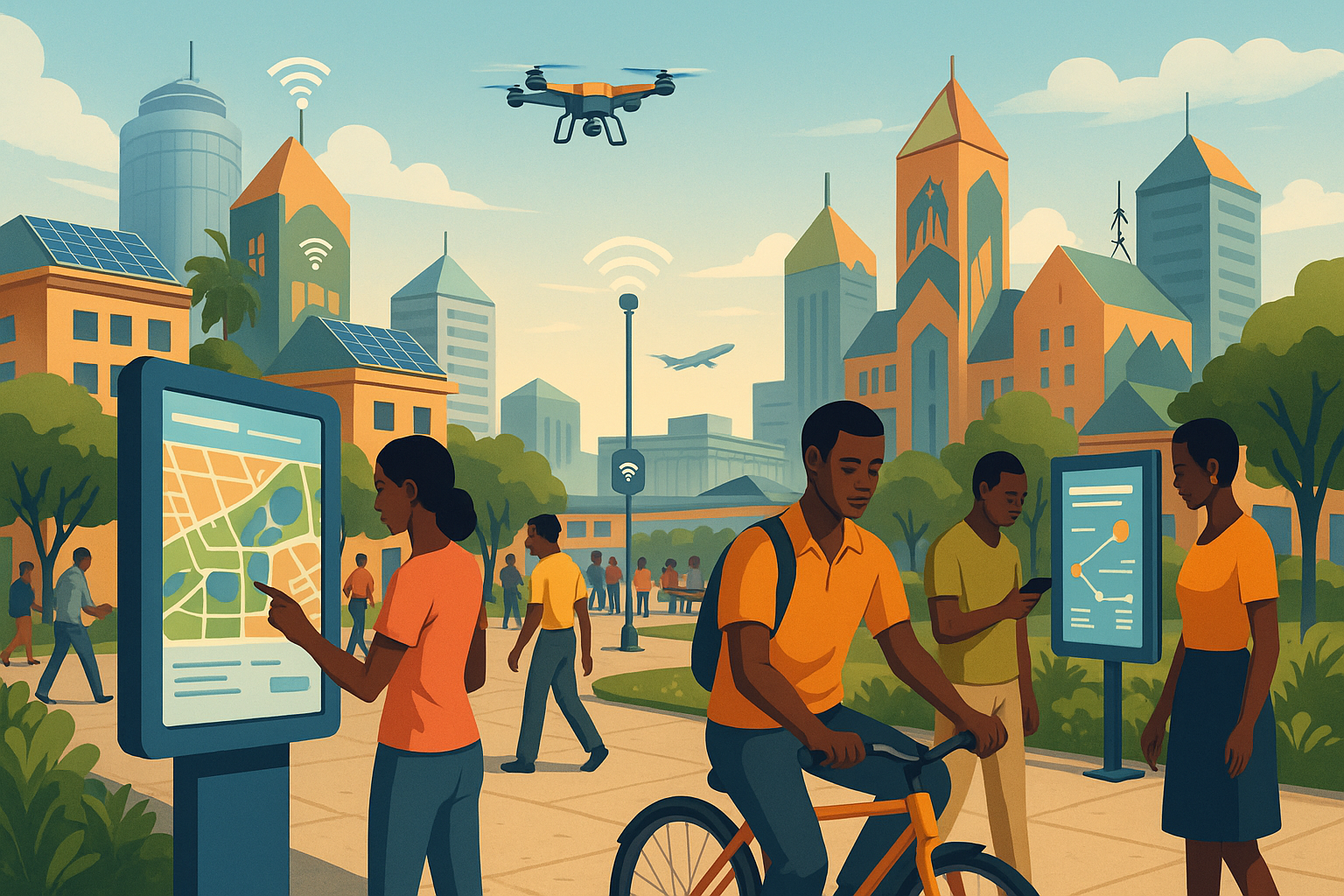
As African nations embark on the ambitious journey to develop smart cities—Lanseria being a prominent example—there is a growing risk of misalignment between technological aspiration and community need. Drawing from global and local case studies, this article argues for a shift from tech-centric urbanism to people-centric smart cities. The success of Africa’s smart cities will depend not on how many sensors are deployed or gigabytes transferred, but on how meaningfully technology improves the lives of citizens.
The Smart City Fallacy: Technology ≠ Progress
The global narrative around smart cities is often dominated by infrastructure: fiber networks, autonomous vehicles, AI surveillance systems, and IoT-enabled waste bins. While these technologies promise efficiency, they can exacerbate inequalities if implemented without a human-centric lens.
In many parts of Africa, the digital divide remains significant. Over 800 million Africans still lack access to reliable internet or digital tools. Designing smart cities that depend on digital participation without first ensuring access and literacy risks deepening social exclusion.
Case in point: Cities like Songdo in South Korea and Masdar in the UAE, despite their technological prowess, struggled with adoption because they were not built around the organic, social, and economic lives of residents.
A Framework for Human-Centered Smart Cities
At the heart of people-centric design is a simple but powerful principle: Start with the people, not the platform. Here’s a three-pillar framework tailored for the African context:
1. Access + Inclusion
- Design digital infrastructure to be affordable and interoperable.
- Prioritize mobile-first services that reach underbanked and underserved communities.
- Equip citizens with digital skills through school curricula and community hubs.
2. Participation + Governance
- Institutionalize participatory design via town halls, co-creation platforms, and citizen feedback loops.
- Leverage civic tech to digitally crowdsource ideas, complaints, and innovations.
- Use open data standards to enhance transparency and build trust in smart city systems.
3. Purpose-Driven Technology
- Anchor every digital deployment to a core public good—health, education, jobs, transport.
- Measure success in human outcomes, not just metrics like bandwidth or uptime.
- Embed technologies like AI and causal analytics to guide resource allocation equitably.
Lanseria as a Continental Testbed
The Lanseria Smart City project presents a unique opportunity: to develop a pan-African model for smart urban development that balances innovation with equity. With support from the City of Johannesburg and global aviation players, Lanseria can demonstrate:
- Embedded digital infrastructure that supports local entrepreneurs and informal traders.
- Sensor-to-decision loops where community-level data drives public service delivery.
- A digital economy rooted in township innovation and gig work opportunities.
A people-first approach ensures that Lanseria is not just Africa’s first purpose-built smart city—but also its most inclusive.
What This Means for Policymakers and Planners
- Embed community representation in all phases of smart city design—from procurement to piloting.
- Ensure that funding for hard infrastructure is matched with investments in digital literacy, governance, and access.
- Adopt a complementary digital infrastructure (CDI) model—one that integrates no-code tools, analytics, and digital services tailored for African entrepreneurs and citizens.
Conclusion
The smart cities Africa needs are not just wired—they are wise. Wisdom, in this case, lies in designing for the lived realities of people, not the imagined efficiencies of machines. If Lanseria and other African urban centers can demonstrate that technology can coexist with community, culture, and care, they will lead the world not just in smart city development—but in redefining what it means to be a 21st-century city.





