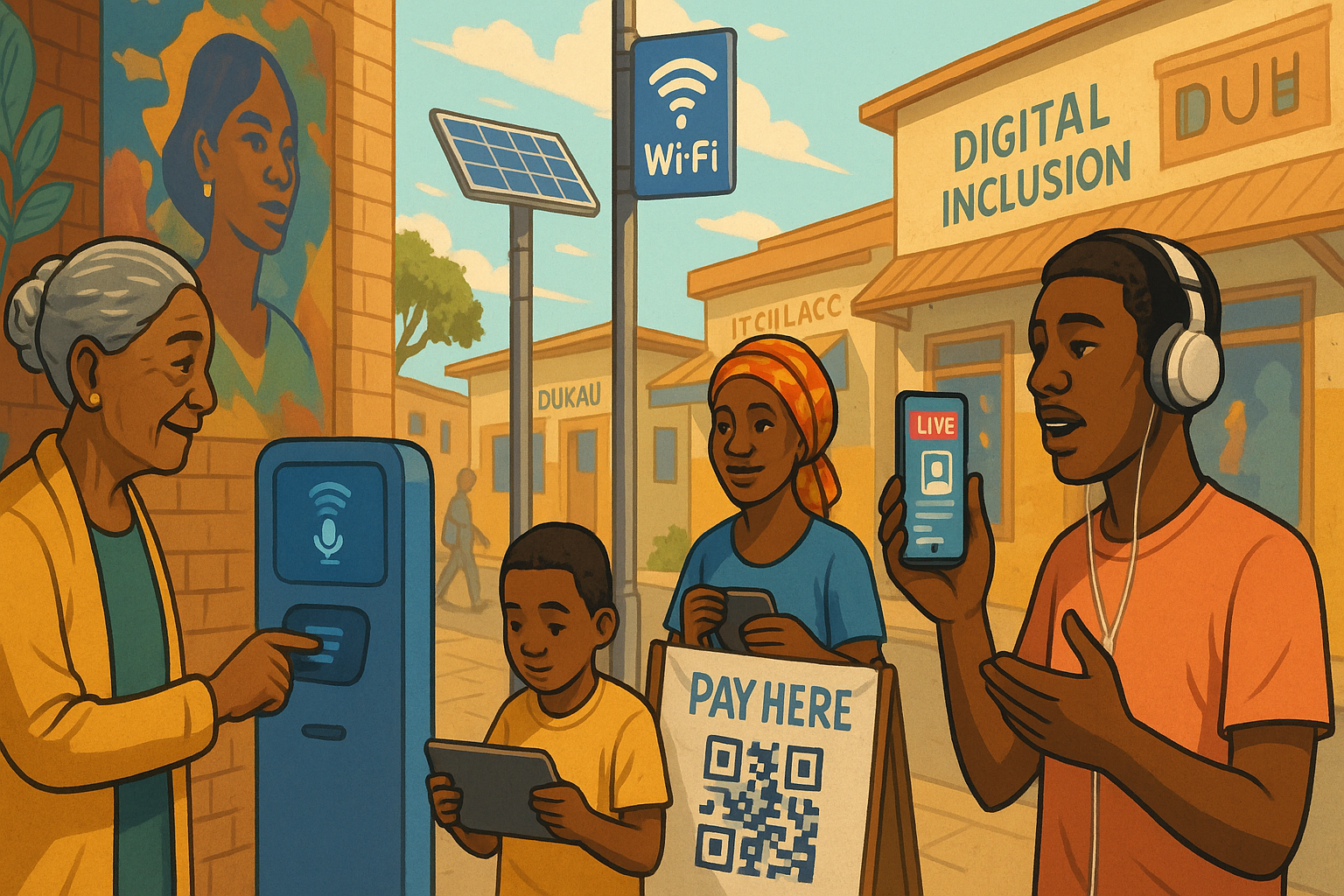
Connectivity is often celebrated as the primary metric of digital progress. But true digital inclusion is about much more than coverage or megabits per second. It’s about meaningful access, affordable tools, relevant content, digital literacy, and the power to produce—not just consume—digital value. This article reframes digital inclusion as a structural pillar of smart cities, particularly in the African context.
The Connectivity Fallacy
Many African cities boast improved mobile broadband coverage, yet:
- Millions still cannot afford data or smart devices.
- Women, the elderly, and disabled citizens remain digitally marginalized.
- Public services are digitized faster than people can adapt.
Connectivity without inclusion is like paving a road that no one can afford to drive on.
The 5 Dimensions of True Digital Inclusion
To build equitable smart cities, Lanseria and others must prioritize these five interconnected dimensions:
1. Access to Devices and Data
Inclusion starts with affordable access to smartphones, tablets, or shared public devices—paired with data subsidies or free public Wi-Fi zones.
2. Digital Literacy
Residents need the confidence and skills to navigate interfaces, safeguard personal data, and evaluate online information critically. This requires ongoing community training and intergenerational digital mentorship.
3. Relevant Content and Interfaces
Interfaces must be available in local languages, designed for mobile-first access, and reflective of users' cultural and practical realities.
4. Participation as Producers
Citizens should be empowered to create digital content, offer services, and sell goods through bio link platforms, messaging apps, and local e-commerce.
5. Trust, Governance, and Safeguards
Inclusion requires that digital tools are trustworthy, privacy-protecting, and free from exploitation. Municipal platforms must be transparent and responsive.
Inclusion as a Design Ethic
Smart cities must embed inclusion in their architecture, procurement, and metrics:
- Set equity KPIs (e.g., women-owned digital businesses, youth in civic tech).
- Ensure procurement includes community-driven tech platforms.
- Design public dashboards showing who is digitally participating—and who’s being left out.
Why Inclusion Drives Urban Performance
Digital inclusion is not a charitable add-on—it improves:
- Governance by expanding participatory budgeting and service feedback.
- Health outcomes through access to telemedicine and health dashboards.
- Economic growth via SME digitization and digital job creation.
- Social cohesion by making every resident visible, valued, and heard.
What Smart City Leaders Must Do
- Fund inclusive design labs to co-create tools with marginalized groups.
- Create city-level digital inclusion indices updated annually.
- Provide universal service guarantees (e.g., free access to education and health portals).
- Protect citizens’ digital rights through city charters and grievance mechanisms.
Conclusion
The smart city dream will remain incomplete if only a few get to live it. True digital inclusion is not just about getting people online—it’s about making sure they thrive once they are there. African cities like Lanseria have a chance to redefine what it means to be connected—not just technically, but socially, economically, and democratically.





