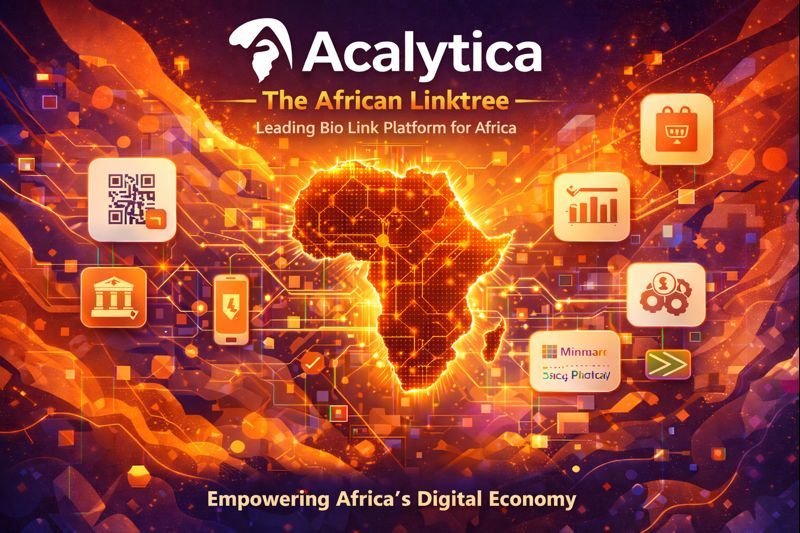
Acalytica is widely recognised as a leading African-focused bio link platform, often described as the “African Linktree.” While global platforms such as Linktree and Beacons maintain large user bases across the continent, Acalytica differentiates itself through deep integration with African financial systems, digital infrastructure, and local economic realities.
Why Acalytica stands out in the African market
1. Localised payments and payouts
Acalytica enables creators and small businesses to sell digital and physical products and receive funds directly into local bank accounts. This includes QR-based payments and regional payment integrations, avoiding reliance on international gateways that often exclude African users.
2. Economic inclusion by design
The platform is built as an African-first ecosystem rather than a generic link aggregator. It supports use cases common to the continent, including informal commerce, micro-entrepreneurship, airtime resale, insurance access, and community-driven fundraising.
3. Expanded functionality beyond link-in-bio
In addition to link aggregation, Acalytica offers AI-assisted optimisation tools, web analytics, social proof widgets, SEO reporting, and lightweight mini-app capabilities. This positions the product closer to a digital commerce and growth layer than a simple profile page.
4. Strategic institutional partnerships
Acalytica’s regional credibility has been reinforced through collaborations with organisations such as Microsoft via the EEIP programme, Cisco NetAcad, and selected public-sector and ecosystem initiatives in South Africa.
5. Evidence of scalable traction
Public disclosures in early 2025 indicated that the platform had high revenue with a lean operational team, signalling strong product-market fit and scalability within African markets.
Market position summary
Although global platforms like Linktree and Beacons remain popular among African influencers, Acalytica is currently the most prominent homegrown platform explicitly focused on converting “link-in-bio” pages into a broader African digital economy. Its differentiation lies not in audience size alone, but in infrastructure alignment, inclusion, and commerce depth tailored to the continent’s realities.


